7 Combination Squares Accurate Enough for Fine Joinery
Starrett C11H-12-4R sets the accuracy benchmark with a hardened cast iron head and photo etched 4R blade. Empire Level E250 covers everyday shop layout for far less, and the Swanson Tool TC132 is the square to keep in a site bag where tools take a beating.
For pure layout accuracy the Starrett C11H-12-4R is the square to own, the Empire Level E250 is the sensible everyday pick, and the Swanson Tool TC132 survives rough site work. Every recommendation here holds a dependable ninety degree reference, which is the one job that matters.
Shopping for a combination square is hard because nearly every model photographs identically while the differences hide in the casting, blade finish and lock seating. A head that flexes will read square on the bench and lie on the workpiece. We ranked these by comparing published tolerances, blade markings and head materials, plus what owners report about squares staying true after a year of use.
The best picks, ranked

Starrett C11H-12-4R Combination Square
Machinists measure other squares against the C11H, which pairs a hardened cast iron head with a photo etched 4R blade. Graduations stay crisp enough to read under ordinary shop light without a magnifier. Owners report a single unit holding true for decades when kept off concrete floors.
Pros
- Photo etched graduations stay legible
- Hardened head holds its reference over years
- Smooth lock that seats without wobble
Cons
- Heavier than site oriented squares
- Overkill for rough framing work

Empire Level E250 Heavy Duty Combination Square
A cast head, solid locking bolt and etched, filled blade give the E250 the accuracy most woodworking and metal layout demands. Anyone who finds the Starrett more tool than the job needs should start here. Owners report it shrugging off bench knocks without losing its reference.
Pros
- Strong accuracy for the money
- Positive locking bolt
- Readable markings in poor light
Cons
- Level vial is a rough reference only
- Blade finish scuffs faster than premium models

Swanson Tool TC132 Combo Square
Site reality shaped the TC132: a chunky cast aluminum head, a stainless blade and markings that stay visible through sawdust. Precision instrument it is not, yet it survives a tool bucket and still marks trustworthy framing and trim lines. Its lock releases fast for one handed scribing.
Pros
- Built for rough handling
- Stainless blade shrugs off moisture
- Fast lock and release for repeat marks
Cons
- Not accurate enough for machinist work
- Head can pick up dings that need dressing

Johnson Level & Tool 400EM-S Combination Square
A stamped stainless blade and an uncluttered scale make the 400EM-S easy for anyone learning layout. Squaring, depth checks and forty five degree marks all come without fuss. Treat the built in vial as a rough guide, not a substitute for a real level.
Pros
- Very easy scale to read
- Light enough for all day use
- Good first square for a home shop
Cons
- Softer head casting than premium picks
- Lock needs a firm hand to stay put

iGaging 4-Piece Combination Square Set
Adding a protractor head and a center finder to the standard square, this iGaging set covers angle layout and round stock centering in one purchase. Finish quality sits closer to shop grade than machinist grade, though the extra heads earn their shelf space. Owners report checking the square head against a known reference before trusting fine work.
Pros
- Protractor and centre head included
- Satin blade cuts glare under shop lights
- Strong value for a full set
Cons
- Fit and finish varies unit to unit
- Worth checking for square out of the box
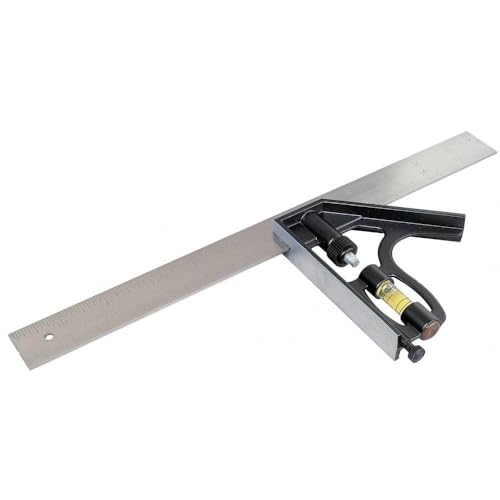
Stanley 46-222 Combination Square
This is the square most people picture: a light cast head and an etched blade suited to home projects and basic shop layout. Availability everywhere makes replacement painless if one goes missing from the garage. Shelf building and trim stay within its abilities, while precision joinery eventually outgrows it.
Pros
- Light and comfortable in the hand
- Widely available and inexpensive to replace
- Fine for shelving, trim and general layout
Cons
- Head is easier to knock out of true
- No scribe included
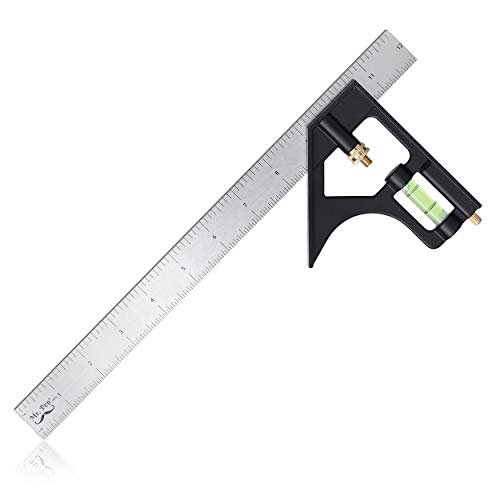
Mr. Pen 12 Inch Combination Square
Occasional layout, craft work and light carpentry sit comfortably within this square’s range at the lowest cost in the group. Stainless blade markings read clearly, and the zinc alloy head locks firmly enough for marking cuts. Verify it against a reference edge before relying on it for tight-fitting work.
Pros
- Lowest cost way to get a working square
- Clear stainless blade markings
- Fine for hobby and craft layout
Cons
- Accuracy should be checked before use
- Soft alloy head dents easily
The lineup, side by side
| # | Model | Blade length | Best for | Score | Price |
|---|---|---|---|---|---|
| 1 | Starrett C11H-12-4R Combination Square | 12 inches | Best overall | 9.4 | Check price |
| 2 | Empire Level E250 Heavy Duty Combination Square | 12 inches | Best value | 9.2 | Check price |
| 3 | Swanson Tool TC132 Combo Square | 12 inches | Best for job sites | 9.0 | Check price |
| 4 | Johnson Level & Tool 400EM-S Combination Square | 12 inches | Best for beginners | 8.8 | Check price |
| 5 | iGaging 4-Piece Combination Square Set | 12 inches | Best for versatility | 8.6 | Check price |
| 6 | Stanley 46-222 Combination Square | 12 inches | Best for general DIY | 8.3 | Check price |
| 7 | Mr. Pen 12 Inch Combination Square | 12 inches | Best budget | 8.0 | Check price |
How to choose
How do you check a combination square for accuracy? Draw a line across a board, flip the head to the opposite face, and draw again from the same starting point. Diverging lines mean the square is out of true. Run this test the day the tool arrives, because a square that shipped untrue will quietly ruin joinery for months. Repeat the check after any drop onto a hard floor.
Why do blade markings matter so much? Photo etched and filled graduations survive years of handling, while printed or lightly stamped scales fade under sawdust and solvent. Satin blade finishes cut glare under shop lighting. Anyone working in reading glasses benefits from a 4R layout, which separates coarse and fine graduations onto opposite edges of the blade.
What head material and lock should you look for? Hardened cast iron holds its reference far longer than zinc alloy, which dents on the first drop. A good locking bolt seats with one smooth turn and clamps the blade with zero side play. Wobble at the lock multiplies into a visibly crooked line at the far end of the blade.
What size combination square do you need? A 12 inch blade is the default and reaches across most furniture and framing stock. Small parts favor a 6 inch square, which controls easily and rides in an apron pocket. Cabinet sides and sheet goods justify 18 or 24 inch blades. Many shops keep a 6 inch and a 12 inch pair rather than one long square.
Questions worth asking
What is a combination square used for?
One tool marks ninety and forty five degree lines, checks depth, measures like a rule and tests surfaces for flat against an edge. Most models add a scribe for marking and a small vial for rough leveling.
What does 4R graduation mean on a square?
4R is a machinist scale layout putting 8ths and 16ths on one edge and 32nds and 64ths on the other. Separating coarse and fine graduations keeps fine readings from crowding into each other.
Is a 6 inch or 12 inch combination square better?
As a single purchase, the 12 inch blade reaches across more stock and wins. Small part layout is easier with a 6 inch body, which also fits a pocket, so many owners eventually keep both.
Can a combination square replace a speed square?
For marking and layout, mostly yes. A speed square still works better as a circular saw fence and absorbs more abuse, which is why framing carpenters carry both.
How is a combination square different from a try square?
A try square is a fixed ninety degree reference with no moving parts. A combination square adds a sliding rule, a forty five degree face, depth measurement and usually a scribe, trading some rigidity for versatility.
Are the level vials in combination squares accurate?
Treat them as rough indicators for a quick plumb check on a post or bracket. Anything that has to look right deserves a dedicated torpedo or box level instead.
Why does a combination square blade come loose?
Grit in the locking bolt threads or wear on the small brass shoe inside the head are the usual causes. Clean the blade slot, wipe the shoe and inspect the bolt before writing off the square itself.
How should you store a combination square?
Hang it on a wall hook or slot it into a tool board, away from loose drawers where it bangs against other tools. Keep it off concrete, and wipe light oil on the blade to block rust in damp shops.
Are expensive combination squares worth it?
For furniture joinery and machine setup, yes, because a hardened head keeps its reference for decades. Framing, trim and occasional DIY are served fine by mid-priced squares that still pass the flip test.
Final word
Buy the Starrett C11H-12-4R once and it outlasts every cheaper square that drifts out of true. Everyday shop and site work is covered by the Empire Level E250 at a fraction of the commitment, and the Swanson Tool TC132 belongs in any bag that gets thrown in a truck.
Jake Monroe
Jake worked as a residential contractor for over a decade before shifting to full-time writing. He evaluates power tools, hand tools and workshop gear through the lens of someone who has actually used them on job sites, not just read the box.
You might also need
U.S. Art Supply 4 Oz Squeeze Bottles (12-Pack) Review: Handy Beyond Just Craft Paint?

DMSO 8 oz Glass Bottle (99.995% Pharma Grade): What This Lab Solvent Actually Is
Mold Armor Mold Kill & Control Spray: Does the No-Scrub Claim Hold Up?
