What Makes a Collapsible Trekking Pole Worth Packing?
Black Diamond Distance Carbon Z leads with a roughly 16 inch packed length and featherweight carbon shafts. Cascade Mountain Tech Carbon Fiber Quick Lock poles deliver the strongest value with cork grips and a full accessory set, while the LEKI Micro Vario Carbon adds adjustability for long distance hikers.
Three collapsible poles earn a place in a daypack: the Black Diamond Distance Carbon Z for minimum packed size, the Cascade Mountain Tech Carbon Fiber Quick Lock poles for value, and the LEKI Micro Vario Carbon for long distance comfort. Each covers a different real buying priority rather than a marketing tier.
Pole marketing leans on weight, yet the practical differences live in the folding system and the locks. We compared packed length, weight per pole, lock behavior under load, grip material and adjustment range, because a pole that slips on a steep descent is worse than carrying no pole at all.
What to look for
Folding vs telescoping: which design should you buy? Z fold poles break into three short sections joined by an internal cord, producing the smallest packed size by a wide margin. Telescoping poles slide into themselves, staying adjustable but measuring considerably longer when collapsed. Poles that must fit inside a daypack for scrambling demand a folding design. Hikers who fine tune length constantly are better served by telescoping.
Carbon or aluminum trekking poles: which material wins? Carbon weighs less and dampens trail vibration, which pays off over long days. Aluminum bends instead of snapping when a tip jams between rocks and gets levered. Fast hikers on maintained trails generally choose carbon. Winter travel, scree and rough ground favor aluminum, so neither material is universally correct.
What lock and grip types work best? External lever locks adjust easily with cold hands and can be retensioned when they start slipping. Twist locks look cleaner but resist field repair. Cork grips mold to your hands and manage sweat, foam runs lighter and softer, and rubber suits cold weather. Straps carry real weight too, since loading the strap spares your grip muscles over hours.
How do you size and use trekking poles correctly? Stand the tip on the ground and check that your elbow bends to roughly ninety degrees. Fixed length folding poles must be ordered in the correct size, so consult the maker’s height chart first. Shorten adjustable poles for climbs and lengthen them for descents. Enter the straps from below so the strap, not your grip alone, supports your weight.
The top picks, ranked

Black Diamond Distance Carbon Z Trekking Poles
A tent-pole style Z fold collapses each pole to roughly 16 inches, short enough to vanish inside a daypack for scrambling sections. Carbon shafts keep weight extremely low for fast days. Hikers report the deploy and stow motion becomes automatic within a single outing.
Pros
- Packs smaller than almost any rival
- Very light for fast moving days
- Deploys and stows one handed
Cons
- Fixed length, so sizing must be right at purchase
- Carbon tolerates less side loading than aluminum
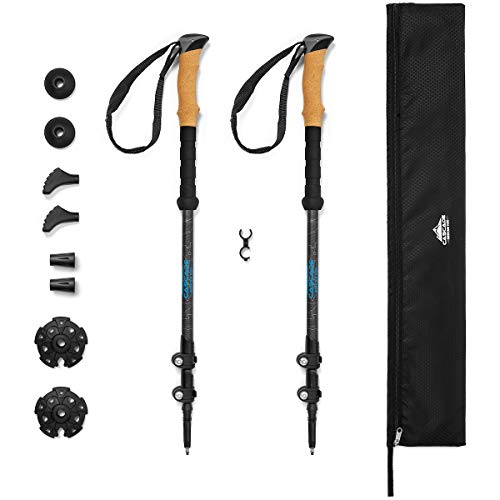
Cascade Mountain Tech Carbon Fiber Quick Lock Trekking Poles
Carbon shafts, cork grips and reliable lever locks arrive here at a fraction of premium pole cost, which explains how often these appear on trails. Cork molds to the hand within a few hikes. Multiple tips and baskets come in the box, so no extra purchases are needed for mud, snow or pavement.
Pros
- Outstanding value for carbon poles
- Cork grips stay comfortable when sweaty
- Full set of tips and baskets included
Cons
- Longer packed length than folding poles
- Lever tension needs occasional adjustment

LEKI Micro Vario Carbon Trekking Poles
LEKI pairs a folding lower section with an adjustable upper shaft, so the pole packs compact yet still shortens for climbs and lengthens for descents. Aergon grips and the strap system stay comfortable over many consecutive hours. Serious mileage hikers get the most from this design.
Pros
- Compact folding with real adjustability
- Excellent grip and strap comfort
- High quality locking mechanism
Cons
- Premium outlay compared with rivals
- Slightly heavier than fixed length folders

TrailBuddy Trekking Poles
Aircraft grade aluminum replaces carbon here, adding grams but shrugging off the rock levering that cracks lighter shafts. Cork and foam blend grips handle sweat well for the class. Casual hikers who want durable poles with zero fuss get accessories and a carry bag included.
Pros
- Aluminum tolerates rough treatment
- Very low outlay with accessories included
- Comfortable grips for the category
Cons
- Noticeably heavier than carbon poles
- Bulkier when packed

MSR DynaLock Ascent Backcountry Poles
MSR built these for ski touring and alpine travel, with aluminum shafts and locks that keep working in gloves at freezing temperatures. Extended foam grips let you choke down on steep traverses without stopping to adjust length. Summer trail walkers will find them more pole than the job requires.
Pros
- Locks operate easily with gloves
- Robust enough for winter mountain use
- Extended grips suit steep traverses
Cons
- Heavier than summer hiking poles
- More pole than most trail walkers need

Foxelli Carbon Fiber Trekking Poles
Foxelli reaches a genuinely low weight without a premium label, which suits hikers who count grams on a budget. Natural cork grips shape themselves to your hands over the first few trips. An included accessory set covers dirt, snow and pavement, though the thin carbon shafts dislike sideways force.
Pros
- Impressively light for the outlay
- Cork grips shape to your hands
- Good accessory selection included
Cons
- Locks need regular tension checks
- Thin carbon is vulnerable to sideways force

Montem Ultra Strong Trekking Poles
Thicker aluminum shafts answer the common complaint that light poles flex under a heavy pack plus body weight. Flip locks operate simply and hold under hard leaning on descents. Gram counters should look elsewhere, but these inspire confidence when loaded.
Pros
- Confident under heavy loads
- Resists flex on steep descents
- Straightforward flip lock operation
Cons
- Among the heaviest options here
- Packed length is longer than folding designs
How they compare
| # | Model | Folding type | Best for | Score | Price |
|---|---|---|---|---|---|
| 1 | Black Diamond Distance Carbon Z Trekking Poles | Z fold with internal cord | Best overall | 9.4 | Check price |
| 2 | Cascade Mountain Tech Carbon Fiber Quick Lock Trekking Poles | Telescoping with lever locks | Best value | 9.2 | Check price |
| 3 | LEKI Micro Vario Carbon Trekking Poles | Fold plus adjustable upper section | Best for long distance hiking | 9.0 | Check price |
| 4 | TrailBuddy Trekking Poles | Telescoping with lever locks | Best budget aluminium | 8.8 | Check price |
| 5 | MSR DynaLock Ascent Backcountry Poles | Foldable with adjustable section | Best for winter and mountains | 8.6 | Check price |
| 6 | Foxelli Carbon Fiber Trekking Poles | Telescoping with quick locks | Best lightweight budget option | 8.3 | Check price |
| 7 | Montem Ultra Strong Trekking Poles | Telescoping with flip locks | Best for heavier hikers | 8.0 | Check price |
Common questions
Are folding trekking poles as strong as telescoping ones?
Under normal planting loads, modern folding poles hold up fine. Their joints tolerate less sideways levering, so rough scrambling and winter routes favor a telescoping aluminum design.
What length trekking poles do I need?
Choose a length that puts your elbow at a right angle with the tip on flat ground. Fixed length folding models are sized by user height, so check the manufacturer’s chart before ordering.
Do trekking poles actually make hiking easier?
Descents show the biggest benefit, where poles take noticeable load off the knees. Balance improves on stream crossings and loose ground, and a pole rhythm helps pace long climbs.
Is carbon fiber worth it for trekking poles?
For long, fast days the weight saving is real and you feel it late in a hike. Casual walkers on rough terrain do better with aluminum, which survives abuse the lighter material cannot.
Why do my trekking pole locks keep slipping?
Lever locks loosen with use and usually need only a slight turn of the tension screw. Twist locks slip when grit gets inside, so clean and dry the sections after muddy trips.
When should I use rubber tips vs carbide tips?
Carbide bites into dirt, rock and ice. Rubber tips belong on pavement and hard indoor surfaces, where bare metal slides and clicks with every step.
Can trekking poles pitch a tent?
Many ultralight shelters are designed around trekking pole supports, which saves carrying dedicated tent poles. Confirm that your pole length, fixed or adjustable, matches the shelter’s stated requirement.
How should trekking poles be stored between trips?
Loosen every lock, dry the sections completely and store the poles extended or unlocked. Clamping them shut while wet is what corrodes aluminum and wears out lock parts.
Are collapsible poles allowed as airline carry-on?
Most airlines treat trekking poles as prohibited in the cabin regardless of packed size, so plan to check them. A folding pole at least fits easily inside a standard checked duffel.
The bottom line
Buy the Black Diamond Distance Carbon Z if packed size and weight decide everything, because it disappears into a daypack the moment the trail turns to scrambling. Weekend hikers get the most from the Cascade Mountain Tech Carbon Fiber Quick Lock poles, while the LEKI Micro Vario Carbon rewards anyone walking day after day with superior grips and real adjustability.
Sierra Daniels
Sierra's background is in landscape design and nursery retail. She focuses on lawn and garden equipment, outdoor furniture and gear durability, weighing published specs against how materials actually hold up outside.


