Which Home Coffee Maker Actually Fits How You Brew?
Cuisinart DCC-3200P1 fits larger households that want a full 14-cup pot ready on a timer. Technivorm Moccamaster KBG741 holds SCA-certified brew temperature for buyers chasing consistent extraction. Ninja CE251 pairs two brew-strength settings with a lower price for anyone who wants flexibility without paying for a precision brewer.
Cuisinart’s DCC-3200P1 holds a full 14-cup carafe and starts brewing on a 24-hour timer, a strong fit for households of four or more. Its warming plate adjusts to avoid a burnt taste, though the glass carafe is more fragile than a steel one. Smaller households or brew purists may want a different pick from this list.
Brew temperature can swing nearly ten degrees between machines, changing how sour or bitter a cup tastes before anyone adds cream. We compared stated brew temperature ranges, carafe capacity, filter type, and programming features across seven current models.
Before you buy
What decides coffee quality at home Extraction depends more on brew temperature than on any button or display. Water between 195 and 205 degrees Fahrenheit pulls flavor evenly from grounds; colder water leaves coffee sour, hotter water turns it bitter. Machines like the Technivorm Moccamaster and OXO Brew are engineered specifically to hold that window, while cheaper machines can drift outside it during a cycle.
Matching carafe size to your household A 9-cup carafe like the OXO Brew’s covers one or two daily drinkers without wasted coffee sitting on a warming plate. Larger households or anyone hosting guests regularly get more use from a 12 to 14-cup carafe, the range covered by the Cuisinart, Ninja, and Hamilton Beach models. Buying more capacity than needed just means stale coffee reheated later in the day.
Manual control versus a set-and-forget timer Households that already grind and weigh beans get more value from the Breville Precision Brewer’s adjustable bloom time and temperature than from a fixed programmable cycle. Anyone who wants to set a timer once and stop thinking about it is better served by the Cuisinart or Mr. Coffee. Neither approach is wrong, but paying for manual control without using it wastes the extra cost.
Best for homes with mixed brewing habits One person wanting a single mug while another wants a full pot usually means two machines cluttering a counter. A 2-in-1 unit like the Hamilton Beach FlexBrew Trio solves that by switching modes on one machine, though it adds a second water reservoir and more parts to clean.
What we recommend

Cuisinart DCC-3200P1 14-Cup Programmable Coffeemaker
Fourteen cups come from one brew cycle, enough for a family or a small office. A 24-hour timer starts the pot before anyone wakes up. Warming plate temperature can be lowered manually, which keeps coffee from turning bitter after an hour on the plate.
Pros
- Fits larger households with a 14-cup carafe
- Adjustable warming plate slows down over-cooking
- Reusable filter option lowers ongoing paper costs
Cons
- Glass carafe cracks more easily than steel
- Full-size footprint takes up more counter space

Technivorm Moccamaster KBG741
Water stays between 196 and 205 degrees Fahrenheit for the entire brew cycle, a range the Specialty Coffee Association certifies for even extraction. Copper heats faster than the aluminum elements found in cheaper machines. A full pot finishes in about six minutes, with no digital timer to set.
Pros
- SCA-certified brew temperature stays consistent
- Copper element reaches temperature quickly
- Fewer parts mean less to break over time
Cons
- No built-in 24-hour programmable timer
- 10-cup carafe holds less than the Cuisinart’s 14
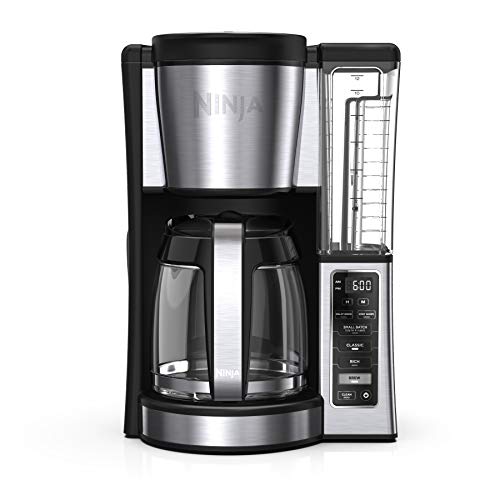
Ninja CE251 12-Cup Programmable Coffeemaker
Switching between Classic and Rich settings changes how long grounds stay saturated, shifting flavor intensity without buying new beans. A permanent filter comes included, so there are no paper filters to restock. Twelve cups cover a mid-size household on a 24-hour timer.
Pros
- Two brew-strength settings from one machine
- Permanent filter cuts recurring filter costs
- Priced below most premium single-purpose brewers
Cons
- Plastic housing feels less sturdy than steel bodies
- Warming plate runs hotter than Cuisinart’s adjustable version
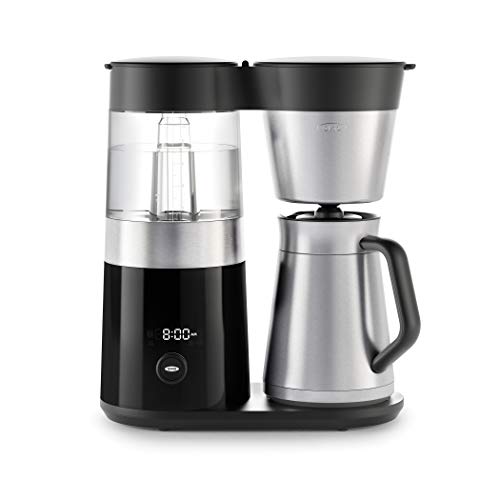
OXO Brew 9 Cup Coffee Maker
Nine cups suits one or two daily drinkers rather than a full house. A rainmaker showerhead spreads water evenly over grounds, similar to a manual pour-over. Brew temperature holds between 197 and 205 degrees Fahrenheit, in line with specialty coffee standards.
Pros
- Even-saturation showerhead mimics pour-over extraction
- Compact 9-cup size fits smaller kitchens
- Stable brew temperature for its price tier
Cons
- No 24-hour programmable timer included
- Cone filters cost more per box than flat-bottom ones

Breville Precision Brewer BDC450
Manual controls let users set brew temperature and bloom time by hand, more adjustment than a fixed-profile programmable maker allows. A gold-tone filter basket ships with the machine alongside paper filter compatibility. Twelve-cup capacity suits households that already grind and weigh their own beans.
Pros
- Manual bloom and temperature control tunes flavor
- Gold-tone filter included at no extra cost
- Appeals to buyers who already dial in grind size
Cons
- More settings to learn than a basic programmable maker
- Costs more than standard drip models

Mr. Coffee 12-Cup Programmable Coffee Maker
Twelve cups brew on a straightforward 24-hour timer, without a strength dial or adjustable temperature. Auto shutoff after two hours adds a basic safety layer. This is a no-frills option for buyers who just want reliable basic coffee.
Pros
- Lower price than most programmable competitors
- Simple controls with a short learning curve
- Auto shutoff adds a basic safety feature
Cons
- No adjustable brew strength setting available
- Warming plate runs at one fixed temperature

Hamilton Beach FlexBrew Trio 2-Way Coffee Maker
One machine switches between a single cup brewed straight into a mug and a full 12-cup carafe. Pods or loose grounds both work for the single-serve side. Households where preferences differ avoid buying two separate machines this way.
Pros
- Covers single-serve and full-carafe brewing in one unit
- Accepts pods or loose grounds for single cups
- Saves counter space versus two separate brewers
Cons
- Single-serve reservoir takes up extra internal space
- More parts to clean than a single-format maker
Compared at a glance
| # | Model | Carafe capacity | Best for | Score | Price |
|---|---|---|---|---|---|
| 1 | Cuisinart DCC-3200P1 14-Cup Programmable Coffeemaker | 14 cups | Best overall | 9.2 | Check price |
| 2 | Technivorm Moccamaster KBG741 | 10 cups | Best for brew consistency | 9.0 | Check price |
| 3 | Ninja CE251 12-Cup Programmable Coffeemaker | 12 cups | Best value | 8.8 | Check price |
| 4 | OXO Brew 9 Cup Coffee Maker | 9 cups | Best for smaller households | 8.6 | Check price |
| 5 | Breville Precision Brewer BDC450 | 12 cups | Best for adjustable brewing control | 8.5 | Check price |
| 6 | Mr. Coffee 12-Cup Programmable Coffee Maker | 12 cups | Best budget | 8.1 | Check price |
| 7 | Hamilton Beach FlexBrew Trio 2-Way Coffee Maker | 12 cups | Best for mixed single-serve and carafe needs | 8.0 | Check price |
Common questions
What is the best brew temperature for drip coffee?
Most specialty coffee guidelines call for water between 195 and 205 degrees Fahrenheit, a range the Technivorm Moccamaster and OXO Brew are both built to hold.
How many cups should a home coffee maker brew?
One or two daily drinkers are often well served by a 9 to 10-cup carafe, while larger households or frequent guests benefit from a 12 to 14-cup capacity.
Is a programmable timer worth it on a coffee maker?
A 24-hour timer, included on the Cuisinart, Ninja, and Mr. Coffee models, starts brewing automatically before anyone gets up, which matters most for a consistent morning schedule.
What is the difference between a permanent filter and paper filters?
Permanent filters, like the one included with the Ninja CE251, cut ongoing filter costs but need regular cleaning, while paper filters absorb more oils and must be replaced.
Can one coffee maker handle both single cups and a full carafe?
2-in-1 machines like the Hamilton Beach FlexBrew Trio brew either a single cup directly into a mug or a full 12-cup carafe from the same unit.
Why do some coffee makers cost more than others with the same carafe size?
Price differences often come down to brew temperature consistency and build materials; the Technivorm Moccamaster’s copper element and SCA certification add cost over a basic plastic-bodied brewer.
Does an adjustable warming plate change how coffee tastes?
A fixed high-temperature warming plate can keep cooking coffee and turn it bitter, while an adjustable plate, like the Cuisinart’s, lets the temperature drop to preserve flavor longer.
What should I look for in a budget-friendly coffee maker?
A reliable auto shutoff, a programmable timer, and a basket-style paper filter cover the basics; the Mr. Coffee 12-Cup Programmable model includes all three at a lower price point.
Which coffee maker is best for a small household?
A smaller 9-cup carafe, like the OXO Brew’s, avoids the leftover coffee that sits and degrades in a larger pot meant for four or more people.
The verdict
Cuisinart’s DCC-3200P1 is the strongest all-around pick for its large capacity and adjustable warming plate. Coffee purists focused on extraction consistency should choose the Technivorm Moccamaster instead, and anyone on a tighter budget still gets a dependable brew from the Mr. Coffee 12-Cup Programmable model.
Dana Whitfield
Dana spent eight years buying and merchandising for a regional kitchenware retailer before moving into editorial work. She has handled thousands of SKUs across cookware, small appliances and kitchen organization, and focuses on the practical differences that matter once a product is actually in daily use.


