Clip-On Phone Lenses: Which Focal Length You Need
Moment Wide 18mm ranks first on optics. Its bayonet mount holds the element square to the sensor, so corners stay sharp. Xenvo Pro Lens Kit pairs a 0.45x wide with a 15x macro on a universal clip. Apexel HD 36X reaches stage and wildlife subjects at 36x.
Moment Wide 18mm fits phone photographers who shoot most weeks. Its M-Series bayonet twists the glass into one fixed position, which is why edge detail survives. Buying a Moment case is mandatory, so occasional shooters lose flexibility. Xenvo Pro Lens Kit skips the ecosystem and puts two focal lengths on a clip.
Add-on lenses fail in two places: soft edges and drifting clips. Acrylic elements smear corners, and spring jaws creep off centre between frames. We compared element construction, barrel material, mount style and stated field of view across current listings. Owners report that three-camera phones cause most alignment trouble, so clip travel shaped the ranking.
What we recommend

Moment Wide 18mm Lens (M-Series)
Multi-element glass sits inside an aluminium barrel here, and a bayonet twist replaces the usual spring clip. Fixing the element in one position is what stops corner detail from smearing. A matching Moment case is required, which adds bulk to a pocket kit.
Pros
- Bayonet seating removes the drift that softens corners
- Aluminium barrel takes bag knocks without denting
- Pairs with Moment’s capture app for manual shutter and focus
Cons
- Case purchase is unavoidable, raising total kit bulk
- Case support arrives late for brand new phone releases

Xenvo Pro Lens Kit
Two optics ship together: a 0.45x wide angle, plus a 15x macro that unscrews from its face. A rechargeable LED ring clips alongside and lifts subjects out of shadow at macro distance. Universal jaws fit most handsets, though armoured cases come off first.
Pros
- Covers the two focal lengths new shooters reach for
- LED ring solves the shadow problem at half-inch focus
- Clip spans iPhone, Android handsets and tablets
Cons
- Wide element bends straight lines near the frame edge
- Clip needs recentring often on three-camera phones
Sandmarc Anamorphic Lens Edition
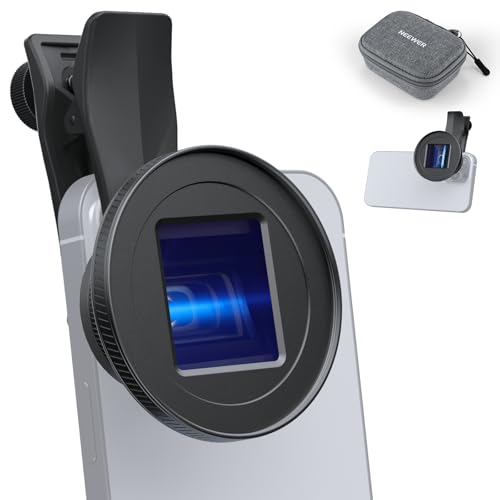
Squeezing the frame 1.55x delivers a 2.40:1 widescreen crop plus the horizontal blue flares cinema glass produces. Footage arrives stretched, so desqueezing happens in an editor or a capture app that handles it live. Sandmarc supplies both a clip and a case mount, letting one lens move between phones.
Pros
- Optical flares rather than a software imitation
- Two mounting routes cover handheld and rigged shooting
- 2.40:1 frame suits landscape plates and interview setups
Cons
- Desqueeze step is required before footage looks right
- Front weight unbalances small phone gimbals

Apexel HD 36X Telephoto Lens
Shaped like a monocular, this 36x telephoto pulls in wildlife, stage performers and stadium action well beyond any digital crop. Focus is set by hand, and the bundled tripod is not optional at this magnification. Brightness drops as light fades, so daylight is where it works.
Pros
- Reaches subjects a phone sensor cannot crop into
- Tripod arrives in the box instead of as an add-on
- Jaws fit tablet cameras as well as phones
Cons
- Handheld frames blur at full magnification
- Image dims quickly once light levels fall

Moment Macro 10x Lens
Ten times magnification resolves insect eyes, fabric weave and solder joints on screen. Working distance sits near 15mm, so a steady grip or a small tripod keeps the focus plane where you want it. Mounting follows the rest of Moment’s range, twisting onto an M-Series case.
Pros
- Detail suits product shots, hobby work and board repair
- Fixed mount keeps the narrow focus plane aligned
- Shares a case with any other Moment lens you own
Cons
- Shallow depth of field demands patience per frame
- Same Moment case outlay applies before first use

Selvim Phone Camera Lens Kit 4 in 1
Four elements travel in one pouch: wide angle, macro, fisheye and a short telephoto. Edge sharpness trails the glass-only lenses above, yet the set shows a new shooter which focal length they keep returning to. Trade up to one dedicated lens once that habit becomes obvious.
Pros
- Cheapest route to sampling four focal lengths
- Jaws open wide enough to clear slim cases
- Pouch and caps stop the elements getting scratched
Cons
- Corner detail softens next to glass-only optics
- Fisheye element vignettes on some ultra-wide cameras

Sandmarc Fisheye Lens Edition
A 180 degree view swallows whole rooms, skate bowls and group shots taken at arm length. Curved lines read as deliberate style here rather than a defect. Multi-coated elements hold flare in check when the sun sits inside the frame.
Pros
- Captures tight interiors without backing up
- Coatings control flare against direct backlight
- Mounts on the same Sandmarc case as the anamorphic
Cons
- Barrel bend rules out straight architectural work
- Fingers wander into frame at this coverage
How to pick the right one
What to look for in a clip-on phone lens Glass elements outperform acrylic, and multi-element designs control the colour fringing that shows at frame edges. Barrel material matters next, since aluminium housings keep their shape after a drop. Mount style decides everything else. Bayonet systems tied to a branded case sit perfectly square, while universal clips trade that precision for fitting any handset. Check the jaws for rubber or silicone pads, because bare plastic scratches phone glass. One rule saves money here: a single sharp lens in the focal length you shoot beats a five-piece kit of soft ones.
Which focal length matches what you shoot Wide angle near 0.45x suits interiors, landscapes and group shots where stepping back is impossible. Macro between 10x and 20x serves coins, plants, jewellery and circuit boards. Telephoto exists for wildlife and stage work, and anything past 10x needs a tripod under it. Fisheye and anamorphic change the shape of an image rather than its coverage, which makes them style tools. Anyone photographing food, products or documents should skip wide entirely and buy macro first.
Best clip-on lenses for video and gimbal work Anamorphic glass alters frame geometry, not just field of view, which is why short-film shooters keep it mounted. Weight becomes decisive once a gimbal joins the rig, since heavy front elements push small stabilisers past their balance range. Counterweights recover part of that margin. Owners report case-mounted lenses stay put during handheld movement, while spring clips shift mid-take and waste the shot. Skip anamorphic if you post straight to social video, because the desqueeze step never fits that workflow.
Fitting lenses to multi-camera phones and thick cases Three-camera phones make alignment fiddly, as the jaw has to land over one lens without blocking another. Measure from the phone edge to the camera centre before choosing a narrow clip. Rugged and battery cases usually have to come off, which is the strongest argument for a bayonet case system if you shoot weekly. Shooting a few times a year? Stay on a universal clip and recentre it as needed. Dark corners almost always mean the clip drifted rather than the lens being faulty.
How they stack up
| # | Model | Mount | Best for | Score | Price |
|---|---|---|---|---|---|
| 1 | Moment Wide 18mm Lens (M-Series) | M-Series bayonet, needs Moment case | Best overall | 9.4 | Check price |
| 2 | Xenvo Pro Lens Kit | 0.45x wide angle plus 15x macro | Best value | 9.2 | Check price |
| 3 | Sandmarc Anamorphic Lens Edition | 1.55x anamorphic | Best for cinematic video | 9.0 | Check price |
| 4 | Apexel HD 36X Telephoto Lens | 36x telephoto | Best for long-range zoom | 8.8 | Check price |
| 5 | Moment Macro 10x Lens | 10x macro | Best for macro detail | 8.6 | Check price |
| 6 | Selvim Phone Camera Lens Kit 4 in 1 | Wide, macro, fisheye and telephoto | Best budget | 8.3 | Check price |
| 7 | Sandmarc Fisheye Lens Edition | 180 degrees | Best for action and interiors | 8.0 | Check price |
Questions worth asking
Do clip on phone lenses actually improve photo quality?
They change what you can frame more than they raise resolution. Wide angle fits more into the shot, and macro focuses closer than the phone allows alone. Multi-element glass holds detail near the edges, while single acrylic elements soften corners.
Which clip on phone lens is best for beginners?
Xenvo Pro Lens Kit covers wide and macro on one universal clip, which is where most new shooters spend their time. Starting there reveals your preferred focal length before you commit to a dedicated lens.
Can clip on lenses scratch or damage a phone camera?
Bare metal jaws pressing on glass can leave marks, so pick clips with rubber or silicone pads. Heavy telephoto barrels add leverage on the mount, another reason to put high magnification lenses on a tripod.
Moment vs Sandmarc: which lens system should I buy?
Moment concentrates on sharp stills glass, a wide case range and its own manual capture app. Sandmarc leans toward video, offering anamorphic and fisheye options with both clip and case mounting. Shoot photos, pick Moment. Shoot video, pick Sandmarc.
Will a clip on lens fit with my phone case on?
Slim cases normally clear a universal clip. Rugged and battery cases lift the camera bump too high, so they come off first. Bayonet systems sidestep the issue by building the mount into the case.
What causes dark corners in photos taken with a clip on lens?
That vignetting means the add-on is off centre or too small for the sensor field of view. Recentre the jaws first. If the circles remain, switch from the ultra-wide camera to the main camera.
Is an anamorphic phone lens worth it?
Only if you finish footage in an editor. Anamorphic files look stretched until desqueezed, so clips posted straight to social gain nothing. Short films, music videos and interview work get a genuine 2.40:1 frame.
How do I keep telephoto phone shots sharp?
Mount the phone on the supplied tripod, then trigger with a two-second timer or a Bluetooth remote. Shoot in daylight where possible. High magnification cuts brightness, and dim venues push the phone into shutter speeds where shake shows.
What is the best clip on lens for real estate and interiors?
Wide angle around 0.45x, such as the one in the Xenvo kit, keeps walls reasonably straight while fitting a room in. Fisheye captures more but bends every vertical line, which buyers and agents usually dislike.
Do clip on lenses work on the ultra-wide or telephoto camera?
They are designed for the main camera, where the sensor and field of view suit an added element. Placing one over the ultra-wide usually produces heavy vignetting, and stacking a telephoto add-on over a zoom camera softens detail.
The bottom line
Buy the Moment Wide 18mm if you shoot most weeks and accept the case system, since bayonet seating holds corner sharpness no clip can match. Xenvo Pro Lens Kit is the smarter pick for anyone who changes phones often or wants wide and macro without an ecosystem. Apexel HD 36X earns a slot only when distance is the whole point, and it needs the tripod every time.
Marcus Chen
Marcus covered consumer electronics for enthusiast tech publications for six years before joining ChoiceCrest. He specializes in translating manufacturer spec sheets into plain-language buying advice, with a focus on audio, computing accessories and smart-home gear.