Which Circular Saw Cuts Cleanest Under 150 Dollars
DEWALT’s DCS391D2 leads for cordless bevel accuracy and framing work. Makita’s 5007MG matches it on power through a corded 7.25 inch blade. Milwaukee’s M18 FUEL 2630-20 suits professionals needing brushless durability. All three cut 2-by lumber cleanly at 90 and 45 degrees.
DEWALT’s DCS391D2 tops this list for DIY builders who want cordless convenience with real bevel accuracy. Its 20V battery system matches corded power up to 2-by lumber, though the 5.5 inch blade limits deep rip cuts.
Circular saws under 150 dollars split into compact cordless models with 5 to 5.5 inch blades and full-size corded saws with 7 to 7.25 inch blades. We compared blade diameter, motor speed, bevel range, and owner reports on cut accuracy and durability.
Our top picks

DEWALT DCS391D2 20V Circular Saw
This 5.5 inch cordless saw runs on DEWALT’s 20V battery platform, with two batteries and a charger included. Bevel adjusts from 0 to 50 degrees for angled framing and roof work. A 3,000 RPM motor cuts 2-by lumber cleanly at 90 and 45 degrees, and the tool weighs under 8 pounds for overhead use.
Pros
- Two batteries let you keep working without a cord
- Bevel range covers most roof and deck angles
- Light enough for extended overhead work
Cons
- 5.5 inch blade caps rip-cut depth on thick stock
- Battery capacity fades after roughly 200 charge cycles

Makita 5007MG Corded Circular Saw
A 7.25 inch corded blade and 5,800 RPM motor cut through 2-by lumber and plywood in a single pass. The aluminum shoe resists warping under daily job-site use, and a built-in laser line helps with alignment. A 13-amp draw means steady power without battery swaps.
Pros
- Motor output beats similarly priced cordless models
- No battery purchases or replacement costs
- Aluminum shoe holds up under repeated use
Cons
- Cord limits reach away from an outlet
- Needs an extension cord on most job sites

Milwaukee M18 FUEL Circular Saw 2630-20
Milwaukee’s brushless FUEL motor spins a 6.5 inch blade at 3,800 RPM with less heat buildup than brushed saws. It runs on the wider M18 battery lineup, so contractors already on that platform can share packs across tools. Body-only pricing keeps it under 150 dollars, though batteries add cost.
Pros
- Brushless motor runs cooler over long shifts
- Faster RPM handles aggressive ripping
- Shares batteries with the full M18 tool lineup
Cons
- Batteries are typically sold separately
- Costs more once batteries are added
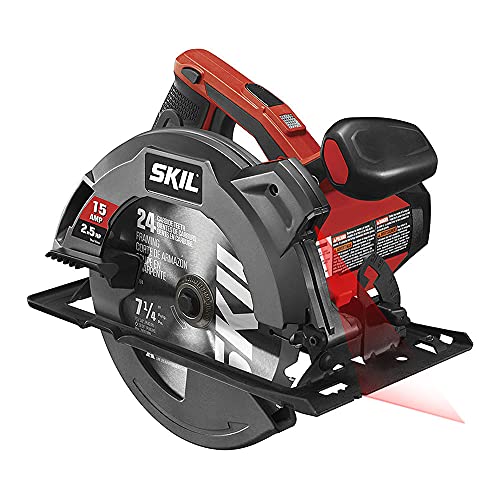
Skil 5280-01 Corded Circular Saw
A laser guide lines up cuts on a 7.25 inch corded blade spinning at 5,800 RPM. The aluminum baseplate resists warping, and the motor holds speed through plywood and sheet goods with minimal top-surface splintering. A 13-amp draw keeps it in the same power class as the Makita.
Pros
- Laser guide speeds up repeat crosscuts
- Clean cuts on plywood and sheet goods
- Aluminum shoe stays flat over time
Cons
- Laser is hard to see in direct sunlight
- Corded design ties it to outlet access

Ryobi P505 ONE+ Circular Saw
This 5.5 inch cordless saw runs on Ryobi’s 18V ONE+ batteries, the same packs used across their drills, blowers, and other tools. A 2,800 RPM motor and simple bevel adjustment suit patio and deck projects. Owners who already have ONE+ batteries skip the added battery cost entirely.
Pros
- Works with any battery from the ONE+ lineup
- Low weight suits extended overhead cuts
- Lowest total cost for existing Ryobi owners
Cons
- Slower RPM than other cordless saws here
- Batteries sold separately if you’re new to Ryobi

BLACK+DECKER CS1024 Circular Saw
At the lowest price point here, this corded 4.25 inch saw runs a 13-amp motor at 3,500 RPM. A dust blower clears the cut line, and the lightweight body suits one-off framing and sheet-good crosscuts. It is not built for daily job-site use.
Pros
- Lowest cost of any saw on this list
- Compact size fits tight cuts and storage
- Enough power for occasional DIY projects
Cons
- Motor stalls in thick hardwood
- Small blade caps cutting depth

Bosch UniversalCirc 150 Circular Saw
A 0 to 60 degree bevel range beats every other saw here, useful for crown molding and steep framing angles. The compact 6 inch blade spins at 3,600 RPM, trading some cutting speed for that extra bevel range. At 5.8 pounds, it stays manageable during long angled cuts.
Pros
- Widest bevel range of any saw here
- Light enough for extended angled work
- Smooth depth adjustment for repeat cuts
Cons
- Slower RPM than full-size corded saws
- Compact blade limits rip-cut depth
Side by side
| # | Model | Blade diameter | Best for | Score | Price |
|---|---|---|---|---|---|
| 1 | DEWALT DCS391D2 20V Circular Saw | 5.5 inches | Best overall | 9.3 | Check price |
| 2 | Makita 5007MG Corded Circular Saw | 7.25 inches | Best value | 9.1 | Check price |
| 3 | Milwaukee M18 FUEL Circular Saw 2630-20 | 6.5 inches | Best for heavy duty | 8.9 | Check price |
| 4 | Skil 5280-01 Corded Circular Saw | 7.25 inches | Best for plywood and sheet goods | 8.6 | Check price |
| 5 | Ryobi P505 ONE+ Circular Saw | 5.5 inches | Best for Ryobi ecosystem owners | 8.4 | Check price |
| 6 | BLACK+DECKER CS1024 Circular Saw | 4.25 inches | Best budget | 8.2 | Check price |
| 7 | Bosch UniversalCirc 150 Circular Saw | 6 inches | Best for angled and bevel cuts | 8.0 | Check price |
How to choose
Corded vs cordless circular saws under 150 Corded saws hold higher RPM for hours of continuous cutting, which favors stationary shop work. Battery models trade some power for mobility on job sites without outlets. Full-size corded saws with 7.25 inch blades generally out-cut compact cordless models at this price. Choose cordless only if you already own batteries or need to move between outlets.
Matching blade size to cutting depth A 7.25 inch blade cuts 2.5 inches deep at 90 degrees, enough for standard 2-by lumber. Compact 5.5 inch blades top out near 1.75 inches, fine for plywood and narrower stock. Rip cuts on thick framing lumber need the larger blade. Sheet goods and trim work rarely need more than the compact size.
How much bevel range actually matters A 0 to 50 degree bevel covers most roof framing, decking, and crown molding angles. Wider ranges like the Bosch’s 0 to 60 degrees help with steep or unusual cuts. Clamp the workpiece before any bevel cut, since freehand angles drift off line quickly. Fine-tooth blades hold accuracy better through an angled pass than standard combination blades.
Dust control and keeping your cut line visible Most saws in this price range rely on a dust blower rather than a collection bag. Stand upwind of the blade to keep sawdust out of your line of sight. Laser guides help with alignment but wash out in direct sunlight. A pencil line and steady feed rate work in any lighting.
Frequently asked questions
Can a 5.5 inch blade cut through a 2-by-10?
Not in one pass. It cuts about 1.75 inches deep, and a 2-by-10 measures 9.25 inches wide. A 7.25 inch saw handles it in one pass, or you can flip the board and cut from both sides.
Is a corded saw better than cordless under 150 dollars?
For raw power, yes. Corded saws in this price range out-cut cordless models on RPM and sustained speed. Cordless makes sense only if you already own batteries from that brand’s tool lineup.
What blade stops plywood from splintering?
A fine-tooth blade with 60 to 80 teeth, run at a slow steady feed rate, leaves the cleanest edge. Clamp the good face down, since plywood tends to splinter on the top side of the cut.
Do I need a bevel feature for basic deck framing?
Most deck boards are cut at 90 degrees, so bevel is optional there. It matters for angled railings, stair stringers, and roof trim. Skip it if your project is all straight cuts.
How many cuts does a circular saw battery last?
An 18V to 20V pack manages roughly 20 to 30 cuts through 2-by lumber, or a few hours of stop-and-start work. Fast chargers refill a battery in 30 to 60 minutes.
Which circular saw works best for plywood and sheet goods?
The Skil 5280-01 and Makita 5007MG both use a 7.25 inch blade with a laser guide, which keeps long crosscuts on sheet goods straight and clean.
What’s the difference between a laser guide and a pencil line?
A laser guide is faster to set up but fades in bright sunlight. A pencil line works in any light but takes a moment to mark. Both need a steady feed rate and a clamped workpiece to stay accurate.
Is variable speed worth paying extra for?
Not for wood cutting under 150 dollars. Variable speed mainly helps with metal or specialty materials. Fixed-speed saws cut wood just as fast and cost less.
Can I share batteries between a Ryobi saw and other Ryobi tools?
Yes. The Ryobi P505 ONE+ runs on the same 18V batteries used across Ryobi drills, blowers, and other ONE+ tools, so existing owners avoid buying a new battery.
The bottom line
Makita’s 5007MG delivers the most cutting power per dollar in this price range, making it the pick for anyone without an existing battery platform. Buyers who already own DEWALT 20V batteries should choose the DCS391D2 for its cordless bevel accuracy. Skip the compact 4.25 inch BLACK+DECKER unless your budget rules out everything else.
Jake Monroe
Jake worked as a residential contractor for over a decade before shifting to full-time writing. He evaluates power tools, hand tools and workshop gear through the lens of someone who has actually used them on job sites, not just read the box.