Job Site Circular Saws Ranked for Framing Crews
Makita 5007MG leads for daily framing. Magnesium construction holds it to 10.6 pounds while a 15 amp motor spins 5,800 RPM. Rip heavy crews should take the SKILSAW SPT77WML-01 worm drive instead. On unpowered sites, Milwaukee 2732-20 cuts 2-7/16 inches deep on M18 packs.
Makita 5007MG suits most framing contractors. Magnesium shoe and guards hold weight to 10.6 pounds, yet the 15 amp motor still turns 5,800 RPM. Left blade placement gives right handed users a clear view of the line. Its limitation is the cord, so unpowered sites need a generator.
Job site saws fail in ways homeowner saws never do. A bent shoe or a sloppy bevel plate turns every cut into a correction. We compared amperage, no load RPM, cut depth at both bevel settings, shoe material and electric brake behaviour. Owner reports on gear wear, bearing life and guard springs broke the ties. Saws using stamped steel shoes or motors under 15 amps were left out.
What matters most
What to look for in a job site circular saw Shoe material tells you most of what you need. Magnesium and cast aluminium stay flat after a fall from staging, while stamped steel bends and ruins square cuts. Corded saws should run 15 amps, since weaker motors stall in wet lumber. Cord length matters too, because anything under eight feet means dragging the extension along every cut. Bearings, guard springs and the gear housing decide whether year three is worth having.
Sidewinder vs worm drive for framing Sidewinders sit the motor beside the blade, keeping the tool short and balanced overhead. Worm drives run gearing behind the blade, adding length and torque that suits ripping sheathing and cutting soaked treated stock. Regional habit plays a part: west coast framers grew up on worm drives, east coast crews on sidewinders. Handedness matters more than most buyers expect, since a left blade saw gives right handed users an unobstructed line of sight. Borrow both layouts for a day before committing a whole crew.
Cut depth, bevel range and the cuts they unlock Anything at or above 2-7/16 inches clears a 2×4 at 45 degrees, covering rafter and hip cuts. Around 2-1/2 inches lets you take doubled 2x material in one pass, saving a flip on every cut. Bevel capacity of 56 degrees earns its keep on roof valleys and stair stringers. Wall framing rarely asks for more than 45. Read the depth figure at 45 degrees as well, because it usually drops about three quarters of an inch.
Cordless saws on a production framing crew M18 FUEL and FLEXVOLT now match corded blade speed, and both clear a two by four in one pass. Runtime, not power, is the constraint, so budget several high amp hour packs per saw. Battery weight also shifts balance forward, which you feel during overhead joist work. Keep one corded saw on the truck for long rips through plywood and LVL. Crews cutting mostly sheet goods should skip cordless as their primary saw.
The best picks, ranked

Makita 5007MG Magnesium 7-1/4 Inch Circular Saw
Magnesium replaces steel in the shoe and both guards, dropping the saw to 10.6 pounds. A 15 amp motor turns 5,800 RPM and cuts 2-1/2 inches at 90 degrees. Two built in LED lights put light on the line inside a framed wall. Bevel swings out to 56 degrees with positive stops along the way.
Pros
- Magnesium shoe stays flat after drops from staging
- Dual LED lights show the cut line inside walls
- Bevel reaches 56 degrees for roof and stair cuts
Cons
- Cord means a generator on unpowered new construction
- No electric brake, so the blade coasts after release

SKILSAW SPT77WML-01 Lightweight Worm Drive Saw
Worm gearing trades blade speed for torque, so the cut holds through soaked pressure treated stock. SKILSAW lists 5,300 RPM from a 15 amp motor inside a magnesium housing at 11.6 pounds. Depth runs 2-3/8 inches at 90 degrees, enough for stacked two by material in one pass. Rear handle geometry lets you push the saw rather than steer it.
Pros
- Gear reduction resists bogging in dense wet lumber
- Rear handle suits long rips across sheathing
- Magnesium keeps it light for a worm drive
Cons
- Gear oil needs checking and topping up
- Extra pound tells during repetitive overhead cuts
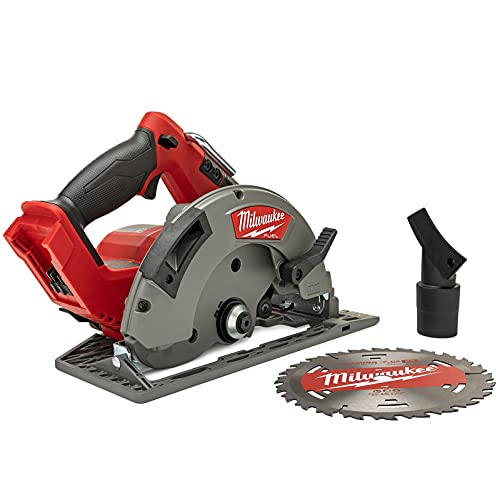
Milwaukee 2732-20 M18 FUEL 7-1/4 Inch Circular Saw
POWERSTATE brushless motor and REDLINK electronics hold 5,800 RPM as the blade loads up. Cut depth of 2-7/16 inches clears a two by four in a single pass. Crews already carrying M18 packs skip buying into a new platform. An electric brake stops the blade between cuts on joists and blocking.
Pros
- Blade speed matches corded sidewinders in framing lumber
- Electric brake halts the blade between cuts
- Magnesium shoe and guards take job site handling
Cons
- Bare tool listing, so packs are bought separately
- Long rips drain batteries faster than crosscutting
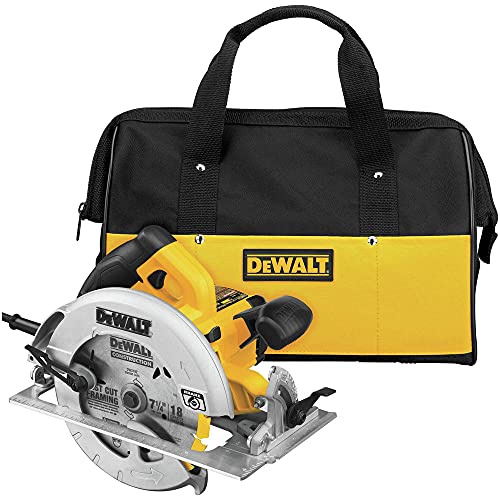
DEWALT DWE575SB 7-1/4 Inch Lightweight Circular Saw
At 8.8 pounds nothing else corded here is lighter, which shows up on ladder and rafter work. A 15 amp motor drives 5,200 RPM, the slowest corded speed in this group. Cut depth still reaches 2-9/16 inches at 90 degrees, beating several heavier saws. Release the trigger and the electric brake stops the blade before you set it down.
Pros
- Lightest corded saw here for overhead cuts
- Electric brake shortens blade spin down
- Dust blower clears sawdust off the pencil line
Cons
- 5,200 RPM trails every other corded saw listed
- Shoe is thinner than the magnesium units above

DEWALT DCS578B FLEXVOLT 60V MAX Circular Saw
FLEXVOLT packs push this brushless saw to 5,800 RPM and a 2-9/16 inch cut at 90 degrees. No other cordless saw here reaches that depth. A brake override switch turns the brake off when repeat cuts matter more than spin down time. Fitting a 9.0 amp hour pack adds real weight, which favours deck and wall framing over all day overhead work.
Pros
- Deepest cut depth among the cordless picks
- Brake override speeds up high volume cutting
- FLEXVOLT packs also run 20V MAX tools on site
Cons
- Front heavy once a large pack is attached
- Bare tool listing means buying batteries separately

Makita XSR01Z 18V X2 LXT Rear Handle Circular Saw
Two 18V LXT batteries combine to 36 volts and drive a brushless motor at 5,100 RPM. Rear handle geometry copies a worm drive, which suits long rips and cutting from a plank. Depth of 2-5/8 inches at 90 degrees handles stacked framing stock. Automatic speed change raises torque the moment the blade meets resistance.
Pros
- Rear handle carries over worm drive muscle memory
- Runs on existing 18V LXT packs, not a new platform
- Automatic speed change reacts to cutting load
Cons
- Two charged batteries required before it will run
- 5,100 RPM is the slowest speed among cordless picks

Bosch CS10 7-1/4 Inch Circular Saw
Bosch pairs a 15 amp motor with 5,600 RPM and a die cast aluminium footplate that resists flex. Cut depth measures 2-7/16 inches at 90 degrees, with bevel out to 56 degrees. An anti snag lower guard helps on narrow offcuts and bevel starts. Treat it as the truck spare or the saw you hand a helper, not the crew’s main framing tool.
Pros
- 5,600 RPM is strong for an entry level saw
- Anti snag lower guard reduces hang ups on bevels
- Bevel to 56 degrees covers roof and stair work
Cons
- Aluminium shoe dents more easily than magnesium
- No electric brake fitted to this model
How they compare
| # | Model | Motor | Best for | Score | Price |
|---|---|---|---|---|---|
| 1 | Makita 5007MG Magnesium 7-1/4 Inch Circular Saw | 15 amp | Best overall | 9.4 | Check price |
| 2 | SKILSAW SPT77WML-01 Lightweight Worm Drive Saw | Worm drive | Best worm drive | 9.2 | Check price |
| 3 | Milwaukee 2732-20 M18 FUEL 7-1/4 Inch Circular Saw | M18 REDLITHIUM | Best cordless | 9.0 | Check price |
| 4 | DEWALT DWE575SB 7-1/4 Inch Lightweight Circular Saw | 15 amp | Best value | 8.8 | Check price |
| 5 | DEWALT DCS578B FLEXVOLT 60V MAX Circular Saw | FLEXVOLT 60V MAX | Best for cordless framing | 8.6 | Check price |
| 6 | Makita XSR01Z 18V X2 LXT Rear Handle Circular Saw | 18V X2 LXT, 36V total | Best rear handle cordless | 8.3 | Check price |
| 7 | Bosch CS10 7-1/4 Inch Circular Saw | 15 amp | Best budget | 8.0 | Check price |
Questions worth asking
What size circular saw do contractors actually use?
A 7-1/4 inch blade is the framing standard, because it clears a 2×4 at 45 degrees in one pass. Smaller 6-1/2 inch cordless saws suit trim and remodel work. Beam cutting calls for 8-1/4 inch saws, though those stay rare on general crews.
Is a worm drive saw better than a sidewinder?
Worm drives deliver more torque and hold speed in wet or dense lumber, at the cost of roughly a pound. Sidewinders balance better for overhead and ladder cuts. Crews cutting treated deck lumber daily usually land on the worm drive.
How many amps should a contractor grade circular saw have?
Fifteen amps is the practical floor for corded framing saws. Weaker motors bog once the blade heats or the stock pinches. Every corded saw listed here runs 15 amps for that reason.
Can a cordless circular saw replace a corded one on site?
For framing, blocking and deck work, M18 FUEL and FLEXVOLT saws keep pace with corded models. Long rips through plywood or LVL still empty packs quickly. Most crews run cordless as the main saw and keep a corded one for sustained cutting.
Makita 5007MG vs SKILSAW SPT77WML-01: which should a framer pick?
Pick the Makita for lighter weight, 5,800 RPM and better overhead balance. Pick the SKILSAW when ripping wet treated lumber or sheathing all day, since worm drive torque refuses to bog. Both use magnesium, so durability lands close.
Does an electric brake matter on a job site saw?
It stops the blade within a second or two of trigger release, which cuts the risk of setting down a coasting blade. DEWALT and Milwaukee models here include one. Some framers dislike the pause between rapid cuts, which is why the DCS578B adds a brake override.
Which blade should go on a framing circular saw?
A 24 tooth carbide framing blade is the default, ripping through dimensional lumber with an acceptable finish. Switch to 40 tooth for plywood and finish material. Keep a demolition blade on the truck for nail embedded reclaimed stock.
How long does a contractor circular saw last?
Owners commonly report five to ten years of daily use from magnesium bodied saws, with brush replacement as the main service item. Regular gear oil changes stretch worm drive life considerably. Failures tend to start at the lower guard spring or the cord entry rather than the motor.
What is the best circular saw for a remodeling contractor?
Remodel work favours light saws with brakes, since cuts happen on ladders and in finished rooms. DEWALT DWE575SB at 8.8 pounds fits that pattern better than a worm drive. Add a fine tooth blade to limit splintering on existing trim.
Is a magnesium shoe worth paying for on a circular saw?
Magnesium holds its shape after drops that dent aluminium and bend stamped steel. A flat shoe is what keeps bevel and depth settings honest over years. On a saw used weekly rather than daily, an aluminium footplate like the Bosch CS10 is enough.
Our take
Buy the Makita 5007MG for general framing: 10.6 pounds of magnesium at 5,800 RPM keeps overhead work manageable across a full day. Crews ripping sheathing or cutting soaked treated lumber should take the SKILSAW SPT77WML-01, where gear reduction simply refuses to bog. Sites without power point to the Milwaukee 2732-20, provided you carry enough high capacity packs to finish the day.
Jake Monroe
Jake worked as a residential contractor for over a decade before shifting to full-time writing. He evaluates power tools, hand tools and workshop gear through the lens of someone who has actually used them on job sites, not just read the box.