Which chisel set actually survives a framing hammer?
Irwin Marples MS500 ProTouch fits most contractors, pairing a steel strike cap with six widths from 1/4 to 1-1/4 inch. For joinery, Narex Richter holds its edge longest at roughly 62 HRC. DEWALT DWHT16063 covers the four most used widths and takes the value slot.
Irwin Marples MS500 ProTouch suits the general contractor who owns one chisel set. Steel runs through to the handle end, so a framing hammer lands on metal. Six widths span strike plates at 1/4 inch through jamb paring at 1-1/4 inch. Edge life trails cryo treated joinery steel, so budget for more honing.
Job site chisels fail two ways: a handle splits under a steel hammer, or an edge rolls after an hour in white oak. Those two demands pull against each other, because harder steel chips on nails and grit. We compared published steel grades, HRC figures, handle construction and size ranges. Owner feedback filled the rest, covering how each set aged after months in a tool bag.
Our top picks

Irwin Marples MS500 ProTouch 6-Piece Chisel Set
Six widths cover nearly every carpentry task, from 1/4 inch strike plates to 1-1/4 inch jamb paring. A steel cap closes the handle end, so hammer blows land on metal rather than polymer. Bi-material grips keep their hold through damp gloves, which is where varnished wood slides.
Pros
- Steel strike cap absorbs framing hammer blows
- Six widths remove any need for a second set
- Grips stay secure in wet or gloved hands
Cons
- Factory bevel wants honing before first use
- Edge dulls faster than cryo treated steel

Narex Richter 4-Piece Bevel Edge Chisel Set
Cryogenic treatment lifts this chrome manganese steel to roughly 62 HRC, several points past typical site sets. Backs arrive ground flat, which saves an hour of lapping before the first mortise. Hornbeam handles carry a steel hoop for mallet work, though a framing hammer stays off limits.
Pros
- Edge lasts far longer in oak and maple
- Flat ground backs need no lapping
- Thin side bevels reach into dovetail corners
Cons
- Hard edge chips on contact with a nail
- Metric widths need converting for imperial layout
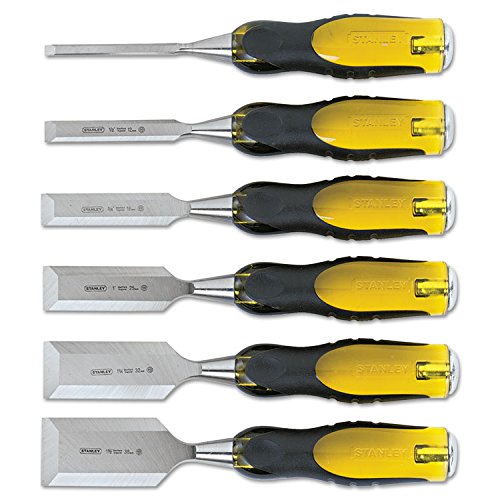
Stanley 16-971 FatMax Thru-Tang Chisel Set
One tang runs from the cutting edge through to the strike cap, so impact travels along steel instead of a glued joint. That layout is why these keep working through subfloor and formwork removal. Chrome carbon sits softer than joinery steel, trading edge life for chip resistance.
Pros
- Thru-tang build takes sustained hammer abuse
- Softer edge survives fasteners and grit
- Polymer handles shrug off drops onto concrete
Cons
- Wants sharpening more often in hardwood
- Only four widths in the set

DEWALT DWHT16063 4-Piece Wood Chisel Set
Four widths cover what carpenters reach for daily, each capped with steel at the handle end. Reinforced side strike zones let you tap sideways to clean a mortise wall without wrecking the grip. Snap-on guards ship in the box, which matters when chisels ride loose beside drill bits.
Pros
- End cap and side strike zones both reinforced
- Guards protect edges inside a tool bag
- Stocked widely, so singles are easy to replace
Cons
- No 3/8 inch width for narrow hinge work
- Backs need lapping before clean paring

Bahco 424P-S6 6-Piece Bevel Edge Chisel Set
Six metric widths from 6 mm to 32 mm line up with European door hardware and shallow rebates. Bahco caps the bi-material handle so a mallet or a light hammer both work. At 32 mm, the widest blade pares a full hinge leaf mortise in a single pass.
Pros
- 32 mm blade clears hinge mortises in one cut
- Six widths span fine and general trim tasks
- Thin side bevels fit acute corners
Cons
- Metric only, with no imperial equivalents
- Handles run slimmer than the Irwin grips
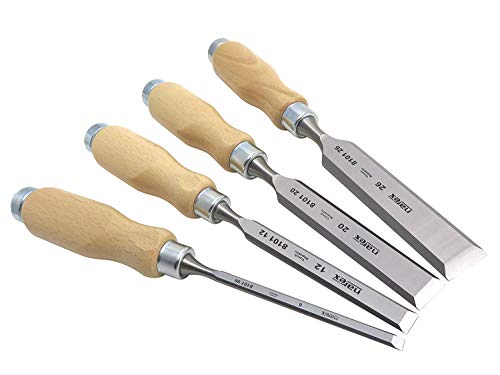
Narex 863010 4-Piece Bevel Edge Chisel Set
Chrome manganese steel at about 59 HRC gives these more edge life than most entry level site sets. Lacquered hornbeam handles wear a steel hoop, so mallet blows land safely on the ferrule. Grind quality varies blade to blade, and owners report flattening the backs before the first job.
Pros
- Edge life approaches premium joinery sets
- Hooped handles accept regular mallet use
- Light in the hand for long paring sessions
Cons
- Backs arrive uneven and need lapping
- Lacquered wood slips once hands are wet

Stanley 16-791 Sweetheart 750 Socket Chisel Set
Socket construction seats a hornbeam handle inside a steel cone, a pattern cabinet shops have used for a century. Chrome carbon steel hardened near 60 HRC slices oak and maple end grain cleanly. Handles work loose over months, though a tap on the bench reseats the taper.
Pros
- Replaceable handles keep a good blade in service
- Holds a fine edge through oak and maple
- Balance favours controlled two hand paring
Cons
- Socket handles loosen under heavy hammer work
- Wrong tool for demolition or nail contact
How to pick the right one
What to look for in a job site chisel set Two details decide whether a chisel lives past its first month. Start with the strike surface: a steel cap or a thru-tang stops a hammer from splitting the handle. Then read the hardness figure, quoted in HRC. Site sets sit near 57 to 59 HRC, so an edge deforms rather than chipping on grit and fasteners. Joinery steel runs 61 HRC and above, cutting cleaner but chipping the moment it meets a nail. Size spread matters third, since a missing width sends you back to a utility knife.
Chisel sizes that earn space in the bag Four widths carry the bulk of carpentry work. Use 1/4 inch for strike plates and narrow mortises, 1/2 inch for general cleanup, 3/4 inch for hinge leaves and 1 inch for door edge paring. Anyone hanging doors weekly should add 1-1/4 inch, because it spans a full hinge mortise in one cut. Metric sets map closely enough: 6 mm, 12 mm, 20 mm and 26 mm land beside those imperial sizes, and you pare to a pencil line anyway.
Best chisels for trim work vs demolition Finish carpenters cut end grain repeatedly in clean stock, so hardness pays. Narex Richter at roughly 62 HRC keeps slicing long after a site set has gone dull. Demolition reverses the maths entirely. Hidden nails and screws snap hard edges, which is why the Stanley FatMax thru-tang with softer chrome carbon steel outlasts better steel in that role. Framing crews sit between the two, and the Irwin MS500 covers that middle ground. Keeping a beater set alongside a trim set saves grinding one edge back into shape every week.
How to sharpen chisels on site A factory bevel is a starting point, not a working edge. Lap the first inch of the back flat, then hone a 25 degree primary bevel. Add a 30 degree micro bevel for site duty, which takes about twenty seconds to refresh. Keep a credit card sized diamond plate in the bag instead of walking back to a bench grinder. Hone while the chisel still cuts, since a rolled edge needs three times the strokes to recover.
How they compare
| # | Model | Sizes | Best for | Score | Price |
|---|---|---|---|---|---|
| 1 | Irwin Marples MS500 ProTouch 6-Piece Chisel Set | 1/4, 3/8, 1/2, 3/4, 1, 1-1/4 in | Best overall | 9.4 | Check price |
| 2 | Narex Richter 4-Piece Bevel Edge Chisel Set | 6, 12, 20, 26 mm | Best for fine joinery | 9.2 | Check price |
| 3 | Stanley 16-971 FatMax Thru-Tang Chisel Set | 1/4, 1/2, 3/4, 1 in | Best for demolition | 9.0 | Check price |
| 4 | DEWALT DWHT16063 4-Piece Wood Chisel Set | 1/4, 1/2, 3/4, 1 in | Best value | 8.8 | Check price |
| 5 | Bahco 424P-S6 6-Piece Bevel Edge Chisel Set | 6, 10, 12, 18, 25, 32 mm | Best for trim and door work | 8.6 | Check price |
| 6 | Narex 863010 4-Piece Bevel Edge Chisel Set | 6, 12, 20, 26 mm | Best budget | 8.3 | Check price |
| 7 | Stanley 16-791 Sweetheart 750 Socket Chisel Set | 1/4, 1/2, 3/4, 1 in | Best for hardwood paring | 8.0 | Check price |
Common questions
What are the best chisels for contractors?
Irwin Marples MS500 ProTouch is the broadest choice, because its steel strike cap tolerates a framing hammer and six widths handle hinges, jambs and mortises without a second set.
Can you hit a wood chisel with a steel hammer?
Only when the handle has a steel strike cap or thru-tang construction, as on the Irwin, DEWALT and Stanley FatMax sets. Hooped wooden handles want a mallet, and socket chisels take light taps only.
Which chisel size gets used most in carpentry?
3/4 inch sees the heaviest use, since it matches common hinge leaf widths and still drops inside a standard door mortise. Many carpenters buy a spare 3/4 inch before adding any new width.
How often should site chisels be sharpened?
Hone whenever the edge stops slicing end grain cleanly, which during framing can mean twice a day. Softer site steel dulls quicker but recovers in under a minute on a diamond plate.
Are cryogenically treated chisels worth it?
For trim, cabinetry and repeated hardwood mortises, yes. Narex Richter blades near 62 HRC hold an edge noticeably longer. Around fasteners or demolition, that same hardness turns into chipped corners.
Bevel edge vs firmer chisels: what is the difference?
Bevel edge blades taper at the sides, letting them reach into dovetails and inside corners. Firmer chisels keep a rectangular section for strength, which suits heavy chopping but cannot clean an acute corner.
Do new chisel sets arrive sharp enough to use?
Rarely. Most ship with a ground bevel and no polish, and owners report flattening the back first. Narex Richter is the exception, since its backs come ground flat from the factory.
Is a metric chisel set a problem for imperial work?
Not in practice. A 12 mm blade falls between 15/32 and 1/2 inch, close enough for mortising because you cut to a marked line rather than to a blade width.
What is the best budget chisel set for a contractor?
Narex 863010 delivers the best edge life in the budget tier, at about 59 HRC with hooped hornbeam handles. Plan on lapping the backs, and keep the set away from wet hands.
Which chisels work for hanging doors?
A blade wide enough to span the hinge leaf saves passes. Bahco 424P-S6 tops out at 32 mm and Irwin includes 1-1/4 inch, both clearing a full mortise in one cut.
The bottom line
Irwin Marples MS500 ProTouch takes the recommendation for general contracting, on the strength of a steel strike cap, six widths and grips that work through damp gloves. Finish carpenters cutting joinery daily should step up to Narex Richter and keep it off anything with fasteners in it. Subfloor and formwork crews want the Stanley FatMax thru-tang instead, since a split handle costs more downtime than a dull edge.
Jake Monroe
Jake worked as a residential contractor for over a decade before shifting to full-time writing. He evaluates power tools, hand tools and workshop gear through the lens of someone who has actually used them on job sites, not just read the box.