Clay or Cast Iron Chiminea: Which One Lasts Longer?
Blue Rooster Alto Chiminea leads this ranking because its tall neck pulls smoke above seated head height. Deeco Aztec Allure Cast Iron Chiminea is the durability pick, since cast iron shrugs off thermal shock. Sunnydaze Steel Chiminea with Wood Grate is the light, low upkeep value choice.
Blue Rooster Alto Chiminea offers the best mix of draw and forward heat for a patio people actually sit around. Owners who refuse to baby their equipment should pick the Deeco Aztec Allure in cast iron, while the Sunnydaze steel model suits anyone who wants something light enough to move under shelter.
Material drives every trade off here, and the traditional clay look that attracts buyers is also the version that cracks after a skipped seasoning or a hard freeze. We compared chimney heights, published dimensions, fuel guidance, and the failure modes owners report most, then ranked each model on smoke handling and year round survival.
The best picks, ranked

Blue Rooster Alto Chiminea
Its tall neck is the whole argument, lifting smoke above the heads of seated guests instead of pushing it across the patio. Blue Rooster sells the Alto in clay and in cast aluminium, and the aluminium version cannot crack or rust. Heat radiates forward through the mouth, which suits a semicircle of chairs.
Pros
- Smoke clears above seated head height
- Cast aluminium version resists cracking and rust
- Traditional profile without generic build quality
Cons
- Costs more than generic models
- Clay version demands careful seasoning
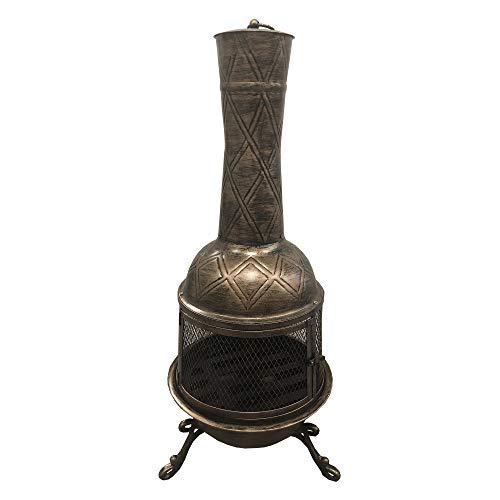
Deeco Aztec Allure Cast Iron Chiminea
Cast iron absorbs thermal abuse that would split clay, so you can light a full fire on a freezing evening without a warm up routine. A spark screen and a stand come included, keeping embers contained and the base off the paving. Ownership means fitting a cover and repainting with high temperature paint when rust spots appear.
Pros
- No cracking risk from thermal shock
- Keeps radiating heat after the fire burns down
- Included stand protects the patio surface
Cons
- Heavy and awkward to reposition
- Rusts without a cover and upkeep
Blue Rooster Casita Chiminea
Same construction as the Alto, scaled down for balconies and compact courtyards where a full size unit would dominate. Heat output scales with the firebox, so it warms three or four people rather than a crowd. Quick warm up times suit short evenings when nobody wants to wait an hour for comfort.
Pros
- Fits genuinely small outdoor spaces
- Reaches useful heat quickly
- Matches the larger model’s build quality
Cons
- Too little heat for larger groups
- Small firebox needs frequent refuelling

Sunnydaze Steel Chiminea with Wood Grate
Steel keeps the weight far below clay or cast iron, so one person can move it under cover before rain arrives. An included grate raises the fuel for better airflow and a cleaner burn. Expect a lifespan of several seasons, because repeated hot fires gradually thin steel walls.
Pros
- Easy to move under shelter
- Grate improves airflow and burn quality
- Strong value at this size
Cons
- Steel eventually burns through
- Outer surface gets dangerously hot

Christopher Knight Home Cape Coral Chiminea
Finishes here are chosen to sit alongside outdoor furniture sets rather than to read as garden hardware. Draw and heat are respectable for evening gatherings, and a stand and screen come in the box. Owners report it performs best as an ambience piece rather than a primary heat source in cold months.
Pros
- Looks designed rather than utilitarian
- Adequate warmth for mild evenings
- Ships with stand and spark screen
Cons
- Weaker heat output than the leaders
- Finish needs protection from weather

Esschert Design Cast Iron Chiminea
Thick cast iron walls in a compact body bring the material’s durability to patios without room for a full size unit. Those walls keep releasing warmth long after the flames die. Refuelling comes often on a long evening, and a cover is mandatory to hold off surface rust.
Pros
- Cast iron durability in a small footprint
- Radiates warmth after the fire dies
- Stable, solid base
Cons
- Small firebox needs regular refuelling
- Heavy for its size

Barton Steel Chiminea Fire Pit
This is the lowest cost route to the chiminea shape, bolted together from thin gauge steel with a screen and simple stand. Occasional weekend fires suit it fine, though the thin walls limit its working life. Adding a grate to lift fuel off the base improves airflow noticeably, according to owner feedback.
Pros
- Cheapest option in this ranking
- Light and easy to store
- Assembles in minutes
Cons
- Thin steel limits lifespan
- Basic finish marks quickly
The lineup, side by side
| # | Model | Material | Best for | Score | Price |
|---|---|---|---|---|---|
| 1 | Blue Rooster Alto Chiminea | Clay or cast aluminium versions | Best overall | 9.4 | Check price |
| 2 | Deeco Aztec Allure Cast Iron Chiminea | Cast iron | Best durability | 9.2 | Check price |
| 3 | Blue Rooster Casita Chiminea | Clay or cast aluminium versions | Best for small patios | 9.0 | Check price |
| 4 | Sunnydaze Steel Chiminea with Wood Grate | Steel | Best value | 8.8 | Check price |
| 5 | Christopher Knight Home Cape Coral Chiminea | Metal construction | Best styling | 8.6 | Check price |
| 6 | Esschert Design Cast Iron Chiminea | Cast iron | Best small cast iron | 8.3 | Check price |
| 7 | Barton Steel Chiminea Fire Pit | Thin gauge steel | Best budget | 8.0 | Check price |
How to pick the right one
Which chiminea material is best: clay, cast iron, or steel? Clay gives the traditional look and a gentle radiant heat, but it must be seasoned with small fires and it cracks in freeze and thaw cycles. Cast iron survives any fire you build in it, at the cost of weight and a rust watch. Steel lands in the middle: light, affordable, and destined to thin out after years of hot burns. Cast aluminium, offered on the Blue Rooster models, avoids both cracking and rust. Match the material to the maintenance you will honestly do.
How does chimney height affect smoke? Draw is the reason a chiminea beats an open fire pit, and a taller, narrower neck creates more of it. Strong draw pulls smoke up the flue and releases it above head height. Short, wide chimneys on budget units behave like fire pits with decoration attached. Buyers whose main complaint is smoke should rank neck height above every cosmetic feature.
Where can you safely place a chiminea? Radiant heat travels downward as well as outward, cracking paving slabs and scorching timber decking. Always use the stand, and add a heat resistant pad on any wooden deck the manufacturer permits. Leave a clear couple of metres from walls, fences, and overhanging branches. Never relocate a unit while lit or warm, and let ash cool a full day before disposal.
What should you burn in a chiminea? Seasoned hardwood is the correct fuel in nearly every model. Green or wet wood makes heavy smoke, weak heat, and creosote deposits in the flue. Softwoods spit embers and burn out fast. Skip accelerants entirely, and check the manual before trying charcoal, because its concentrated heat can crack clay bodies that tolerate wood without complaint.
Good to know
Do I need to season a clay chiminea?
Yes. Light several small fires that warm the clay gradually before any full burn, following the maker’s instructions. Skipped seasoning is the leading cause of cracked new units, and the damage cannot be repaired.
Can a chiminea stay outside all winter?
Cast iron and steel manage under a fitted cover, provided rust gets treated. Clay needs covering and ideally a sheltered spot, because absorbed water expands in a freeze and splits the body.
Is a chiminea better than a fire pit?
For smoke control, yes: the chimney lifts smoke upward and the mouth directs heat forward. Fire pits win on all round warmth and how many people can gather close. Small patios and smoke sensitive neighbours favour the chiminea.
What can you burn in a chiminea?
Seasoned hardwood, and little else. Avoid green wood, treated or painted timber, and household rubbish. Consult the manual before charcoal, since its intense heat can damage clay.
Can you use a chiminea on a wooden deck?
Only with the stand, a heat resistant pad underneath, and explicit manufacturer approval. Downward radiant heat is significant, which is why many deck owners choose a metal unit on a tall stand.
How much heat does a chiminea give off?
Enough to warm a small group seated in front of the opening, where the heat is aimed. No chiminea heats a whole patio. Cast iron models hold their warmth longest after the fire fades.
How do you clean ash out of a chiminea?
Wait a full day until the ash is stone cold, then scoop it into a metal container with a metal shovel. A shallow ash bed can protect the base, but deep build up chokes airflow.
Why does my chiminea smoke so much?
Wet or unseasoned wood is the usual culprit, followed by starved airflow under the fuel and a cold flue. Raise the wood on a grate and start with a small kindling fire to warm the chimney, and the draw improves quickly.
Our take
Blue Rooster Alto Chiminea is the one to buy when smoke management matters, because its tall neck genuinely keeps the air clear where people sit. Deeco Aztec Allure suits owners willing to cover and repaint cast iron in exchange for near indestructibility. Whichever you pick, match the material to the upkeep you will actually do, since that decides how many seasons it survives.
Sierra Daniels
Sierra's background is in landscape design and nursery retail. She focuses on lawn and garden equipment, outdoor furniture and gear durability, weighing published specs against how materials actually hold up outside.