Sleeping Bags Sized Right for Kids on Camping Trips
TETON Sports Celsius Junior leads for its 20 F rating and durable stitching, making it the safest all-round choice. Coleman Kids 50 covers mild-weather trips at a lower outlay, and the REDCAMP Kids Sleeping Bag handles sleepovers and warm nights on the smallest budget.
TETON Sports Celsius Junior is the strongest all-round children’s sleeping bag, rated to around 20 F with room for several growth spurts. Coleman Kids 50 suits milder campground nights for less, and the REDCAMP Kids Sleeping Bag covers sleepovers and summer trips at the lowest cost.
Sizing makes this category harder than it looks. An oversized bag traps cold air pockets around a small body, and a wrong temperature rating leaves a child shivering or sweating. We compared manufacturer temperature ratings, stated fit lengths, packed size, fill type, and care instructions, weighed against what parents report after real trips.
Our top picks
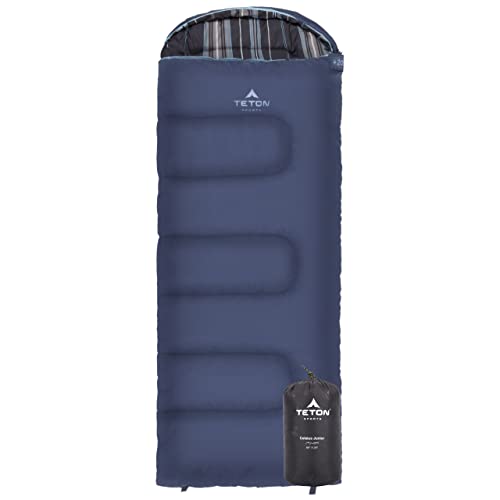
TETON Sports Celsius Junior Sleeping Bag
Rated to around 20 F, the Celsius Junior handles spring and fall campground nights that defeat most kids bags. A draft tube runs the length of the zipper to block cold air, and the plush lining goes straight into a washing machine after a muddy trip. Fit length of about 5 ft means one purchase covers several years of growth.
Pros
- 20 F rating covers three-season family camping
- Zipper draft tube blocks cold air leaks
- 5 ft fit length lasts through growth spurts
Cons
- Packs bulkier than summer-weight bags
- Extra insulation adds carrying weight

Coleman Kids 50 Sleeping Bag
Coleman rates the Kids 50 to around 50 F, which matches summer campgrounds and backyard nights. A snag-free zipper matters here because children operate it themselves in the dark. Roll-up is simple enough for a child to manage alone, and the synthetic fill survives regular machine washing.
Pros
- Snag-free zipper kids can work themselves
- Rolls up easily without adult help
- Longest fit length in this group at 5 ft 5 in
Cons
- 50 F rating limits it to mild nights
- Draft protection is basic around the zipper
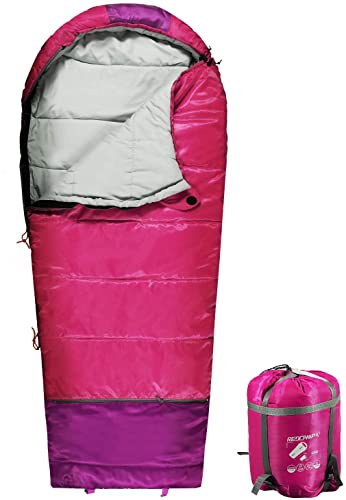
REDCAMP Kids Sleeping Bag
Weight is the REDCAMP’s calling card, since a child can carry it to a sleepover without help. Mild-night rating suits indoor use, warm-weather camping, and living room forts. Synthetic fill dries fast after a machine wash, so a spilled drink is a minor event rather than a ruined bag.
Pros
- Lowest cost entry into a first sleeping bag
- Light enough for a child to carry alone
- Washes and dries quickly after messy use
Cons
- No cold-weather capability at all
- 4 ft 6 in fit suits younger kids only
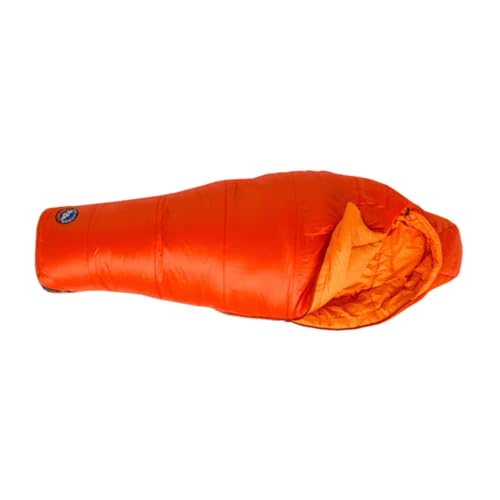
Big Agnes Little Red 15 Sleeping Bag
A 15 F rating makes the Little Red the coldest-capable bag in this group. Its integrated sleeve holds a sleeping pad in place, which solves the classic problem of a child sliding off the mat onto cold ground by 2 a.m. A soft chin guard stops the zipper scratching, a small detail parents mention often.
Pros
- 15 F rating handles shoulder-season cold
- Pad sleeve keeps kids on the mat all night
- Chin guard protects skin from the zipper
Cons
- Costs more than any other pick here
- Too warm for summer campgrounds

Kelty Woobie 30 Kids Sleeping Bag
Built for young hikers, the Woobie 30 compresses small enough to fit a child-sized pack. Its tapered, mummy-style cut cuts dead air space, so the 30 F rating comes without excess weight. Machine washability is unusual in a trail bag and makes it practical for everyday family use too.
Pros
- Compresses small for a child’s backpack
- Tapered cut delivers warmth without bulk
- Machine washable despite the trail focus
Cons
- Narrow cut feels tight on broader kids
- Mummy shape restricts sprawling sleepers

Morrison Outdoors Little Mo Wearable Sleeping Bag
Arm and leg openings turn the Little Mo into a sleeping bag a toddler wears rather than lies in, so it cannot be kicked off overnight. Down fill delivers a 20 F rating at a weight small children barely notice. This design solves the wriggling problem that defeats every conventional bag at this age.
Pros
- Wearable design cannot be kicked off
- Down fill keeps weight low for a 20 F rating
- Openings let toddlers move and settle naturally
Cons
- Outgrown once children pass the toddler stage
- Down fill needs gentler laundering than synthetic

Ohuhu Kids Sleeping Bag
An included carry bag makes the Ohuhu easy to transport to a friend’s house, which is its real job. Soft lining and bright colors get kids excited to use it, and the mild-night rating suits indoor floors and warm campgrounds. Machine washing keeps it fresh through weekly sleepover rotation.
Pros
- Carry bag included for easy transport
- Soft lining comfortable on hard floors
- Colors and patterns kids actually want to use
Cons
- Not suitable for cold outdoor nights
- Light construction wears under heavy outdoor use
How they compare
| # | Model | Temperature | Best for | Score | Price |
|---|---|---|---|---|---|
| 1 | TETON Sports Celsius Junior Sleeping Bag | Rated to around 20 F | Best overall | 9.4 | Check price |
| 2 | Coleman Kids 50 Sleeping Bag | Rated to around 50 F | Best value | 9.2 | Check price |
| 3 | REDCAMP Kids Sleeping Bag | Rated for mild nights | Best budget | 9.0 | Check price |
| 4 | Big Agnes Little Red 15 Sleeping Bag | Rated to around 15 F | Best for cold weather | 8.8 | Check price |
| 5 | Kelty Woobie 30 Kids Sleeping Bag | Rated to around 30 F | Best for backpacking | 8.6 | Check price |
| 6 | Morrison Outdoors Little Mo Wearable Sleeping Bag | Rated to around 20 F | Best for toddlers | 8.3 | Check price |
| 7 | Ohuhu Kids Sleeping Bag | Rated for mild nights | Best for sleepovers | 8.0 | Check price |
What to look for
What temperature rating do kids need in a sleeping bag? A bag’s rating is roughly the lowest temperature at which an average sleeper stays comfortable. Children run colder than adults overnight, so choose a rating warmer than the forecast lows. Summer campgrounds suit a 40 to 50 F bag like the Coleman Kids 50. Spring and fall trips call for 15 to 30 F, which is where the TETON Celsius Junior and Big Agnes Little Red operate.
How should a childrens sleeping bag fit? Empty space inside a bag fills with cold air, so a full adult bag actually makes a child colder. Check the stated fit length against your child’s height and allow modest growing room, not several feet. Youth bags in this group run from about 4 ft 6 in to 5 ft 5 in. Some designs add a cinch or fold-back foot section to shorten the interior temporarily.
Down vs synthetic: which fill is better for kids? Synthetic fill survives machine washing, dries fast, and keeps some insulating power when damp. Those traits fit family use, which is why six of these seven picks use it. Down packs more warmth per ounce, as the Little Mo shows, but it needs careful laundering and loses insulation when wet. Choose down only when weight matters and you accept the care routine.
Which sleeping bag suits camping, backpacking, or sleepovers? Car camping favors roomy rectangular bags because packed size does not matter and comfort does. Backpacking flips that, rewarding a compressible tapered design like the Kelty Woobie 30 that a child can carry. Sleepovers need only a light, washable bag with a carry sack, the Ohuhu’s specialty. For toddlers who wriggle out of anything, a wearable bag stays on regardless of movement.
Good to know
What temperature rating does a child’s sleeping bag need?
Pick a rating warmer than the coldest night you expect, because kids sleep colder than adults. A 40 to 50 F bag covers summer campgrounds. For spring and fall, choose something in the 15 to 30 F range.
Should I buy a bigger sleeping bag so my child grows into it?
Allow modest growing room, not a jump to adult sizing. Excess interior space creates cold air pockets the child’s body must heat, which makes a too-big bag colder than a fitted one.
Are down or synthetic sleeping bags better for kids?
Synthetic wins for most families. It machine washes, dries fast, and insulates even when damp. Down is lighter and warmer per ounce but demands careful cleaning, which fits toddler gear like the Little Mo more than everyday bags.
What is a wearable sleeping bag?
It is a bag with arm and leg openings that a toddler wears like a suit. Because it moves with the child, it cannot be kicked off, so warmth lasts the whole night.
Can kids sleeping bags go in the washing machine?
Most synthetic bags here, including the TETON, Coleman, REDCAMP, Kelty, and Ohuhu, are machine washable on a gentle cycle. Down-filled bags need the manufacturer’s specific wash guidance.
Which kids sleeping bag packs smallest for backpacking?
The Kelty Woobie 30 compresses smallest thanks to its tapered cut and trail focus. Rectangular and cold-rated bags pack noticeably bulkier, so check packed dimensions if your child carries their own gear.
Do kids need a sleeping pad under the bag?
For outdoor camping, yes. Ground contact drains warmth as fast as cold air does, and a pad blocks it. The Big Agnes Little Red adds a sleeve that locks the pad in place under the child.
What age range do youth sleeping bags cover?
Most youth bags fit roughly ages three to twelve depending on height, with fit lengths from about 4 ft 6 in to 5 ft 5 in in this group. Wearable designs target toddlers specifically. Match the listed length to your child’s height.
Is a kids sleeping bag worth it over a small adult bag?
Yes for warmth. A child-length bag leaves less empty air to heat, so the same fill keeps a child warmer. Youth bags also cost less and weigh less than adult equivalents.
Our pick
TETON Sports Celsius Junior earns the top spot by covering three seasons with one 20 F bag that survives machine washing and years of growth. Coleman Kids 50 handles summer trips and sleepovers for less, and the REDCAMP keeps a first sleeping bag affordable. Match the temperature rating to your real trips before anything else.
Rachel Simmons
Rachel previously worked in child-product retail and brings a practical, detail-first eye to gear reviews, focusing on safety standards, ease of use and the fine print that matters most for new caregivers.