How to Pick a Chef Knife That Feels Right in Hand
Victorinox’s Fibrox Pro 8-Inch fits the most home cooks, cutting well and sharpening easily at a modest cost. Wusthof’s Classic 8-Inch is the forged German workhorse built for decades, and the Mac Knife Professional MTH-80 delivers the thin, keen edge Japanese steel is known for.
One knife can do nearly everything, and for most cooks that knife is the Victorinox Fibrox Pro 8-Inch. Buyers wanting a forged blade for the long haul should choose the Wusthof Classic 8-Inch. For a thinner, sharper Japanese style edge, the Mac Knife Professional MTH-80 leads this group.
Specification sheets hide what matters most in a chef knife: thickness behind the edge, blade curvature and how the handle sits in a pinch grip. We compared steel composition, factory edge angles, profiles, weight and balance, then checked what owners report about edge retention and sharpening effort.
The top picks, ranked

Victorinox Fibrox Pro 8-Inch Chef’s Knife
Professional kitchens buy this stamped Swiss knife by the box, and home cooks get the same value. It sharpens quickly, weighs little and costs so little that hard use carries no anxiety. Wet hands grip the textured Fibrox handle securely through long prep sessions.
Pros
- Light and easy to control
- Sharpens fast with basic skill
- Handle stays grippy when wet
Cons
- Plain looks next to forged knives
- Thin blade lacks heft for dense squash
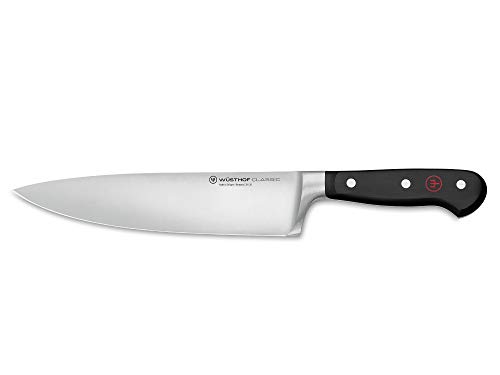
Wusthof Classic 8-Inch Chef’s Knife
Forged from a single billet with a full bolster and tang, the Classic is the reference German chef knife. Its curved belly suits rocking cuts, and the blade’s weight helps push through dense vegetables. Owners report decades of service with routine honing, which is where the cost is recovered.
Pros
- Forged full tang build lasts decades
- Curved belly suits rocking cuts
- Balanced, comfortable handle
Cons
- Heavier than Japanese rivals
- Full bolster complicates heel sharpening

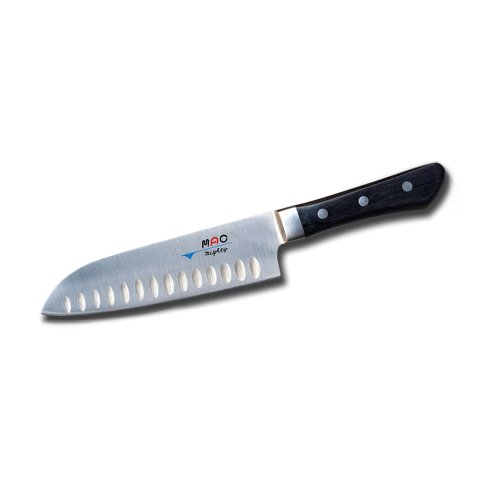
Mac Knife Professional Hollow Edge Chef’s Knife MTH-80
Thinner behind the edge than any German blade here, the MTH-80 glides through produce with little resistance. Hollow ground dimples release wet slices instead of dragging them. Harder steel holds sharpness longer but chips more easily, so it wants a wood or plastic board and careful hands.
Pros
- Exceptionally low cutting resistance
- Dimples reduce food sticking
- Long edge retention between sharpenings
Cons
- Hard steel chips under abuse
- Sharpening demands proper technique

Mercer Culinary Genesis 8-Inch Chef’s Knife
Culinary schools issue the Genesis for a reason: forged construction, a full tang and a grippy Santoprene handle at a fraction of premium German cost. In hand it feels closer to a Wusthof than to a stamped budget knife. Finish is plainer than premium brands, while the performance gap stays small.
Pros
- Forged full tang at a modest cost
- Non slip Santoprene handle
- Good weight for general prep
Cons
- Fit and finish trail premium brands
- Edge retention behind harder steels

Zwilling J.A. Henckels Pro 8-Inch Chef’s Knife
Half bolster design leaves the entire edge usable and makes heel sharpening easy, a genuine fix for the classic German bolster problem. A flatter curve favors push cutting over rocking. Substantial weight gives a planted, confident feel that suits larger hands best.
Pros
- Whole edge stays usable and sharpenable
- Solid, planted feel on the board
- Consistent factory edge
Cons
- Weight tires hands in long sessions
- Handle favors larger grips

Global G-2 8-Inch Chef’s Knife
One continuous piece of CROMOVA 18 stainless forms blade and handle, leaving no seam to trap food. Sand fills the hollow handle to tune balance, and the whole knife weighs far less than German rivals. Handle feel divides cooks sharply, so try the smooth dimpled steel before committing.
Pros
- Seamless build is easy to sanitize
- Light and nimble in hand
- Distinctive neutral balance
Cons
- Steel handle feels slippery to some
- Polarizing grip shape

Shun Classic 8-Inch Chef’s Knife
A VG-MAX core clad in layered Damascus steel gives the Shun Classic its keen edge and rippled finish. Light weight and an acute angle suit precise slicing of fish, herbs and vegetables. Twisting cuts or contact with bone can chip the hard edge, so reserve it for board work.
Pros
- Extremely sharp out of the box
- Precise and light for fine slicing
- Attractive layered Damascus finish
Cons
- Edge chips with rough treatment
- D shaped handle favors right handers
What matters most
German vs Japanese chef knives: what actually differs? Steel hardness and edge geometry separate the two schools. German blades run softer with a wider edge angle, so they forgive abuse and sharpen easily at home. Japanese blades run harder and thinner, cutting with less force but chipping more readily. Your care habits should decide, not prestige.
What blade profile matches your cutting style? Watch yourself chop an onion. If the tip stays planted while the handle rocks, a curved German belly like the Wusthof suits you. If you push and pull the whole blade through food, a flatter Japanese profile like the Mac works with your motion instead of fighting it.
How important is handle fit on a chef knife? More important than steel specification, for most cooks. A handle that pinches during a pinch grip gets avoided no matter how sharp the blade is. Hand sizes vary widely, so hold a candidate knife in a pinch grip on the blade before buying whenever possible.
How do you keep a chef knife sharp? Hone every few sessions with a steel to realign the edge, then sharpen on a whetstone or guided system when honing stops restoring bite. Softer German steel sharpens faster, while harder Japanese steel holds longer but needs finer stones. Owners often report learning to sharpen helped more than upgrading the knife.
How they stack up
| # | Model | Steel | Best for | Score | Price |
|---|---|---|---|---|---|
| 1 | Victorinox Fibrox Pro 8-Inch Chef’s Knife | Stamped high carbon stainless | Best overall | 9.4 | Check price |
| 2 | Wusthof Classic 8-Inch Chef’s Knife | Forged high carbon stainless | Best German workhorse | 9.2 | Check price |
| 3 | Mac Knife Professional Hollow Edge Chef’s Knife MTH-80 | Hardened Japanese stainless | Best Japanese style | 9.0 | Check price |
| 4 | Mercer Culinary Genesis 8-Inch Chef’s Knife | Forged high carbon stainless | Best value forged knife | 8.7 | Check price |
| 5 | Zwilling J.A. Henckels Pro 8-Inch Chef’s Knife | Forged high carbon stainless | Best for board control | 8.5 | Check price |
| 6 | Global G-2 8-Inch Chef’s Knife | CROMOVA 18 stainless, one piece | Best lightweight design | 8.2 | Check price |
| 7 | Shun Classic 8-Inch Chef’s Knife | VG-MAX core with Damascus cladding | Best for fine work | 8.0 | Check price |
Common questions
What size chef knife should I buy?
Eight inches serves most home cooks, long enough for cabbage yet manageable on a standard board. Ten inch blades speed up high volume prep. Six inch knives suit smaller hands and tight kitchens.
Do expensive chef knives cut better?
Only up to a point. Stepping from a bargain blade to a well made one improves cutting clearly. Beyond that level, money buys finish, materials and craftsmanship more than performance, as the inexpensive Victorinox demonstrates.
How often should you sharpen a chef knife?
Sharpen a few times a year for typical home use, whenever honing no longer restores the bite. Hone every few sessions in between. Harder Japanese steel stretches the interval but takes more skill when sharpening day arrives.
Can chef knives go in the dishwasher?
No. Detergent dulls edges, heat stresses handles, and contact with other items chips blades. Hand wash, dry immediately, and store on a magnetic strip or in a block.
What cutting board is best for chef knives?
Wood or soft plastic. Glass, stone and ceramic boards blunt an edge within minutes and can chip hard Japanese steel. End grain wood treats edges most gently.
Is a full tang knife better?
For heavy work and long term durability, yes, since the steel runs the handle’s full length. Stamped partial tang knives like the Victorinox still handle everyday prep excellently.
Should I buy a knife set or a single good knife?
Buy individually. A chef knife, a paring knife and a serrated bread knife cover nearly every task, and three good blades beat a block of mediocre ones at the same spend.
Can you use a chef knife to cut through bone?
Never. Bone, frozen food and hard rinds chip and roll edges, with hard Japanese steel most at risk. Reach for a cleaver or boning knife instead.
Which chef knife is best for beginners?
Victorinox’s Fibrox Pro is the standard answer. It costs little, forgives mistakes, sharpens easily and reveals your cutting preferences before you invest in forged German or Japanese steel.
The bottom line
Most kitchens are best served by the Victorinox Fibrox Pro 8-Inch, which delivers professional cutting performance at a fraction of forged knife cost. Cooks committed for the long term should pick the Wusthof Classic for durable German heft, or the Mac MTH-80 for a keener Japanese edge with careful ownership.
Dana Whitfield
Dana spent eight years buying and merchandising for a regional kitchenware retailer before moving into editorial work. She has handled thousands of SKUs across cookware, small appliances and kitchen organization, and focuses on the practical differences that matter once a product is actually in daily use.