Which Cedar Raised Garden Bed Will Last Longest?
Greenes Fence RCP2-4X4 suits most gardens, pairing untreated cedar with dovetail corners that need no tools. Outdoor Essentials 4 ft x 8 ft opens up 32 square feet for a real vegetable rotation. CedarCraft Elevated Cedar Planter lifts soil to 30 inches for gardeners who cannot kneel.
Greenes Fence RCP2-4X4 fits most home gardens. Untreated cedar boards drop into notched posts, so nothing needs screwing. Four feet square keeps the middle within arm’s reach from either side. Depth is the catch at 10.5 inches, which rules out parsnips.
Cedar kits photograph alike, yet lumber thickness and joinery decide how many winters they survive. We compared species, wall thickness, assembly method, footprint and usable soil depth across current Amazon listings. Owner reports of boards bowing after two or three seasons shaped the final order.
The shortlist, ranked

Greenes Fence RCP2-4X4 Cedar Raised Garden Bed
Notched corner posts take the boards, so the frame goes up on hand pressure alone. Greenes mills untreated North American cedar, which keeps preservatives away from edible roots. Stacking kits add a second course later when root crops need more room.
Pros
- Dovetail corners lock without screws or brackets
- Untreated cedar avoids preservatives near food crops
- Stacking kits raise wall height for root vegetables
Cons
- 10.5 inch soil depth stops short for parsnips
- Four foot sides bow outward without a centre brace

Outdoor Essentials 4 ft x 8 ft Cedar Raised Garden Bed
Thirty two square feet handles a family rotation: a tomato row, a bean teepee and a salad block. Western red cedar boards slot into routed corner posts, which stops the long sides splaying. Budget roughly a cubic yard of mix, so bulk delivery beats hauling bags.
Pros
- Largest growing area here at 32 square feet
- Routed posts hold the long sides square
- Weathers to silver grey with no sealing needed
Cons
- Filling takes roughly a cubic yard of soil
- Eight foot sides want a mid-span brace by year two
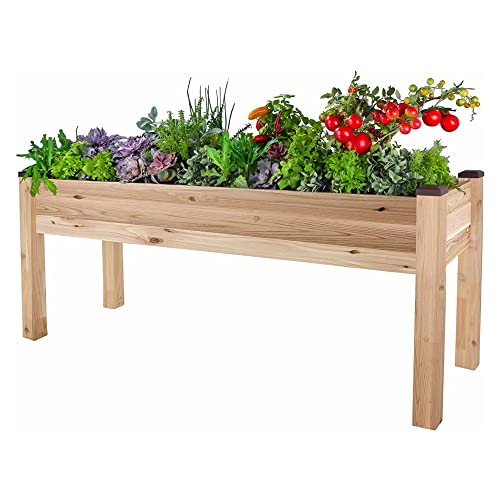
CedarCraft Elevated Cedar Planter
Soil sits at 30 inches, so sowing and weeding happen standing up. A 49 by 23 inch trough holds about 10 inches of mix, enough for lettuce, herbs, bush beans and determinate tomatoes. Slatted western red cedar forms the floor and lets water drain straight through.
Pros
- Standing height removes kneeling and bending
- Slatted floor drains without a separate tray
- Legs put soil above rabbit and slug reach
Cons
- Ten inches of soil dries faster than any ground bed
- Racking sets in unless the legs sit on level paving

Gronomics Elevated Cedar Garden Bed
Interlocking joints tap together by hand, leaving no screws to strip or rust. Unfinished western red cedar puts no coating between soil and food. Boards run thicker than most elevated planters, and owners report the joinery staying tight across several seasons.
Pros
- Hand-fit joints leave no hardware to corrode
- Thicker stock than most elevated planters
- Breaks down flat for winter storage
Cons
- Base slats need a liner to hold fine potting mix
- Swollen joints resist separating after heavy rain

Greenes Fence Cedar Tiered Raised Garden Bed
Three stepped levels split mint, thyme and strawberries into separate root zones. Each tier runs about 7 inches deep, which favours shallow rooted herbs over root vegetables. Dovetail joinery carries over from the flat Greenes beds, so assembly still needs no tools.
Pros
- Separate tiers stop mint running through the bed
- Stepped shape puts all three levels in sun
- Narrow footprint fits along a path or fence
Cons
- Seven inch tiers rule out carrots and potatoes
- Top tier dries out well before the bottom

Jumbl Raised Canadian Cedar Garden Bed
A removable liner and drilled holes send runoff downward rather than across decking. Canadian cedar planks build a 48 by 24 inch trough standing roughly 30 inches tall. Contained drainage matters on a patio, where nothing underneath can soak the water away.
Pros
- Liner keeps wet soil off decking boards
- Supplied screws and pilot holes speed the build
- Working height suits terraces and balcony rails
Cons
- Blocked holes let the liner hold standing water
- Planks run thinner than the Gronomics trough
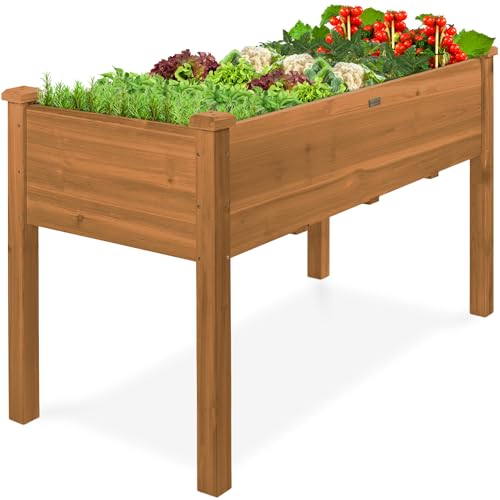
Best Choice Products Elevated Cedar Planter Box
Under the trough sits a shelf for seed trays, gloves and a watering can. Cedar legs carry the 48 by 24 inch box at around 30 inches. Boards measure thinner than the premium elevated planters, so expect visible weathering by the third season.
Pros
- Lower shelf stores tools where space is tight
- Lightest elevated planter here to reposition empty
- Pre-drilled holes cut assembly time
Cons
- Thin boards cup and grey faster than thick cedar
- Legs flex once the trough is fully watered
What to look for
What to look for in a cedar raised bed Four attributes decide how a cedar kit ages: board thickness, joinery, soil depth and species. Thicker stock resists cupping, which is why budget planters grey and warp first. Dovetail and interlocking corners hold without hardware, so nothing rusts into the grain. Depth sets your crop list long before floor area does. Check whether the maker sells stacking kits, because that is the cheap route to more root room later.
Cedar vs pine and pressure treated lumber Cedar heartwood carries natural oils called thujaplicins, and decay fungi struggle to digest them. Pine sitting in wet soil gives out within two to four seasons unless treated. Treated lumber lasts, yet it brings a preservative many gardeners refuse near edible roots. Expect seven to ten years from untreated cedar, shifting with rainfall and board thickness. Left bare, the surface fades to silver grey while structural strength stays put.
How deep and how wide to build Four feet is the practical width, since most adults reach two feet in from each side. Length costs nothing in reach, so 4 by 8 feet supports a proper rotation beside a fence. Ten inches of soil covers lettuce, bush beans, herbs and determinate tomatoes. Carrots, parsnips and maincrop potatoes want 18 inches or more. Volume climbs fast: a 4 by 8 bed at 10.5 inches swallows about a cubic yard of mix.
Ground beds vs elevated planters Ground beds hold far more soil, which steadies both temperature and moisture. Roots also travel below the frame into the earth beneath, so wall height understates real depth. Elevated troughs cap out near 10 inches and want water most summer days. Access is where they win, because 30 inches ends kneeling and lifts crops above rabbits. Balconies and paved yards force the elevated choice anyway. Anyone with open soil should start with a ground bed, then add one elevated trough for herbs by the door.
The lineup, side by side
| # | Model | Footprint | Best for | Score | Price |
|---|---|---|---|---|---|
| 1 | Greenes Fence RCP2-4X4 Cedar Raised Garden Bed | 4 x 4 ft | Best overall | 9.4 | Check price |
| 2 | Outdoor Essentials 4 ft x 8 ft Cedar Raised Garden Bed | 4 x 8 ft | Best for a full vegetable plot | 9.2 | Check price |
| 3 | CedarCraft Elevated Cedar Planter | 49 x 23 in | Best elevated for back comfort | 9.0 | Check price |
| 4 | Gronomics Elevated Cedar Garden Bed | 48 x 24 in | Best tool-free assembly | 8.8 | Check price |
| 5 | Greenes Fence Cedar Tiered Raised Garden Bed | 3 stepped levels | Best for herbs and strawberries | 8.6 | Check price |
| 6 | Jumbl Raised Canadian Cedar Garden Bed | 48 x 24 in | Best for patios and balconies | 8.3 | Check price |
| 7 | Best Choice Products Elevated Cedar Planter Box | 48 x 24 in | Best budget elevated | 8.0 | Check price |
Frequently asked questions
How long do cedar raised garden beds last?
Seven to ten years is typical for untreated cedar in soil contact. Rainfall and board thickness move that range either way. Thin budget planks cup and grey years before thicker Gronomics stock does.
How deep should a raised garden bed be for vegetables?
Ten to eleven inches handles lettuce, herbs, beans and bush tomatoes. Root crops such as carrots, parsnips and potatoes want 18 inches. Greenes stacking kits add that depth without buying a second bed.
Is cedar safe for growing vegetables?
Untreated cedar adds no preservative to the soil, which is why it dominates edible beds. Rot resistance comes from oils inside the heartwood instead. Keep pressure treated lumber out of food growing frames.
Do you need to line a cedar raised bed?
Ground beds need nothing on the sides, and landscape fabric across the base blocks perennial weeds. Slatted elevated floors do need a liner to hold fine potting mix. Clear drainage holes matter more than the liner itself.
Which cedar raised bed works on a patio or balcony?
Jumbl Raised Canadian Cedar Garden Bed ships with a liner and drilled holes, so runoff stays off decking. Standing height also spares your knees. Weigh a wet, filled trough against the balcony load limit first.
Elevated planter vs ground bed: which should you choose?
Ground beds win on soil volume, watering intervals and root depth. Elevated planters win on access and pest exclusion. Gardeners with open soil usually end up wanting one of each rather than one or the other.
How much soil does a 4 by 8 foot raised bed need?
About a cubic yard at 10.5 inches deep. Blend topsoil, compost and bark fines instead of filling with pure compost, which slumps and compacts. Bulk delivery beats bagged mix at that volume.
Should you seal or stain a cedar raised bed?
Sealing slows the colour fade on outer faces only. Decay begins on the buried inner face, which no coating reaches. Most gardeners leave cedar bare and accept the silver grey.
Can you stack cedar raised beds for more depth?
Greenes sells stacking kits that add a second course of boards to the same footprint. Doubling wall height roughly doubles the soil you must buy. Brace long sides once walls pass a foot, since wet soil pushes outward.
What is the best cedar raised garden bed for beginners?
Greenes Fence RCP2-4X4 assembles without tools and stays reachable from both sides. Four by four feet also keeps the first soil order manageable. Add a stacking kit later if root crops become the goal.
Our pick
Buy the Greenes Fence RCP2-4X4 first. Untreated cedar, tool-free dovetails and a reachable 4 by 4 footprint answer what most home plots actually need. Gardeners planting a full rotation should size up to the Outdoor Essentials 4 ft x 8 ft and order soil in bulk. Anyone who cannot kneel should skip ground beds entirely and start at 30 inches with the CedarCraft Elevated Cedar Planter.
Sierra Daniels
Sierra's background is in landscape design and nursery retail. She focuses on lawn and garden equipment, outdoor furniture and gear durability, weighing published specs against how materials actually hold up outside.