8 Cat Trees That Hold Up to Daily Climbing
Vesper’s V-High Base tops this list for its wide, weighted base and living-room-friendly finish. Multi-cat households get more usable levels from the 67-inch Feandrea tower. Small apartments fit better with the compact TRIXIE Baza, which offers a post and single perch without crowding a room.
Vesper’s V-High Base suits most cats and rooms, the 67-inch Feandrea tower gives multi-cat homes the most separate perches, and the compact TRIXIE Baza works best in tight apartments.
Stability, height, base weight and scratching material all have to match a cat’s size and climbing habits, plus the floor space available. We compared these seven towers on base stability, usable height, scratching surface and value, drawing on manufacturer specifications and wear patterns owners report over time.
The best picks, ranked
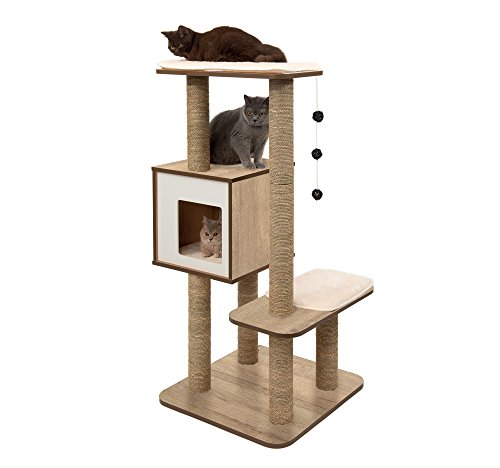
Vesper V-High Base Cat Tree
A wide, weighted base keeps this 52-inch tower solid even under larger cats. Walnut-look finish blends into a living room better than most carpet-covered towers. Memory-foam cushions add real comfort, though the price runs higher than basic plush models.
Pros
- Wide weighted base stays solid under bigger cats
- Walnut finish suits furnished living rooms
- Memory-foam cushions add genuine comfort
Cons
- Costs more than carpet-covered towers
- Moderate height limits appeal for serious climbers

Feandrea 67-Inch Multi-Level Cat Tree
Multiple perches, a hammock and covered condos give several cats separate space on one 67-inch footprint. Sisal-wrapped posts hold up well under repeated scratching, according to owner reports. The large size calls for careful measuring, and wall anchoring is smart for active climbers.
Pros
- Many separate levels suit multi-cat homes
- Tall perches attract cats that like to survey a room
- Durable sisal-wrapped scratching posts
Cons
- Large footprint requires planning before purchase
- Anchoring recommended for very active climbers

Yaheetech Multi-Level Cat Tree
This 54-inch tower packs multiple perches, a condo and dangling toys into a modest price. Owners describe it as a solid starter tree, though the plush covering wears sooner than sisal-heavy models. Assembly instructions are straightforward, with clearly labeled parts.
Pros
- Lots of structure for the price
- Condo and perches give real lounging space
- Simple assembly with labeled parts
Cons
- Plush covering wears faster than sisal
- Base could be heavier for very active cats

Frisco 72-Inch Cat Tree
Six feet of stacked perches and a top condo give serious climbers real vertical territory. Owners report cats gravitate toward the highest platforms for the vantage point. Wall anchoring is worth the extra step at this height, and assembly takes patience given the number of parts.
Pros
- Tall design rewards cats that love to climb
- Multiple high perches for vantage points
- Roomy top condo for resting
Cons
- Height benefits from wall anchoring for safety
- Assembly takes longer than shorter towers
Go Pet Club Cat Tree
A tall frame packed with perches, condos and posts spreads a lot of shared territory across one tower. Busy multi-cat households benefit most from the sheer number of spots to claim. The faux-fur finish looks more functional than stylish, but the usable space per price is hard to match.
Pros
- Generous number of perches and condos
- Well suited to busy multi-cat homes
- Competitive price for the amount of space
Cons
- Utilitarian appearance over decorative styling
- Plush covering feels basic compared to premium models

Amazon Basics Cat Tree Tower
A straightforward 40-inch tower covers scratching, perching and a small condo without extra frills. Tool-free assembly steps make setup quick for a first-time buyer. It runs shorter than most rivals here, so it suits a single cat or kitten rather than a dedicated climber.
Pros
- Quick, tool-free assembly
- Consistent build quality for the price
- Good scale for a single cat or kitten
Cons
- Shorter than most towers in this list
- Fewer extra features than premium models

TRIXIE Baza Scratching Post Tower
A compact footprint gives a single cat a post to scratch and a perch to rest on without crowding a small room. Studio apartments and tight corners suit this tower better than open living rooms. It is not built for multiple cats, but for one cat in limited space it strikes a sensible balance.
Pros
- Small footprint fits tight rooms
- Neat, simple design with fewer visible parts
- Easy to tuck into a corner
Cons
- Limited to a single cat
- Only one perch, unlike taller multi-level towers
How they compare
| # | Model | Height | Best for | Score | Price |
|---|---|---|---|---|---|
| 1 | Vesper V-High Base Cat Tree | About 52 inches | Best overall | 9.4 | Check price |
| 2 | Feandrea 67-Inch Multi-Level Cat Tree | About 67 inches | Best for multi-cat homes | 9.2 | Check price |
| 3 | Yaheetech Multi-Level Cat Tree | About 54 inches | Best budget tower | 9.0 | Check price |
| 4 | Frisco 72-Inch Cat Tree | About 72 inches | Best for tall spaces | 8.7 | Check price |
| 5 | Go Pet Club Cat Tree | About 62 inches | Best large multi-perch tower | 8.5 | Check price |
| 6 | Amazon Basics Cat Tree Tower | About 40 inches | Best simple starter tree | 8.3 | Check price |
| 7 | TRIXIE Baza Scratching Post Tower | About 45 inches | Best for small apartments | 8.1 | Check price |
How to pick the right one
Why a stable base matters more than height A wobbly tower stops getting used, because cats will not commit to a perch that shifts underfoot. Look for a wide base with real weight behind it, not just a tall frame. Taller towers benefit from wall anchoring, which removes tip risk and lets even heavy cats use the top perches confidently.
Matching height and layout to your cat’s age and energy Young, athletic cats gravitate toward height and multiple stacked perches. Older or heavier cats generally prefer lower, roomier platforms that are easy to reach without a big jump. In multi-cat homes, separate levels reduce squabbles by giving each cat its own claimed space. Measure ceiling clearance and floor area before buying, since towers read smaller online than they do in a room.
Sisal or plush: which scratching surface holds up? Sisal rope and sisal fabric resist claws far longer than carpet or plush covering. Plush feels cozy and looks soft, but it shows wear and sheds sooner under regular use. Many towers combine both, putting sisal where claws land and plush where cats rest.
Space, style and assembly before you commit A cat tree lives in a room full time, so a finish that matches existing furniture makes it easier to place somewhere a cat actually wants to be, often near a window. Compact towers suit apartments, while large multi-condo designs need real floor space. Check the assembly instructions too, since most towers ship flat and unclear steps add frustration on setup day.
Good to know
How tall should a cat tree be?
It depends on the cat and the room, but many cats enjoy towers between four and six feet for the vantage point and territory. Older or less agile cats often do better on lower, easy-to-reach perches, so match height to climbing ability and ceiling clearance.
What’s the best scratching material for a cat tree?
Sisal rope and sisal fabric outlast carpet or plush by a wide margin. Many quality trees combine sisal posts with soft plush perches, giving a tough surface for claws and a comfortable spot to rest afterward.
How do you stop a cat tree from tipping over?
Choose a tower with a wide, weighted base sized to match its height, then anchor taller trees to a wall bracket. That step removes tip risk entirely, which owners report makes a real difference for active climbers and heavier cats.
Will my cat actually use a cat tree?
Most cats take to a tree faster when it sits near a window or in a room the household actually uses. A little catnip or a favorite toy on the perches speeds up adoption, and stability matters since cats avoid platforms that wobble.
Are tall cat trees safe for older cats?
Tall trees work for senior cats when they include lower, easy-to-reach perches and stable steps between levels. For cats with mobility issues, a shorter tower with wide, closely spaced platforms is usually the safer, more comfortable option.
How many perches does a multi-cat home need?
More separate perches and levels generally reduce competition, so multi-cat households benefit from a tall tower with several distinct platforms and condos. Giving each cat its own claimed space helps prevent squabbles over the best spot.
How do you clean a cat tree?
Vacuum perches and posts regularly to remove loose hair, and spot-clean plush sections with a pet-safe cleaner. Brushing sisal removes loose fibers, and regular cleaning keeps the tower appealing to a cat as well as tidy for the room.
Where’s the best place to put a cat tree?
Cats usually prefer a tower placed near a window with a view, or in a room where the household spends time, so they can watch activity while feeling secure. Cramped corners with no sightlines see far less use.
Does a cat tree stop cats from scratching furniture?
A sturdy sisal post or tree placed near the furniture a cat targets gives it a better option, and rewarding its use reinforces the habit. Cats scratch to stretch and mark territory, so an appealing, stable alternative works better than scolding.
Our pick
Vesper’s V-High Base offers the strongest mix of stability, comfort and living-room-friendly styling, which is why it tops this list. Choose the 67-inch Feandrea tower for a household with several cats needing separate perches, or the compact TRIXIE Baza when floor space is tight and there’s only one cat to plan around.
Olivia Hartley
Olivia spent several years working at an animal shelter and a pet-supply retailer before joining the editorial team. She researches pet gear with an emphasis on safety, comfort and the fine print that owners often miss.

