Which Cast Iron Cleaner Removes Carbon, Not Seasoning
The Ringer chainmail scrubber wins overall. Its 316L stainless rings lift carbon while bonded seasoning stays put. Lodge Pan Scrapers cost the least and pop off flat baked-on patches. Rust is a separate job, and the Lodge Rust Eraser handles it before you re-season.
The Ringer chainmail scrubber is the cast iron cleaner to buy first. Anyone cooking on a seasoned skillet several times a week gets the most from it, because stainless rings shear off carbon and stuck egg in a few passes. Rust is its blind spot, and that job needs an abrasive block instead.
Cast iron confuses people because the layer worth keeping looks a lot like the residue worth removing. We compared ring sizes, steel grades, abrasive types and the surfaces each maker lists as safe. Owner reports about chipped enamel, stripped seasoning and rust returning after a wash decided the running order.
How to choose
What to look for in a cast iron cleaner Match the tool to the residue, not to the pan. Loose carbon and stuck protein come away with stainless chainmail. Flat baked-on patches yield faster to a polycarbonate scraper edge. Oxidation needs an abrasive block, and nothing else on this list will touch it. Ring size decides the rest: large rings clear a 12 inch skillet quickly, while the small rings on a Knapp Made scrubber protect enamel and thin seasoning.
How to clean a skillet without stripping the seasoning Seasoning is polymerised oil bonded into the iron, not a film sitting on top of it. That layer survives warm water, chainmail and modern dish soap without complaint. Overnight soaking is what genuinely destroys it, closely followed by steel wool. Wash while the pan still holds heat, rinse, then dry it over a burner for about two minutes. Standing water starts rust far more often than detergent does.
Enamelled, vintage and newly seasoned pans Enamel chips under coarse mail, so reach for small ring chainmail or a plastic scraper instead. Simmering water in the pan for a few minutes loosens baked stains before any scrubbing starts. Vintage iron poses the opposite problem, since a pebbled casting lets big rings glide over the low spots. Fine mesh drops into that texture and clears what larger rings miss. Pans seasoned within the past month deserve the gentlest tool you own.
Fixing rust, then re-seasoning properly Surface rust usually costs twenty minutes rather than a weekend. Rub the patch dry with a Lodge Rust Eraser until grey metal shows through. Rinse the grit away and dry the pan over heat before oxidation restarts. While it is still warm, wipe a very thin film of Crisbee or plain oil across every surface, handle included. Buff that back until the pan looks nearly dry, then heat it until smoking stops. Thick coats are the classic mistake and cure tacky enough to flake off months later.
The best picks, ranked

The Ringer Original Stainless Steel Cast Iron Cleaner
Interlocking 316L stainless rings flex around a skillet wall, so pressure stays even across the curve. Warm water and a few passes lift stuck egg and carbon, with no soap or steel wool involved. At roughly 8 by 6 inches it clears a 12 inch pan quickly, then goes straight in the dishwasher.
Pros
- Strips residue while polymerised seasoning stays intact
- 316L grade shrugs off rust in a wet sink
- Panel covers a 12 inch skillet in a few passes
Cons
- Does nothing against rust that has already formed
- Bunched rings can pinch fingers mid scrub

Amagabeli Chainmail Scrubber with Pan Scraper
Two jobs arrive in one purchase here: mail for loose carbon, a silicone scraper for hardened patches. Ring layout copies pricier mail, and the 8 by 6 inch panel still spans a flat top griddle. Welds sit slightly proud of the rings, so keep this one away from enamel and glass lids.
Pros
- Scraper and chainmail come together in one pack
- Panel reaches across large skillets and griddles
- Rinses clear under a hot tap
Cons
- Ring edges feel rougher than premium mail
- Enamelled cookware needs a gentler tool

Knapp Made CM Scrubber Small Ring Chainmail Scrubber
Small rings spread the load over more contact points, which is exactly why thin seasoning survives them. Finer mesh drops into the texture of rough vintage castings, where large rings skate across the high spots. Its compact panel suits saucepans and 8 to 10 inch skillets better than a griddle.
Pros
- Kind to new or thin seasoning layers
- Fine mesh clears pitted vintage surfaces
- Listed as safe on enamelled cast iron
Cons
- Small panel slows the work on a 12 inch pan
- Sticky residue clogs the tight mesh

Lodge Rust Eraser
Chainmail cannot touch oxidation, and this abrasive block can. Rub the rusted patch dry, brush the dust away, then wash and re-season the pan the same day. Seasoning comes off alongside the rust, so file this under restoration rather than washing up.
Pros
- Fastest route back to bare grey metal
- Needs no vinegar soak or chemicals
- Handles grill grates and dutch oven rims
Cons
- Takes the seasoning off with the oxidation
- Leaves grit that must be rinsed before cooking
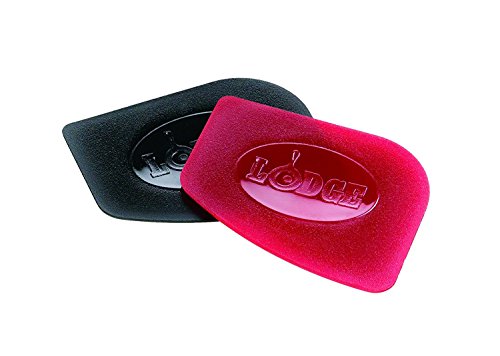
Lodge Pan Scrapers 2-Pack
Moulded polycarbonate edges shear off baked-on food that a cloth only pushes around. Rounded corners follow the radius where a skillet wall meets its base, while the straight edge suits griddles. Flat surfaces are the limit here, so a pitted vintage pan still wants chainmail.
Pros
- Cheapest tool here that genuinely works
- Curved corner matches a standard skillet radius
- Polycarbonate will not cut polymerised seasoning
Cons
- Cannot reach into pitted or rough castings
- Edges round off after months of heavy scraping

Full Circle Tenacious C Cast Iron Brush
Residue releases most easily while a pan is still warm, and a bamboo handle keeps knuckles clear at that moment. Stiff bristles sweep loose carbon, while a moulded scraper edge on the head deals with crusted spots. Welded-on carbon defeats bristles, so park the worst pans for mail.
Pros
- Long handle allows cleaning a warm skillet
- Scraper edge is built into the brush head
- Soft enough for a freshly seasoned surface
Cons
- Bristles give up on heavy baked carbon
- Bamboo splits if it is stored damp
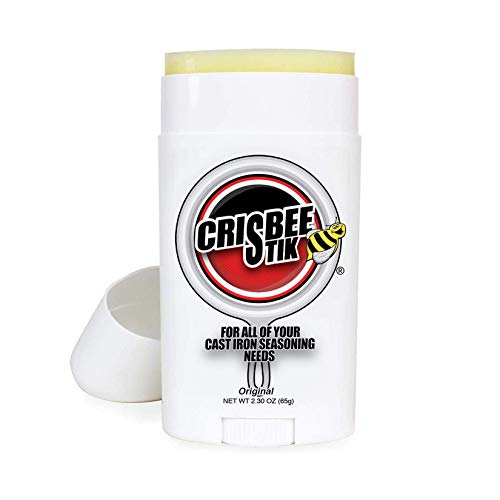
Crisbee Stik Cast Iron and Carbon Steel Seasoning
Bare iron can flash rust within hours in a humid kitchen, so cleaning only gets you halfway. Solid oils and beeswax rub straight onto a warm pan, with nothing to pour and no drips down the handle. Wipe the film back until the surface reads almost dry, then heat until the smoke stops.
Pros
- No measuring or dripping compared with bottled oil
- One stick covers many seasoning rounds
- Also suits carbon steel woks and grill grates
Cons
- Heavy coats cure sticky and flake later
- Cleans nothing on its own
How they stack up
| # | Model | Material | Best for | Score | Price |
|---|---|---|---|---|---|
| 1 | The Ringer Original Stainless Steel Cast Iron Cleaner | 316L stainless steel chainmail | Best overall | 9.4 | Check price |
| 2 | Amagabeli Chainmail Scrubber with Pan Scraper | Stainless steel chainmail | Best value | 9.2 | Check price |
| 3 | Knapp Made CM Scrubber Small Ring Chainmail Scrubber | Stainless steel chainmail, small rings | Best for delicate surfaces | 9.0 | Check price |
| 4 | Lodge Rust Eraser | Abrasive rubber block | Best for rust removal | 8.8 | Check price |
| 5 | Lodge Pan Scrapers 2-Pack | Polycarbonate | Best budget | 8.6 | Check price |
| 6 | Full Circle Tenacious C Cast Iron Brush | Bamboo, long grip | Best for hot pans | 8.3 | Check price |
| 7 | Crisbee Stik Cast Iron and Carbon Steel Seasoning | Solid seasoning stick | Best for re-seasoning | 8.0 | Check price |
Common questions
What is the best cast iron cleaner for everyday cooking?
Stainless chainmail does the most work with the least risk, and The Ringer is the safest default. A polycarbonate scraper clears flat baked-on spots faster. Keep an abrasive block aside for rust, which mail cannot shift.
Can you use soap on a cast iron skillet?
Yes. Modern dish soap does not dissolve polymerised seasoning. Long soaking and harsh degreasers cause the damage people blame on soap. Wash quickly, rinse, then dry the pan over heat.
Is chainmail safe on seasoned cast iron?
On an established pan, yes. Rings catch loose carbon and slide over the bonded layer underneath. Seasoning laid down in the last few weeks does better with a small ring scrubber such as the Knapp Made. Steel wool is the tool to avoid, since it cuts straight through.
Chainmail vs pan scraper: which one do you need?
Chainmail covers a whole pan and reaches into rough castings. A scraper targets one stubborn patch and costs a fraction as much. Many owners run the scraper first, then finish with mail.
How do you remove rust from a cast iron pan?
Rub the rusted area dry with a block such as the Lodge Rust Eraser until bare metal appears. Rinse off the dust, dry the pan over a burner, then apply a thin seasoning coat. Deep pitting takes several passes.
How do you clean enamelled cast iron without chipping it?
Small ring chainmail or a plastic scraper is the safe pairing. Coarse mail and metal tools chip the glaze at the rim first. Simmer water in the pot to lift stains before scrubbing anything.
Can cast iron go in the dishwasher?
No. Detergent plus a long wet cycle strips seasoning and starts rust within a day. Chainmail scrubbers themselves are dishwasher safe, which is a separate question. Wash pans by hand and dry them with heat.
Which cleaner works best on a rough vintage skillet?
Older sand-cast pans have a pebbled surface that large rings barely touch. Fine mesh mail reaches the low points between those bumps. Expect to re-season afterwards if the pan has been sitting unused.
How often should you re-season a cast iron pan?
Only when food starts sticking or the surface turns dull and patchy. Everyday cooking with fat maintains the layer by itself. Plan on a full re-season after rust removal or any deep clean.
Our pick
Buy The Ringer if you own one skillet and want one tool, since it clears a pan in seconds and leaves the seasoning untouched. Cooks who mainly deal with flat baked-on spots can spend far less and get most of the result from the Lodge Pan Scrapers two-pack. Reviving a rusted or inherited pan is a different project: start with the Lodge Rust Eraser, finish with a Crisbee Stik, and keep chainmail out of it until the seasoning is rebuilt.
Dana Whitfield
Dana spent eight years buying and merchandising for a regional kitchenware retailer before moving into editorial work. She has handled thousands of SKUs across cookware, small appliances and kitchen organization, and focuses on the practical differences that matter once a product is actually in daily use.
You might also need

Vollum 8 Liter Insulated Beverage Dispenser Review: Does the Spigot Design Deliver?

JH JIEMEI HOME Ramen Bowl Set Review: Real Donburi Bowls or Just Pretty Glaze?

Breaking Bad Los Pollos Hermanos Apron Review: Fun Fan Gear, But How Functional?