Slim Card Holder Wallets That Actually Carry Everything
The Ridge Wallet leads with a flexible aluminum or titanium plate design that expands as cards are added. Secrid’s Slimwallet offers a one-click card mechanism for fast access. Bellroy’s Slim Sleeve keeps a leather feel with a real bill compartment.
The Ridge Wallet is the best overall pick for anyone replacing a bulky bifold with something genuinely slim. Two metal plates, available in aluminum, titanium, or carbon fiber, hold cards together with an elastic band that flexes as the stack grows. Folded cash needs a separate money clip accessory, since the core design is built around cards rather than bills.
Card holder wallets differ mainly in how they present cards, what they are made from, and how much cash they realistically hold alongside cards. We compared card capacity, material durability, and cash accommodation across current listings, then weighed owner feedback on long-term wear and mechanism reliability.
How to pick the right one
What problem a card holder wallet is actually solving A traditional bifold wallet carries unused space for a coin pocket or extra slots that most people never fill. Card holder wallets strip that down to just what regularly gets carried: a handful of cards and sometimes a little cash. The main differences between models come down to material, how cards are accessed, and whether cash fits in at all. Deciding how much cash needs to travel with the cards narrows the list significantly before comparing anything else.
Metal plates versus leather construction Metal-plate wallets, like aluminum or titanium designs, resist scuffing and wear better than leather over years of daily pocket use. Leather wallets develop a worn-in patina that some owners prefer aesthetically, though they need more care than bare metal. Full-grain leather tends to outlast cheaper leather blends, so checking the material grade matters if durability is a priority. Neither material is inherently better; the choice mostly comes down to look and feel preference.
Card access mechanisms: slots, fans, and eject buttons Basic slide-in slots are the simplest and most reliable, with nothing mechanical to eventually wear out or fail. Fan-style mechanisms, like Secrid’s one-click design, spread the entire card stack at once for fast access but add moving parts. Quick-eject designs push just the top card forward, which suits someone who mainly reaches for one or two cards regularly. More mechanical complexity generally means a higher price and a small amount of long-term reliability risk.
Making room for cash when it is still needed Pure card-only designs, like metal-plate wallets, usually need a separate money clip or fold of cash tucked loosely alongside the cards. Wallets built with an actual bill compartment, like Bellroy’s Slim Sleeve, solve this more cleanly for anyone who still uses cash regularly. Front-pocket slim wallets often split the difference, fitting a few folded bills without the bulk of a full bifold. Anyone going fully cashless can ignore this factor and focus purely on card capacity and material.
The shortlist, ranked

Ridge Wallet
Two rigid plates sandwich a stack of cards together with an elastic band that stretches as more cards are added, keeping the wallet slim at low card counts and still functional when fuller. Metal construction resists the wear a fabric or leather wallet shows over years of pocket use. A separate money clip attachment is needed for anyone who regularly carries folded bills.
Pros
- Metal plates resist long-term wear
- Elastic band adjusts to card count
- RFID-blocking by design
Cons
- No built-in space for folded cash
- Rigid plates feel less flexible than leather
Secrid Slimwallet
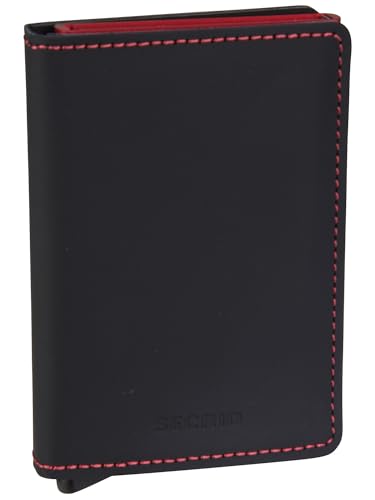
A single click of a side button fans out the entire card stack at once, rather than pulling cards out individually from a slot. At about 14mm thick, it holds up to 12 cards along with a few folded bills in an exterior pocket. The mechanical card holder sits inside a leather exterior for a more traditional wallet look than bare metal designs.
Pros
- One-click mechanism speeds up card access
- Leather exterior feels more traditional
- Holds folded bills alongside cards
Cons
- Mechanical parts add complexity over simple sleeves
- Pricier than basic leather card holders

Bellroy Slim Sleeve Card Holder
Bellroy designs this sleeve to stay thin while still including a proper full-length bill compartment, unlike many card-only holders. Leather construction develops a worn-in look over time rather than showing scuffs like bare metal. Anyone who regularly carries cash alongside cards gets more practical use from this than a metal plate design.
Pros
- Proper full-length bill compartment
- Leather develops a worn-in look over time
- Thin profile despite cash storage
Cons
- Leather needs more care than metal or synthetic materials
- Card capacity lower than dedicated card-only designs

Vaultskin Manhattan Slim Front Pocket Wallet
A slim front-pocket profile is built specifically to disappear into a pants pocket without the bulk of a traditional bifold. RFID-blocking lining protects contactless cards without an additional insert. Leather exterior keeps a classic look while staying thinner than most back-pocket wallets.
Pros
- Slim profile suits front-pocket carry
- RFID-blocking lining built in
- Classic leather exterior
Cons
- Less rigid structure than metal-plate wallets
- Moderate capacity compared to dedicated card holders

Andar Charlie Minimalist Card Holder
Full-grain leather with simple slot construction keeps this holder close to the smallest possible footprint while still looking like a traditional wallet. It skips any mechanical card fan in favor of basic slide-in slots. Owners who prioritize a classic leather look over gadget-style mechanisms tend to prefer this simplicity.
Pros
- Full-grain leather ages well over time
- Very slim slot-based construction
- Classic traditional wallet look
Cons
- Lower card capacity than mechanical designs
- No cash storage built in

Ekster Senate Card Holder
A quick-eject mechanism pushes the top card forward for fast access, similar in spirit to Secrid’s fan but in a slimmer aluminum-backed profile. It is built to accept an optional tracker card for locating a lost wallet. Owners who want a tech feature alongside basic card storage choose this over purely analog designs.
Pros
- Quick-eject mechanism for the top card
- Supports an optional tracker card
- Slim aluminum-backed construction
Cons
- Tracker card sold separately
- Mechanism adds moving parts versus simple slots

Trayvax Contour 2.0 Wallet
A metal frame and heavier overall construction are built to survive rougher outdoor and work conditions than a typical slim leather or aluminum wallet. A locking closure keeps cards and cash secure during physical activity. The tradeoff is more bulk and weight than most minimalist competitors on this list.
Pros
- Rugged build survives rough conditions
- Locking closure adds security during activity
- Holds cards and cash together securely
Cons
- Bulkier than most minimalist wallets
- Heavier to carry than aluminum or leather-only designs
Side by side
| # | Model | Material | Best for | Score | Price |
|---|---|---|---|---|---|
| 1 | Ridge Wallet | Aluminum, titanium, or carbon fiber plates | Best overall | 9.3 | Check price |
| 2 | Secrid Slimwallet | Approximately 14mm | Best card mechanism | 9.0 | Check price |
| 3 | Bellroy Slim Sleeve Card Holder | Leather | Best slim leather with real cash space | 8.8 | Check price |
| 4 | Vaultskin Manhattan Slim Front Pocket Wallet | Leather exterior, RFID-blocking lining | Best for front-pocket carry | 8.5 | Check price |
| 5 | Andar Charlie Minimalist Card Holder | Full-grain leather | Best classic leather minimalism | 8.3 | Check price |
| 6 | Ekster Senate Card Holder | Leather exterior, aluminum card plate | Best tech-forward features | 8.1 | Check price |
| 7 | Trayvax Contour 2.0 Wallet | Metal frame with leather panel | Best rugged and outdoor durability | 8.0 | Check price |
Good to know
What is the difference between a card holder and a traditional wallet?
A card holder strips away unused space like coin pockets, keeping only card slots and sometimes minimal cash storage.
Do metal card holder wallets block RFID skimming?
Most metal-plate designs naturally block RFID signals, and many leather alternatives add a separate blocking lining for the same effect.
How many cards can a slim card holder actually fit?
It varies by design, but most hold between 4 and 12 cards depending on mechanism and material thickness.
Can I carry cash in a minimalist card holder?
Some designs include a bill compartment or exterior pocket; pure metal-plate wallets often need a separate clip for folded cash.
Is leather or metal better for a card holder wallet?
Metal resists wear longer, while leather develops a worn-in look that some prefer; durability needs and style both matter here.
What is a card ejector mechanism?
It is a button or lever that pushes a card, or the whole stack, forward for faster access than pulling from a slot.
Are rugged metal-frame wallets worth the extra bulk?
They are worth it for outdoor or physical work conditions where a slim leather wallet would wear out faster.
Can a card holder wallet include a tracker?
Some models are built to accept an optional tracker card, usually sold separately from the wallet itself.
How thin can a card holder wallet realistically get?
Slot-based leather or metal designs without a mechanical fan tend to be the thinnest, often under 10mm with a few cards.
Do minimalist card holders fit in a front pocket comfortably?
Yes, that is one of their main selling points over a traditional back-pocket bifold wallet.
Our take
The Ridge Wallet is the right pick for most people switching from a bulky bifold who want long-term durability over a traditional leather feel. Anyone who regularly carries cash alongside cards should pick the Bellroy Slim Sleeve instead, since it builds in a real bill compartment without adding much bulk. Someone working in rough outdoor conditions should skip the slimmest options entirely and choose the Trayvax Contour 2.0 for its rugged build.
Priya Nathan
Priya spent years in apparel buying and merchandising for a multi-brand retailer before moving into editorial work. She focuses on fit, fabric and construction quality across everyday wear, activewear and accessories, reading past marketing copy to the details that affect how a garment actually wears and holds up.