Which Car Subwoofer Actually Fits Your Trunk
Kicker CompR 12 inch leads for drivers building a loud, dedicated bass setup with a separate amp. Pioneer TS-WX130EA suits owners who want bass without losing trunk space to a box. Rockville RWK10A fits first time installers who need sub, amp and wiring in one kit.
Kicker’s CompR 12 inch subwoofer is the choice for drivers building a loud, dedicated bass setup paired with their own amplifier and enclosure. Pioneer’s TS-WX130EA powered subwoofer suits owners who want noticeably more bass without giving up trunk space to a box. Rockville’s RWK10A complete kit works best for a first subwoofer install, since it bundles the sub, amp and wiring together.
Subwoofer shopping gets confusing fast because a bare driver, a powered all in one unit and a full kit solve different problems. We compared power handling, whether an enclosure or amp is required separately, physical size against typical trunk space, and how each option suits a first install versus a planned upgrade.
The top picks, ranked

Kicker CompR 40CWR124 12-Inch Subwoofer
Kicker’s CompR line uses a dual 4 ohm voice coil design that wires flexibly for different amplifier setups. The 12 inch driver handles substantial power in a properly sized sealed or ported box. It targets drivers who already plan to run a separate amplifier rather than a factory head unit alone.
Pros
- Strong output when paired with a matched amplifier
- Flexible wiring options from dual voice coils
- Durable surround for repeated heavy use
Cons
- Requires a separate box and amplifier
- Takes up real trunk space once boxed

Rockford Fosgate Prime R2SD4-12
Rockford Fosgate’s R2SD4-12 uses a shallow mount basket that needs less airspace than a standard depth 12 inch driver. That makes it a better fit for compact sealed boxes in smaller trunks or under truck seats. The dual 4 ohm coil still accepts a wide range of amplifier wiring configurations.
Pros
- Fits smaller sealed boxes than standard depth subs
- Good midbass punch for music heavy playlists
- Reputable brand with wide amp compatibility
Cons
- Still needs a separate enclosure and amp
- Shallow design trades some maximum output versus deep mount subs

JL Audio 12W0v3-4 Subwoofer
JL Audio’s W0v3 series targets accurate, controlled bass rather than maximum loudness at any cost. The 12 inch single 4 ohm driver works well in a modestly sized sealed enclosure for daily music listening. Owners moving from factory audio to a real system often start here before adding more drivers.
Pros
- Controlled, musical bass response
- Reliable build quality from an established brand
- Works well in a single sub sealed box setup
Cons
- Not the loudest option for bass heavy competition use
- Enclosure and amp both sold separately

Pioneer TS-WX130EA Powered Subwoofer
Pioneer’s TS-WX130EA packs a driver and amplifier into one slim enclosure that slides under a seat or into a small trunk corner. It wires directly into the factory speaker output, so no separate amp or RCA preamp connection is required. Built in level and crossover controls let owners dial in bass without a full install.
Pros
- No separate amplifier or large box needed
- Fits under a seat in most sedans
- Simple wiring without a dedicated RCA preamp output
Cons
- Less maximum output than a large component sub
- Not intended for competition level volume
Bazooka BTA10250 10-Inch Bass Tube
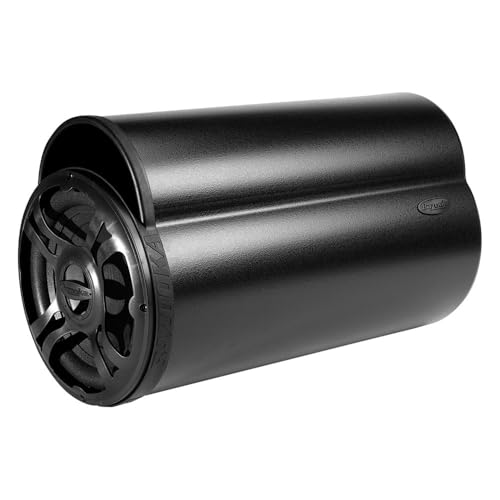
Bazooka’s bass tube design packs a 10 inch driver and amplifier into a cylindrical housing that sits along a trunk wall rather than taking up floor space. It wires to the factory speaker output like a powered sub, skipping a separate amp purchase. Compact car and hatchback owners often choose the tube shape over a square box.
Pros
- Tube shape clears more trunk floor space
- Self contained amp means simpler wiring
- Good fit for hatchbacks and compact sedans
Cons
- Less deep bass extension than a large sealed box sub
- Tube mounting hardware takes some trunk planning

Rockville RWK10A Subwoofer, Amp and Wire Kit
Rockville’s RWK10A bundles a 10 inch subwoofer, a matched mono amplifier and a complete wiring kit with power cable, RCA cables and fuse holder. Buying matched components removes the guesswork of pairing power handling to amplifier output. It suits a first subwoofer install more than an incremental system upgrade.
Pros
- Sub and amp are pre matched for power handling
- Wiring kit removes a separate purchase
- Straightforward path for a first time install
Cons
- Still requires a box, which is not included
- Less output ceiling than premium component subs
Kicker CompC 40CWCD124 12-Inch Subwoofer
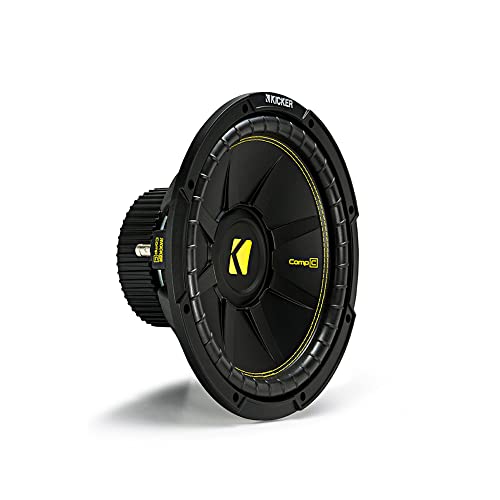
Kicker’s CompC series trims cost while keeping the same 12 inch dual 4 ohm format as the pricier CompR line. It suits drivers who want a noticeable step up from factory bass without spending on a premium driver. A simple sealed box and a modest amplifier are enough to get useful output.
Pros
- Lower cost than the CompR line
- Noticeable upgrade over factory bass
- Works with a modest power, budget friendly amp
Cons
- Less output headroom than premium component subs
- Box and amp still required separately
What to look for
What to look for in a car subwoofer Decide first whether you want a bare component driver, a powered all in one unit, or a complete kit, since each needs a different install. Power handling should roughly match your amplifier’s output, not exceed it by a wide margin. Voice coil configuration, single or dual, changes how the sub wires to your amp’s channels.
Component subs versus powered subwoofers A component driver like the Kicker CompR gives the highest output ceiling but needs a box and a separate amplifier. A powered unit like the Pioneer TS-WX130EA wires straight to the factory speaker output and skips both of those purchases. Drivers chasing maximum loudness lean component, while drivers who just want noticeably better bass lean powered.
Best for small trunks and compact cars Shallow mount drivers, like the Rockford Fosgate R2SD4-12, and tube style subs, like the Bazooka BTA10250, both trade some low end extension for a smaller footprint. Hatchbacks and small sedans benefit more from these shapes than from a deep, square sealed box built for a full size trunk.
First install versus a planned system upgrade A bundled kit like the Rockville RWK10A removes the guesswork of matching a driver to an amplifier for a first build. Owners planning to upgrade speakers and add a separate amp down the line often do better buying a component driver like the JL Audio W0v3 and matching the amp intentionally rather than relying on a bundle.
Side by side
| # | Model | Size | Best for | Score | Price |
|---|---|---|---|---|---|
| 1 | Kicker CompR 40CWR124 12-Inch Subwoofer | 12 inch driver | Best overall | 9.2 | Check price |
| 2 | Rockford Fosgate Prime R2SD4-12 | 12 inch shallow mount driver | Best for small sealed enclosures | 8.9 | Check price |
| 3 | JL Audio 12W0v3-4 Subwoofer | 12 inch driver | Best for sound quality | 9.0 | Check price |
| 4 | Pioneer TS-WX130EA Powered Subwoofer | Powered, self contained enclosure | Best for saving trunk space | 8.7 | Check price |
| 5 | Bazooka BTA10250 10-Inch Bass Tube | 10 inch driver in tube enclosure | Best for tight trunk space | 8.4 | Check price |
| 6 | Rockville RWK10A Subwoofer, Amp and Wire Kit | 10 inch driver included | Best complete kit for a first install | 8.5 | Check price |
| 7 | Kicker CompC 40CWCD124 12-Inch Subwoofer | 12 inch driver | Best budget | 8.2 | Check price |
Frequently asked questions
Do I need an amplifier for every car subwoofer?
Component subwoofers need a separate amplifier, but powered subwoofers like tube style or under seat units have the amp built in and wire directly to the factory speaker output.
What size subwoofer box do I need for a 12 inch sub?
Box volume varies by driver, and the subwoofer’s spec sheet or owner’s manual lists the manufacturer recommended sealed or ported volume in cubic feet, which you should follow rather than guess.
Can a powered subwoofer sound as good as a component sub and amp setup?
A powered subwoofer gets noticeably closer to factory bass improvement but generally will not match the maximum output of a well matched component driver, box and dedicated amplifier.
What is the difference between a single and dual voice coil subwoofer?
A dual voice coil sub has two separate coils that can be wired in series or parallel, giving more flexibility to match a specific amplifier’s impedance than a single voice coil driver.
How much trunk space does a 12 inch subwoofer box take up?
A sealed box for a single 12 inch driver commonly takes up somewhere around 1 to 1.5 cubic feet, which is a meaningful portion of a sedan trunk but still leaves room for luggage.
Is a bigger subwoofer always louder?
Not necessarily. Amplifier power, box tuning and the driver’s own efficiency all affect loudness as much as raw cone size, which is why a well matched 10 inch setup can outperform a mismatched 12 inch one.
Do bass tubes sound as good as square subwoofer boxes?
Tube enclosures generally trade some low end depth for a smaller footprint, so a square sealed or ported box of the right volume usually produces tighter, deeper bass for the same driver.
What gauge wire do I need to install a car subwoofer and amp?
Wire gauge depends on amplifier power and cable run length, and most kits like the Rockville RWK10A specify the correct power and ground gauge for the included amplifier.
Will adding a subwoofer drain my car battery faster?
A properly installed subwoofer and amp draw power only while playing audio with the engine running or accessory power on, and should not meaningfully affect battery life when wired correctly with a fuse.
The bottom line
The Kicker CompR 12 inch is the right call for anyone building a real bass system around a dedicated amplifier and box. Drivers who want more bass without sacrificing trunk space should choose the Pioneer TS-WX130EA powered subwoofer instead, since it skips the box entirely. First time installers who want one straightforward purchase will do best with the Rockville RWK10A kit rather than piecing components together themselves.
Tony Russo
Tony trained as an automotive technician and spent years in service and parts retail before moving into writing. He focuses on garage tools, car care products and accessories from a hands-on maintenance perspective.