7 Car Polishers That Cut Swirl Marks Without Damage
Griot’s Garage G9 leads for a long throw and low vibration that suits beginners and experienced detailers alike. DeWalt DWP849X brings rotary level power for oxidised paint. PORTER-CABLE 7424XP remains the forgiving budget pick most first timers reach for.
Griot’s Garage G9 stands out for most buyers, pairing a 15mm throw with steady, low vibration control. DeWalt DWP849X suits owners chasing serious correction on tired paint. PORTER-CABLE 7424XP remains the forgiving budget choice that beginners reach for first.
Throw length, motor amperage and handle design all change how a machine cuts, finishes and tires your wrist over a long session. We compared published specifications, stated throw and power ratings, and recurring owner feedback across seven machines spanning different budgets and skill levels. That comparison decided the order below, not marketing copy.
The top picks, ranked

Griot’s Garage G9 Random Orbital Polisher
A 15mm throw combines with a well balanced body that stays smooth even at higher speeds, according to owner reports. It corrects moderate defects with confidence, then finishes down cleanly afterward. Few machines feel this approachable for beginners while still satisfying detailers.
Pros
- Long 15mm throw covers panels quickly
- Low vibration eases hand fatigue
- Strong warranty reputation among owners
Cons
- Heavier than compact models
- Cord length falls short for larger garages

DeWalt DWP849X Variable Speed Polisher
This rotary style machine runs variable speed for owners chasing serious correction on tired, oxidised paint. A 12 amp motor and wide speed range give real control over cut depth. Rotary action demands more care than a dual action, so novices should approach it carefully.
Pros
- Ample power for heavy correction
- Wide variable speed dial
- Durable trigger with lock-on function
Cons
- Rotary action less forgiving for novices
- Heavier to hold overhead for long stretches

PORTER-CABLE 7424XP Dual Action Polisher
Countless beginners start with this machine, and its forgiving 8mm orbit explains why, since it rarely burns through paint. A wide aftermarket of pads and backing plates keeps it useful well past a first weekend of learning. Motor power stays modest compared with rivals here.
Pros
- Very forgiving for first time users
- Wide pad and plate ecosystem
- Affordable entry into paint correction
Cons
- Short throw slows large panel work
- Bogs down under heavy pad pressure

TORQ 10FX Random Orbital Polisher
Chemical Guys built this around simplicity, with a clear dial and grip that owners say builds confidence fast. It handles light to moderate swirls well, suiting anyone maintaining a daily driver. A smaller backing plate means more passes across a full car.
Pros
- Simple controls suit new users
- Comfortable rubberised grip
- Bundles well with pad kits
Cons
- Short throw limits work on heavy defects
- Smaller plate covers less area per pass

Adam’s Swirl Killer 15mm Mini Polisher
A 15mm throw fits inside a compact body here, which owners appreciate for pillars, bumpers and mirror caps where a full size machine feels clumsy. It works best as a second polisher rather than a sole tool. The small backing plate trades speed for reach.
Pros
- Long throw inside a small frame
- Reaches panels a full size machine misses
- Light enough for extended detail work
Cons
- Small plate slows work on large panels
- Works best paired with a full size unit
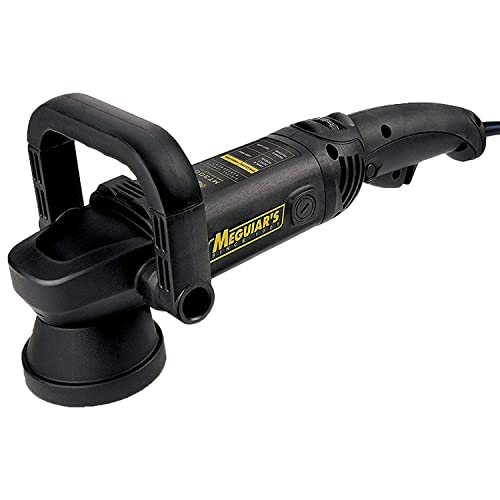
Meguiar’s MT300 Dual Action Polisher
A torque management circuit holds pad speed steady under pressure, which owners credit for even results across a panel. That consistency suits maintenance and light correction rather than deep defect removal. An 8mm throw keeps it in that lane deliberately.
Pros
- Steady speed under load
- Even, predictable finishing results
- Balanced body stays comfortable to hold
Cons
- Short throw limits deep defect removal
- Fewer bundled accessories than rivals

BLACK+DECKER WP900 Random Orbit Waxer
This is a light duty waxer rather than a correction machine, and the listing is upfront about that. Applying and buffing wax on already clean paint costs little and takes minimal effort. Throw and power both fall short of what swirl removal actually needs.
Pros
- Affordable option for wax application
- Light and simple to handle
- Buffs wax evenly across clean paint
Cons
- Not built for paint correction
- Underpowered for swirl removal
How to pick the right one
What does throw length actually change? Throw, or orbit, describes how far the pad travels with each rotation. Short 8mm throws stay forgiving and easy to control, which is why beginners favour them. Longer 15mm throws cover a panel faster and cut deeper defects when paired with the right pad. Match the throw to your paint condition rather than picking on power alone.
Pick a pad and product for the job, not just the machine A polisher performs only as well as the pad and liquid riding on it. Coarse cutting pads with compound tackle heavier oxidation, while soft finishing pads with a light polish restore gloss. Owners often credit results to pad choice more than the machine itself. Budget for a small pad set and test one panel before tackling the whole car.
Comfort decides how much of the car you actually finish A full detail can run for hours, so weight, grip texture and vibration quietly decide whether the last panels get the same care as the first. Low vibration bodies such as the G9 reduce hand fatigue over a long session. Compact units help in tight areas that strain a wrist. Corners get skipped once a machine tires you out.
Know whether you need correction or just waxing Not every buffer corrects paint. Dedicated waxers such as the WP900 spread and buff product, but cannot remove swirls no matter how long you run them. True dual action polishers with adequate power and throw can level real defects instead. Decide first whether the paint needs protecting or fixing, then buy accordingly.
How they stack up
| # | Model | Throw | Best for | Score | Price |
|---|---|---|---|---|---|
| 1 | Griot’s Garage G9 Random Orbital Polisher | 15 mm | Best overall | 9.4 | Check price |
| 2 | DeWalt DWP849X Variable Speed Polisher | 12 amp | Best for power | 9.2 | Check price |
| 3 | PORTER-CABLE 7424XP Dual Action Polisher | 8 mm | Best value | 9.0 | Check price |
| 4 | TORQ 10FX Random Orbital Polisher | 8 mm | Best for beginners | 8.8 | Check price |
| 5 | Adam’s Swirl Killer 15mm Mini Polisher | 15 mm | Best for tight spots | 8.6 | Check price |
| 6 | Meguiar’s MT300 Dual Action Polisher | 8 mm | Best for consistent finish | 8.4 | Check price |
| 7 | BLACK+DECKER WP900 Random Orbit Waxer | Random orbit | Best for waxing only | 8.0 | Check price |
Frequently asked questions
What is a dual action car polisher?
A dual action polisher spins the pad while also moving it in a small orbit, so the pad rotates and wobbles at once. That combined motion spreads heat and pressure, making it far harder to burn through paint than a straight rotary machine does.
Is a dual action polisher good for beginners?
Yes. The random orbital motion stays forgiving, rarely damaging paint even if you pause too long in one spot. Short throw models like the PORTER-CABLE 7424XP and TORQ 10FX are especially stable and predictable at moderate speeds.
What is the difference between an 8mm and 15mm throw?
An 8mm throw moves the pad a shorter distance each orbit, giving tighter control on curves. A 15mm throw covers more area per pass and cuts moderate defects faster. Beginners often prefer 8mm, while larger panels favour 15mm.
Do you need different pads for correcting and finishing?
Generally yes. Cutting pads paired with compound remove deeper swirls, while soft finishing pads with a light polish refine gloss and remove haze. Many owners keep at least one of each, switching based on how the paint responds.
Can a dual action polisher remove swirl marks?
A true dual action polisher with adequate power, the right pad and a suitable compound can reduce or remove many light to moderate swirls. Deeper scratches that catch a fingernail may not fully disappear, and results vary by clear coat.
Is a polisher the same as a waxer?
No. A waxer like the BLACK+DECKER WP900 only spreads and buffs wax on paint that is already clean. A polisher levels real defects when paired with the correct pad and product, so swirl removal needs a genuine polisher, not a waxer.
How do you avoid damaging paint with a polisher?
Work on a clean, decontaminated panel, keep the pad flat, and use moderate speed and pressure. Never run a dry pad across paint. Testing on one small section first confirms the pad and product combination before committing to the whole car.
What speed setting should you use on a dual action polisher?
Lower speeds spread product and finish gently, while middle to upper speeds handle the actual correcting work. A common approach primes and spreads at a low setting, corrects at a higher one, then drops back down to refine the result.
How long does polishing a whole car take?
A careful single stage polish on a sedan can take a newcomer a few hours, and a full multi stage correction can span a day or more. Low vibration machines help keep quality consistent across every panel instead of rushing the last few.
Is a rotary or dual action polisher better for beginners?
Most owners are better served by a dual action polisher, since it stays safer while still cutting effectively. Rotary machines such as the DeWalt DWP849X correct severe oxidation faster but demand more skill, so they suit experienced hands rather than first timers.
Final word
Griot’s Garage G9 remains the best all around pick, blending a long throw with steady control that flatters beginners and detailers alike. DeWalt DWP849X delivers more correcting muscle for experienced hands willing to manage a rotary action. PORTER-CABLE 7424XP stays the smart, forgiving way to start without overspending.
Tony Russo
Tony trained as an automotive technician and spent years in service and parts retail before moving into writing. He focuses on garage tools, car care products and accessories from a hands-on maintenance perspective.


