What Car Buffer Should You Use for Paint Waxing?
DeWalt’s DWP849X leads for detailers wanting serious rotary correction power. Griot’s Garage 6-inch dual action gives beginners a smooth, forgiving learning curve. PORTER-CABLE’s 7424XP delivers the best value, since its orbital motion resists swirls and burns while a new user builds skill.
DeWalt’s DWP849X tops this list for powerful rotary correction in experienced hands. Griot’s Garage 6-inch dual action polishes smoothest for beginners, and PORTER-CABLE’s 7424XP earns the value nod as a forgiving orbital that protects paint while you learn.
Rotary and dual action machines behave very differently, and orbit throw changes how fast and how safely each one cuts. Too much heat from the wrong tool burns straight through clear coat. We compared these polishers on correction power, ease of use, orbit throw, and grip comfort, drawing on published specifications and patterns owners report.
The top picks, ranked

DeWalt DWP849X
DeWalt built the DWP849X as a variable speed rotary for detailers who need real correction power. A wide speed range cuts heavy defects, then finishes down at lower settings. Owners praise the balance and the motor’s durability across long sessions.
Pros
- Cuts heavy paint defects with real authority
- Wide variable speed range covers cutting and finishing
- Motor holds up through long detailing sessions
Cons
- Rotary action can burn paint if misused
- Learning curve runs steeper for beginners

Griot’s Garage 6-inch Dual Action
Griot’s Garage designed this dual action polisher to be hard to get wrong. Random orbit motion resists burning and swirls, so newcomers correct paint with confidence. Owners highlight smooth power delivery and the brand’s long standing support.
Pros
- Forgiving motion suits new users well
- Power delivery stays smooth and consistent
- Brand support has a strong reputation
Cons
- Less aggressive cutting than a rotary
- Heavier than compact polishers

PORTER-CABLE 7424XP
PORTER-CABLE’s 7424XP remains the classic entry point into machine polishing. Dual action motion forgives mistakes while a beginner builds technique. Owners rate it as a dependable first polisher that leaves budget for pads and compounds.
Pros
- Forgiving action protects paint while learning
- Value stretches further than premium machines
- Aftermarket pad support runs wide
Cons
- Power falls short for heavy correction work
- Throw is shorter than premium orbitals

TORQ 10FX
TORQ pairs a longer orbit throw with a comfortable grip on the 10FX for faster coverage on large panels. A longer throw cuts more efficiently than short throw orbitals while keeping the forgiving dual action safety net. Owners like the clear speed dial and overall balance.
Pros
- Long throw speeds coverage on big panels
- Grip and balance stay comfortable through use
- Speed dial reads clearly at a glance
Cons
- Long throw needs more surrounding clearance
- Tight spots feel busy under this throw

Adam’s Swirl Killer 15mm
Adam’s Swirl Killer uses a 15mm orbit throw to chew through defects on big panels and trucks. Extra throw speeds up correction across wide surfaces while dual action motion keeps things safe. Owners note the ergonomic body for extended detailing sessions.
Pros
- Large throw speeds correction on big jobs
- Body stays comfortable through long sessions
- Dual action motion keeps correction safe
Cons
- Large throw feels clumsy on small spots
- Bulkier than compact polishers overall
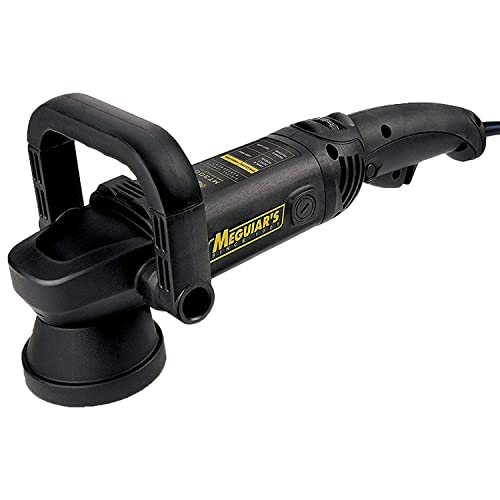
Meguiar’s MT300
Meguiar’s MT300 uses digital torque management to hold pad speed steady under load. That consistency delivers more even finishing results across a panel. Owners appreciate the soft start and the readable speed display for repeatable work.
Pros
- Speed stays steady under pad pressure
- Soft start controls the beginning of each pass
- Digital display reads speed clearly
Cons
- Price sits at the premium end of the range
- Overbuilt for occasional, light use

BLACK+DECKER WP900
BLACK+DECKER built the WP900 as a simple random orbit waxer aimed at applying and removing wax rather than heavy correction. Light weight and an easy grip suit quick maintenance shine work. Owners use it for wax jobs, not defect removal.
Pros
- Price and simplicity suit occasional use
- Light body handles easily for wax jobs
- Application and removal both go quickly
Cons
- Paint correction sits outside its ability
- Speed control and power stay limited
Before you buy
Rotary vs dual action: which type of buffer should you choose? Rotary polishers like the DeWalt DWP849X spin the pad directly for maximum cutting power, correcting heavy defects fast but risking paint burn in inexperienced hands. Dual action polishers add a random orbit that resists heat buildup and swirls, making them far safer to learn on. Most owners start with dual action and add a rotary only once they need more aggressive correction.
What does orbit throw mean for coverage and speed? Orbit throw is the diameter of the random motion on a dual action machine. Short throw orbitals stay nimble in tight spots, while long throw units like the TORQ 10FX or Adam’s Swirl Killer cover large panels faster and cut more efficiently. Based on specifications, match throw size to your vehicle, choosing a larger throw for trucks and a shorter one for detail work.
Do you need a correction machine or just a waxer? Not every buffer corrects paint. Dedicated waxers such as the BLACK+DECKER WP900 apply and remove wax but will not touch scratches or swirls. A quick maintenance shine only needs a waxer, while defect removal calls for a correction capable dual action or rotary machine paired with the right pads and compounds.
Which features actually matter for comfort and control? Sessions can run for hours, so grip comfort, weight, and balance matter as much as raw power. Features like soft start and digital torque management, found on the Meguiar’s MT300, keep pad speed steady and smooth out jerky starts. Owners consistently report cleaner, more even results from machines that hold speed under pad pressure.
How they stack up
| # | Model | Type | Best for | Score | Price |
|---|---|---|---|---|---|
| 1 | DeWalt DWP849X | Rotary polisher | Best overall | 9.4 | Check price |
| 2 | Griot’s Garage 6-inch Dual Action | Dual action random orbital | Best for beginners | 9.2 | Check price |
| 3 | PORTER-CABLE 7424XP | Dual action random orbital | Best value | 9.0 | Check price |
| 4 | TORQ 10FX | Dual action random orbital | Best long throw orbital | 8.8 | Check price |
| 5 | Adam’s Swirl Killer 15mm | Dual action random orbital | Best for large vehicles | 8.6 | Check price |
| 6 | Meguiar’s MT300 | Dual action random orbital | Best for consistent finishing | 8.3 | Check price |
| 7 | BLACK+DECKER WP900 | Random orbit waxer | Best budget waxer | 8.0 | Check price |
Good to know
What is the difference between a rotary and a dual action polisher?
A rotary spins the pad in one direction for maximum cutting power and faster correction, though it can burn paint if misused. A dual action polisher adds a random orbit that resists heat and swirls, making it far safer for beginners while still correcting most defects.
Which car buffer is best for a beginner?
A forgiving dual action polisher like the Griot’s Garage 6-inch or the PORTER-CABLE 7424XP is the safer starting point. Random orbit motion greatly reduces the risk of burning through clear coat while technique develops.
What does orbit throw mean and why does it matter?
Orbit throw is the diameter of the random motion on a dual action polisher. A larger throw, such as 15mm, covers big panels faster and cuts more efficiently, while a shorter throw stays more precise in tight areas and around edges.
Can a car buffer remove scratches and swirls?
Correction capable dual action and rotary polishers reduce or remove swirls and light scratches when paired with the right pads and compounds. Simple waxers like the BLACK+DECKER WP900 apply wax only and will not remove defects.
Will a buffer damage my paint?
It can, especially a rotary held too long in one spot. Dual action machines forgive mistakes far more easily. Keep the pad moving, use moderate speeds, and match compound and pad to the defect to protect the clear coat.
Do I need different pads for cutting and finishing?
Yes. Firmer cutting pads paired with a compound remove defects, while softer finishing pads with a polish refine gloss. A small range of pads lets one machine handle both correction and final finishing.
How many speed settings does a good buffer need?
Variable speed matters because cutting happens at higher speeds and finishing at lower ones. Look for a clear speed dial, and features like soft start and torque management, as on the Meguiar’s MT300, help hold speed steady under pad pressure.
Is a long throw polisher better than a short throw one?
It depends on the vehicle. Long throw units cover large panels quickly and cut efficiently, while short throw polishers stay easier to control in tight spaces. Many owners keep both, choosing based on whether they mostly detail cars or larger vehicles.
Can I use a car buffer to just apply wax?
Yes. A dedicated waxer like the BLACK+DECKER WP900 is built for exactly that and stays light and easy to handle. A dual action polisher can also apply wax, giving one tool for both correction and maintenance.
How do I avoid swirl marks when buffing a car?
Keep pads clean, match the correct pad and product to the job, and let a dual action machine do the work at moderate speed. Working in the shade on a cool panel and wiping with clean microfiber towels also helps keep the finish swirl free.
The verdict
DeWalt’s DWP849X rotary remains the most capable pick for experienced hands chasing serious correction. Griot’s Garage 6-inch dual action offers the smoothest, safest route for beginners. PORTER-CABLE’s 7424XP delivers the best value entry into machine polishing without much compromise.
Tony Russo
Tony trained as an automotive technician and spent years in service and parts retail before moving into writing. He focuses on garage tools, car care products and accessories from a hands-on maintenance perspective.


