7 Camping Tents That Hold Up in Bad Weather
The REI Co-op Base Camp 6 wins on stormworthy build and livable interior space for families. Beginners get more value from the Coleman Sundome, and backpackers counting ounces should look at the Naturehike Cloud Up 2 instead.
Families get the most from the REI Co-op Base Camp 6, a dome that combines a stormworthy build with genuinely usable interior space. Beginners on a budget do fine with the Coleman Sundome, and backpackers counting every ounce should look at the Naturehike Cloud Up 2 instead.
Specs on the box, like peak height, floor area and season rating, only tell part of the story, and a tent that leaks or collapses in wind can ruin a trip regardless of its numbers. We compared denier ratings, pole materials, floor dimensions and waterproofing against what long term owners report about real world weather performance, setup time and durability.
Before you buy
Match tent capacity to how much gear travels with you Capacity ratings assume sleepers packed shoulder to shoulder with no room for bags. A couple wanting space for gear does better in a four person tent, and a family of four often prefers a six. Sizing one person larger than the actual headcount is the reliable move whenever comfort outweighs pack weight.
Weather protection comes down to the fly and the poles A full coverage rainfly, sealed seams and quality poles are what keep a tent dry and standing in a storm. Partial flies, common on budget models, leave doors and windows exposed to driving rain. Aluminium poles flex better in wind than cheaper fibreglass, so owners in wet or windy regions should weigh that detail over peak height.
Setup style should match how the tent gets used Instant cabin frames pop up in minutes, while traditional pole sleeve designs take longer to pitch but pack down smaller. Colour coded poles and free standing bodies make solo setup easier, especially in fading light. Frequent movers and backpackers should prioritise packed size and weight, while base campers can favour fast, roomy instant tents.
Floor material and denier rating signal how long a tent lasts The floor absorbs the most abuse of any panel, so check the denier rating and whether a bathtub style floor lifts seams off the ground. Higher denier fabric resists punctures better, and a footprint extends floor life further. Rocky or rooty sites justify the small extra weight of a tougher floor and a separate groundsheet.
The shortlist, ranked
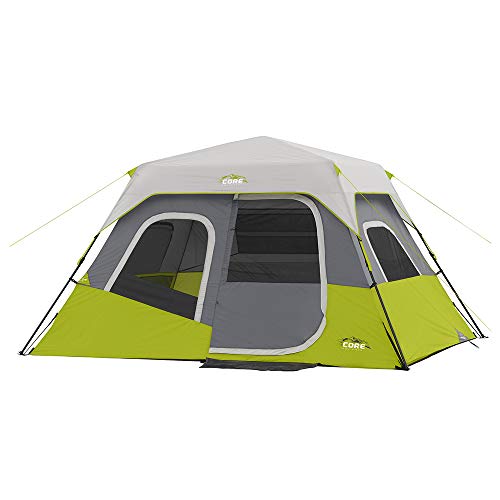
REI Co-op Base Camp 6
Crossing poles form a geodesic structure that resists collapsing in gusty wind. A full coverage rainfly keeps water off even in sustained rain, according to owner reports. Near vertical walls make the six person rated interior feel genuinely usable rather than cramped. Weight and price both sit at the premium end of this list.
Pros
- Excellent wind and rain performance
- Near vertical walls maximise usable space
- Durable poles and full coverage fly
Cons
- Heavy and bulky to transport
- Sits at the premium end on price

Coleman Sundome
Two poles cross to form the dome, so setup takes minutes even for a first timer. A welded floor and inverted seams keep ordinary rain from soaking through. Owners consistently call it reliable value for fair weather trips. Its partial fly leaves less coverage than pricier tents once wind picks up.
Pros
- Very affordable and widely available
- Fast, beginner friendly setup
- Welded floor resists ground moisture
Cons
- Partial fly offers limited rain coverage
- Struggles in strong, sustained wind

Kelty Wireless 6
Two large doors and two vestibules let a family come and go without climbing over each other. Colour coded poles cut down on setup confusion at a busy campsite. Steep walls keep gear organised rather than sliding into the corners. A full rainfly adds confidence once weather turns.
Pros
- Two doors and vestibules for easy access
- Colour coded poles speed up setup
- Tall walls create a livable interior
Cons
- Bulky packed size for storage
- Vestibules run smaller than expected

Marmot Tungsten 4P
A full coverage fly and taped seams handle sustained rain better than most tents at this capacity. D shaped doors make entry easier without stepping on a sleeping bag. An included footprint protects the floor from day one. Owners report solid performance in genuinely wet conditions, though peak height trails roomier rivals.
Pros
- Full coverage fly with taped seams
- Included footprint protects the floor
- Solid build reported in wet weather
Cons
- Lower peak height than some rivals
- Heavier than lightweight competitors
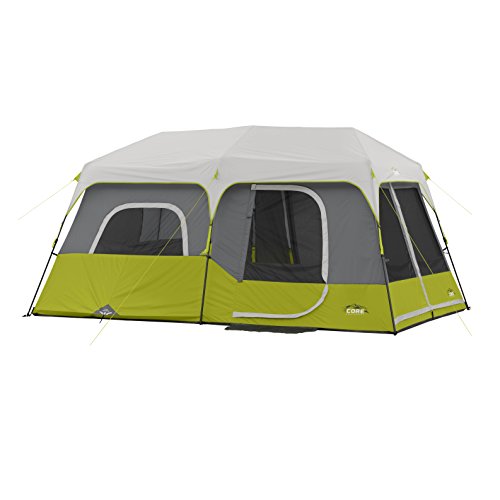
Core 9 Person Instant Cabin
Pre attached poles pop the frame up in minutes, a real advantage for families juggling kids and gear. Near vertical cabin walls create standing headroom throughout. A built in room divider adds privacy between sleeping areas. Its large footprint needs a genuinely flat site to pitch properly.
Pros
- Instant frame sets up very quickly
- Huge floor and standing headroom
- Room divider adds privacy
Cons
- Very large and heavy to pack
- Needs a large flat site to pitch

ALPS Mountaineering Lynx 2
Aluminium poles and a factory sealed fly punch above the tent’s price point. Two doors give each occupant independent access rather than sharing one exit. Free standing construction forgives imperfect staking on rocky ground. Interior room gets snug once two sleeping pads and gear are inside.
Pros
- Sturdy aluminium poles for the price
- Two doors and vestibules for couples
- Factory sealed fly aids weatherproofing
Cons
- Snug interior for two plus gear
- Heavier than dedicated backpacking tents
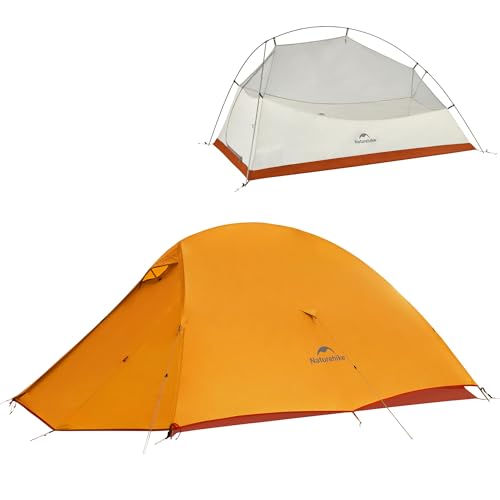
Naturehike Cloud Up 2
A silicone coated fly and single aluminium pole keep total weight low without dropping to tarp territory. Owners report solid weather resistance for a tent this light. Its low price makes it an accessible entry into backpacking shelters. A single door limits access when both occupants need to move at once.
Pros
- Light and compact packed size
- Coated fly resists rain well for the class
- Affordable entry into backpacking tents
Cons
- Tight interior for two adults
- Single door limits access
How they stack up
| # | Model | Capacity | Best for | Score | Price |
|---|---|---|---|---|---|
| 1 | REI Co-op Base Camp 6 | 6 person | Best overall | 9.4 | Check price |
| 2 | Coleman Sundome | 4 person | Best budget pick | 9.2 | Check price |
| 3 | Kelty Wireless 6 | 6 person | Best for families | 9.0 | Check price |
| 4 | Marmot Tungsten 4P | 4 person | Best weather protection | 8.8 | Check price |
| 5 | Core 9 Person Instant Cabin | 9 person | Best for large groups | 8.5 | Check price |
| 6 | ALPS Mountaineering Lynx 2 | 2 person | Best two-person value | 8.3 | Check price |
| 7 | Naturehike Cloud Up 2 | 2 person | Best for backpacking | 8.0 | Check price |
Questions worth asking
What size camping tent should I buy?
Capacity ratings assume sleepers with no gear space, so most campers benefit from sizing up. A couple fits comfortably in a four person tent, and a family of four in a six person model. Choosing one size larger than your group gives room to move and stash bags inside.
Are budget tents like the Coleman Sundome any good?
For fair weather trips, yes, and that value is why so many campers start with one. Limits show up in sustained wind and heavy rain, where partial flies and fibreglass poles struggle to keep pace. Mild condition campers get real reliability from a well reviewed budget tent.
How do you keep a tent dry in the rain?
Start with a full coverage rainfly and sealed seams, then pitch the tent taut so water runs off instead of pooling. Use a footprint that stays within the fly’s coverage, not beyond it. A slightly elevated site helps water drain away rather than collect underneath.
What is the difference between a 3-season and 4-season tent?
Three season tents, which cover every model here, suit spring through fall with good ventilation and rain protection. Four season tents add stronger poles and less mesh for snow load and harsh wind, at the cost of extra weight and warmer summer nights. Most campers only need a three season design.
How many poles and doors does a family tent need?
More crossing poles generally add sturdiness in wind, which is why geodesic designs like the REI Base Camp handle storms well. Two doors matter for families, since people can enter and exit without climbing over each other. Prioritise both when comfort and weather resistance top the list.
Do I need a footprint under my tent?
Not strictly, but a footprint protects the floor from abrasion and punctures while adding a moisture barrier underneath. Some tents, including the Marmot Tungsten, include one. Rocky or rooty ground makes the small extra weight worth carrying.
How long does it take to set up a camping tent?
Setup time varies by design. Instant cabin models like the Core 9 Person pop up in a few minutes thanks to pre attached poles, while traditional dome tents such as the Coleman Sundome take roughly ten to fifteen minutes once familiar. Practising the pitch at home before a first trip helps a lot.
Can a two person backpacking tent work for car camping?
Yes, and lightweight options like the Naturehike Cloud Up handle car camping fine if space for two people and gear is enough. The trade off is a snugger interior and lower ceiling than a dedicated camping tent. Drivers who mainly camp near the car usually get more comfort from a roomier dome instead.
How should a tent be stored between trips?
Dry it completely before storing, since packing it damp invites mildew and degrades coatings over time. Store it loosely in a breathable bag rather than compressed tightly, and keep it out of direct sunlight. Checking poles and zippers for grit before storage is one of the biggest factors in tent longevity.
The verdict
The REI Co-op Base Camp 6 is the tent to trust when the forecast looks uncertain, combining a stormworthy build with livable family space. Beginners and budget campers do well with the reliable Coleman Sundome, while backpackers counting every ounce should reach for the lightweight Naturehike Cloud Up 2.
Sierra Daniels
Sierra's background is in landscape design and nursery retail. She focuses on lawn and garden equipment, outdoor furniture and gear durability, weighing published specs against how materials actually hold up outside.

