Camera Tripods That Hold Steady Where You Actually Shoot
The Manfrotto MT190XPRO4 is the best overall camera tripod, with a versatile horizontal column and solid aluminum build. The Peak Design Travel Tripod suits anyone who needs the smallest packed size, and the Amazon Basics 60-Inch model covers lighter gear on a budget.
The Manfrotto MT190XPRO4 is the best overall camera tripod, because its horizontal column and solid aluminum legs handle everyday, macro and overhead shots without needing a second tripod. It weighs more than carbon fiber options, so anyone hiking long distances with gear can save real weight with a carbon fiber tripod instead.
We compared material and weight, maximum load capacity, folded length for travel, head type and maximum height using manufacturer specification sheets and owner feedback from retail listings.
The top picks, ranked

Manfrotto MT190XPRO4
The MT190XPRO4 uses a horizontal column that swings out for overhead or macro shots without repositioning the legs, a feature many tripods in this price range skip. Four leg sections fold down reasonably compact while still supporting a solid maximum load.
Pros
- Horizontal column adds genuine flexibility for overhead shots
- Durable aluminum build holds up to regular field use
- Compatible with a wide range of tripod heads sold separately
Cons
- Heavier than carbon fiber tripods at a similar load rating
- No tripod head included, sold as legs only
Peak Design Travel Tripod
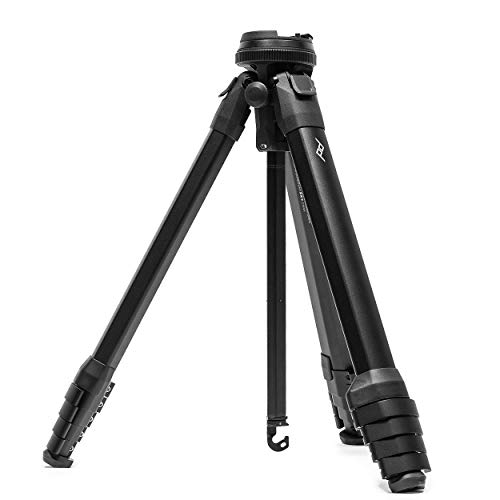
Peak Design folds its legs around the center column rather than beside it, shrinking the packed size to roughly the width of a water bottle. A built in phone mount hidden in the center column skips the need for a separate phone clamp.
Pros
- Exceptionally compact folded size for a full height tripod
- Built in phone mount removes the need for a separate clamp
- Twist locks open and close all legs in one motion
Cons
- Costs significantly more than traditional tripod designs
- Leg design trades some stability on uneven ground versus wider spread tripods

Benro Tortoise 34CLV
The Tortoise 34CLV combines carbon fiber’s light weight with a high maximum load rating, suited to heavier telephoto lenses that need a stable base without adding tripod weight to a camera bag. A leveling base helps on uneven outdoor terrain.
Pros
- High load rating relative to its carbon fiber weight
- Leveling base simplifies setup on uneven ground
- Sturdy enough for heavy telephoto lenses
Cons
- Costs more than aluminum tripods with similar height
- Still bulkier when folded than dedicated travel tripods

Vanguard VEO 3+ 264CB
The VEO 3+ 264CB pairs its legs with a fluid video head for smooth panning and tilting shots, rather than the stills-oriented ball heads common on photo tripods. A multi-angle center column adds positioning flexibility beyond simple up and down movement.
Pros
- Fluid head included, no separate purchase needed for video
- Multi-angle center column adds positioning options
- Tall maximum height suits standing video interviews
Cons
- Fluid head adds weight compared to a stills-only ball head setup
- Less ideal for fast action stills photography than a ball head
JOBY GorillaPod 5K
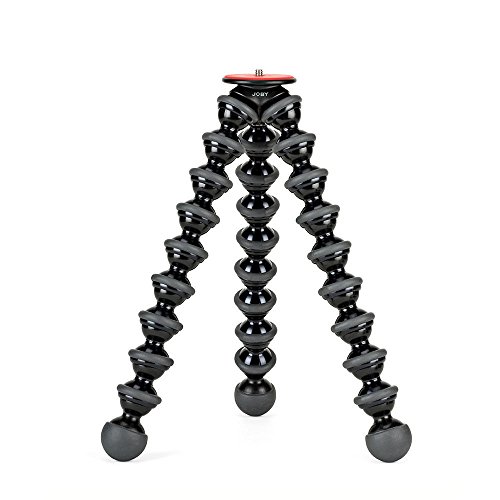
The GorillaPod 5K’s flexible legs wrap around railings, branches or rocks instead of needing flat, level ground like a traditional tripod. It supports heavier mirrorless and DSLR setups than JOBY’s smaller GorillaPod models.
Pros
- Wraps around uneven surfaces where standard tripods cannot stand
- Compact and lightweight for travel carry
- Rubber grips hold securely on smooth or angled surfaces
Cons
- Shorter maximum height than standard tripod legs
- Less stable than a traditional tripod on perfectly flat ground
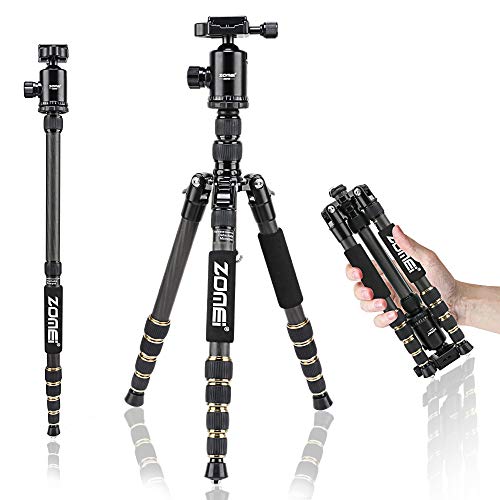
Zomei Z699C Carbon Fiber Tripod
Zomei brings carbon fiber’s weight savings to a price closer to aluminum tripods, a middle ground for anyone who wants lighter carry weight without paying premium brand pricing. A built in monopod function converts one leg for quick single-leg support.
Pros
- Carbon fiber weight savings at a lower price than premium brands
- Convertible monopod leg adds versatility
- High load rating for its price tier
Cons
- Build quality and leg lock tightness trail premium brands
- Included ball head feels less refined than dedicated photo heads

Amazon Basics 60-Inch Lightweight Tripod
This aluminum tripod covers basic stability needs for cameras, phones or small camcorders at the lowest cost in this comparison. It includes a simple ball head and phone mount adapter in the box.
Pros
- Lowest cost tripod in this comparison
- Includes a phone mount adapter and basic ball head
- Reasonable height for casual photo and video use
Cons
- Lower maximum load limits use with heavier camera and lens combinations
- Legs feel less sturdy than carbon fiber or premium aluminum tripods in wind
What to look for
Carbon Fiber Versus Aluminum: What the Weight Difference Buys Carbon fiber tripods like the Benro Tortoise 34CLV and Zomei Z699C weigh noticeably less than aluminum tripods rated for a similar maximum load, which matters most for anyone hiking long distances with gear. Aluminum tripods like the Manfrotto MT190XPRO4 cost less for the same stability and work fine for anyone shooting mostly near a car or a short walk from it. The weight savings from carbon fiber become most noticeable once a tripod and lens combination crosses a few pounds.
Folded Length and Why It Determines What Actually Gets Packed A tripod’s folded length decides whether it fits inside checked luggage, a carry-on bag or just the trunk of a car. The Peak Design Travel Tripod folds to roughly 15.5 inches, noticeably shorter than tripods like the Manfrotto MT190XPRO4 at over 25 inches folded. Photographers who travel by plane regularly should weigh folded length as heavily as maximum height when comparing tripods.
Matching Maximum Load to the Gear You Actually Own A tripod’s maximum load rating should exceed the combined weight of a camera body and its heaviest lens by a comfortable margin, not just barely meet it. Heavier telephoto lenses push toward tripods like the Benro Tortoise 34CLV or Zomei Z699C with load ratings above 25 pounds. A lightweight mirrorless setup with a standard lens rarely needs a tripod rated much above 10 pounds.
When a Traditional Tripod Is the Wrong Tool Flat, open ground suits a standard three-leg tripod like the Manfrotto or Vanguard models here, but uneven terrain, railings or tree branches call for something different. The JOBY GorillaPod 5K’s bendable legs wrap around objects a standard tripod cannot stand on at all. Video shooters who need smooth panning motion also benefit more from a fluid head tripod like the Vanguard VEO 3+ 264CB than from a stills-focused ball head.
How they compare
| # | Model | Material | Best for | Score | Price |
|---|---|---|---|---|---|
| 1 | Manfrotto MT190XPRO4 | Aluminum | Best Overall | 9.4 | Check price |
| 2 | Peak Design Travel Tripod | Carbon fiber or aluminum versions | Best for Travel and Packed Size | 9.1 | Check price |
| 3 | Benro Tortoise 34CLV | Carbon fiber | Best Carbon Fiber for Stability | 8.9 | Check price |
| 4 | Vanguard VEO 3+ 264CB | Carbon fiber legs | Best for Video With a Fluid Head | 8.7 | Check price |
| 5 | JOBY GorillaPod 5K | Aluminum and rubber grip legs | Best for Flexible Mounting on Uneven Terrain | 8.4 | Check price |
| 6 | Zomei Z699C Carbon Fiber Tripod | Carbon fiber | Best Budget Carbon Fiber | 8.2 | Check price |
| 7 | Amazon Basics 60-Inch Lightweight Tripod | Aluminum | Best Budget Pick | 7.9 | Check price |
Common questions
Is carbon fiber worth the extra cost over an aluminum tripod?
Mainly for anyone carrying a tripod long distances on foot, since carbon fiber saves real weight at a similar stability rating. For car-based or short-distance shooting, aluminum tripods offer similar performance for less money.
What tripod head type works best for photography versus video?
Ball heads suit stills photography with quick repositioning between shots, while fluid heads, like the one included on the Vanguard VEO 3+ 264CB, provide smoother, controlled movement for panning and tilting video.
How much weight can a travel tripod safely hold?
The Peak Design Travel Tripod is rated to 20 pounds despite its compact folded size, though staying well under a tripod’s maximum rating generally produces steadier results.
Can a flexible tripod like the GorillaPod replace a standard tripod?
It works well for uneven terrain, railings or branches a standard tripod cannot use, but it offers less stability and height than a traditional tripod on flat, open ground.
Do all tripods include a head, or is it sold separately?
It varies. Some tripods, like the Manfrotto MT190XPRO4, sell legs only with the head as a separate purchase, while others, like the Vanguard VEO 3+ 264CB, include a matched head in the price.
What folded length counts as travel friendly for a tripod?
Folded lengths under about 16 to 20 inches generally fit in a carry-on bag or checked luggage without issue, while longer tripods may need to be checked separately or strapped to the outside of a bag.
Does a heavier maximum load rating mean a sturdier tripod overall?
Generally yes, since a higher rated tripod typically uses thicker leg tubing and sturdier locks, but actual stability in wind or on uneven ground also depends on leg spread and design, not load rating alone.
Can a monopod function replace a full tripod?
A convertible monopod leg, like the one on the Zomei Z699C, offers quick single-leg support for fast repositioning, but it does not provide the hands free stability a full tripod offers for long exposures.
The bottom line
The Manfrotto MT190XPRO4 is the strongest overall pick, since its horizontal column and solid aluminum build handle the widest range of everyday photography needs. Travelers who prioritize packed size above all else should choose the Peak Design Travel Tripod instead, even at a higher cost. Anyone just starting out or shooting with lighter gear can get reliable basic support for less with the Amazon Basics 60-Inch Lightweight Tripod.
Marcus Chen
Marcus covered consumer electronics for enthusiast tech publications for six years before joining ChoiceCrest. He specializes in translating manufacturer spec sheets into plain-language buying advice, with a focus on audio, computing accessories and smart-home gear.