5 Lenses That Pair Perfectly With the Sony A6000
The Sony E 18-135mm F3.5-5.6 OSS covers wide to telephoto with stabilisation, making it the best single lens for most a6000 owners. The Sigma 16mm F1.4 DC DN wins on low light and background blur, while the Sony E PZ 16-50mm kit stays the lightest everyday choice.
One lens can cover travel, family and street shooting on an a6000: the E 18-135mm F3.5-5.6 OSS. Indoor shooters or anyone chasing strong background separation should look at the Sigma 16mm F1.4 instead.
The a6000 uses an APS-C sensor, so full frame E mount lenses fit and work but add size and cost, and the crop factor turns a 35mm lens into a short telephoto in practice. That makes lens choice trickier than the spec sheet suggests. We compared native E mount options on focal length, aperture, stabilisation and reported autofocus behaviour to rank these seven for real use.
The best picks, ranked

Sony E 18-135mm F3.5-5.6 OSS
Most a6000 owners reach for this lens when they want to stop swapping glass mid shoot. It covers a genuinely useful wide to telephoto range while staying reasonably compact for that reach. Optical stabilisation helps at the long end, and owners report quick, quiet autofocus that suits both stills and casual video.
Pros
- Very versatile range for one lens
- Optical stabilisation aids the long end
- Fast and quiet autofocus
Cons
- Variable aperture limits low light
- Costs more than the kit zoom

Sigma 16mm F1.4 DC DN Contemporary
A bright wide angle view, roughly 24mm equivalent, opens up scenes the kit lens cannot capture. F1.4 pulls in far more light for indoor and evening shooting and produces smooth background blur. Size runs larger than a compact prime, yet it remains a favourite value pick among a6000 owners.
Pros
- Bright aperture for low light
- Sharp across the frame
- Great value for the optics
Cons
- Larger than a basic prime
- No optical stabilisation

Sony E PZ 16-50mm F3.5-5.6 OSS
This retractable power zoom often ships with the a6000 and stays the smallest way to keep the camera pocketable. Wide to short telephoto coverage with stabilisation suits casual video well. Image quality lands as fair rather than outstanding, so it works best as a light everyday carry lens.
Pros
- Extremely small and light
- Stabilised for handheld video
- Convenient everyday range
Cons
- Softer corners wide open
- Modest low light performance
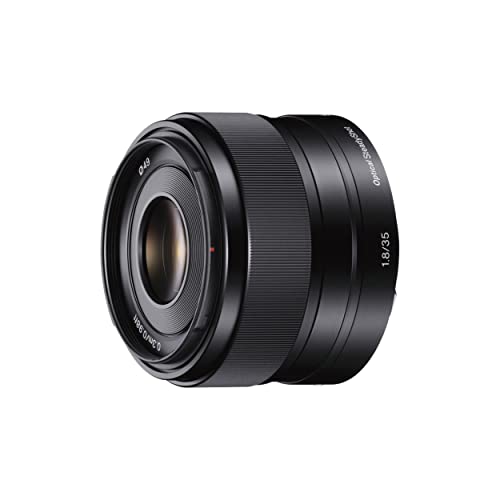
Sony E 35mm F1.8 OSS
A natural standard view, about 52mm equivalent on this sensor, flatters portraits and everyday subjects alike. Background separation comes easily at F1.8, and unusually for a fast prime it includes optical stabilisation. Owners keep it mounted all day as a small, sharp companion for the a6000.
Pros
- Natural standard field of view
- Optical stabilisation is rare at this size
- Compact and sharp
Cons
- Tighter than a true portrait tele
- Autofocus can hunt in dim light

Sony E 55-210mm F4.5-6.3 OSS
Distant subjects come within reach here without a heavy price tag, the affordable telephoto choice for a6000 owners. Stabilisation keeps long shots steady handheld, and the lens stays light enough for a full day out. Sharpness softens toward the far end, rewarding good light and careful technique.
Pros
- Long reach at a low cost
- Optical stabilisation for handheld shots
- Light for a telephoto
Cons
- Dim aperture at the long end
- Softer detail fully zoomed

Sony E 10-18mm F4 OSS
Interiors, landscapes and vlog framing open up here in ways the kit lens simply cannot reach. A constant F4 aperture paired with optical stabilisation keeps handheld video steady, while the lens stays compact for its coverage. Owners treat it as the go to choice for architecture and travel scenery.
Pros
- Very wide field for interiors and vlogs
- Constant aperture across the zoom
- Stabilised and compact
Cons
- F4 limits low light
- Some distortion at the widest end

Sigma 30mm F1.4 DC DN Contemporary
A bright, sharp standard prime lands at a friendly price here, roughly 45mm equivalent on the a6000. F1.4 makes indoor and evening shooting easy and gives portraits pleasing background blur. Owners consistently praise its sharpness and value as a first fast prime for the camera.
Pros
- Bright aperture for low light
- Excellent sharpness for the price
- Smooth background blur
Cons
- No optical stabilisation
- Single focal length only
How to pick the right one
Understand the crop factor first An APS-C sensor makes every lens behave as though it runs about one and a half times longer than the number printed on it. A 16mm lens frames like a 24mm, a 35mm frames like a 52mm, and a 55mm frames like an 83mm. Keep that multiplier in mind before picking a focal length, since a lens marketed as wide can land as a standard view on this body.
Native E mount versus full frame E lenses Full frame E mount lenses mount and function on the a6000, though they run larger, heavier and pricier than lenses built for APS-C. Native APS-C glass gives the better balance of size, cost and image quality on a body this small. Full frame lenses make more sense once you move to a full frame body later.
Aperture and stabilisation for low light F1.4 or F1.8 apertures let the a6000 shoot in dim rooms and evening light while keeping shutter speeds sensible. No in body stabilisation exists on this camera, so a lens marked OSS becomes the fallback for handheld video and slow shutter stills. Fast primes and stabilised zooms cover the two main routes to sharper low light results.
Match the lens to how you actually shoot Anyone who dislikes swapping glass benefits most from a single travel zoom like the 18-135mm. A fast prime instead rewards those chasing background blur and low light performance. Add an ultra wide for interiors and landscapes, or a telephoto zoom for sports and wildlife, since a small kit of two or three lenses usually beats one lens trying to do everything.
How they compare
| # | Model | Mount | Best for | Score | Price |
|---|---|---|---|---|---|
| 1 | Sony E 18-135mm F3.5-5.6 OSS | Sony E APS-C | Best overall | 9.4 | Check price |
| 2 | Sigma 16mm F1.4 DC DN Contemporary | Sony E APS-C | Best value | 9.2 | Check price |
| 3 | Sony E PZ 16-50mm F3.5-5.6 OSS | Sony E APS-C | Best budget | 8.8 | Check price |
| 4 | Sony E 35mm F1.8 OSS | Sony E APS-C | Best for portraits | 9.0 | Check price |
| 5 | Sony E 55-210mm F4.5-6.3 OSS | Sony E APS-C | Best telephoto | 8.6 | Check price |
| 6 | Sony E 10-18mm F4 OSS | Sony E APS-C | Best wide | 8.7 | Check price |
| 7 | Sigma 30mm F1.4 DC DN Contemporary | Sony E APS-C | Best prime | 9.1 | Check price |
Frequently asked questions
Do full frame Sony lenses work on the a6000?
Yes, full frame E mount lenses mount and autofocus on the a6000 with no adapter needed. They run bigger, heavier and pricier than APS-C lenses, so most owners get better size and value from native APS-C glass.
What is the best all round lens for the a6000?
The Sony E 18-135mm F3.5-5.6 OSS stands out as the strongest single lens for general use. Wide to telephoto coverage with stabilisation handles travel, family and everyday shooting without swapping glass.
Does the a6000 have in body stabilisation?
No, the body carries no stabilisation of its own. Steadying handheld shots and video requires a lens marked OSS, which stabilises optically, or faster shutter speeds paired with brighter apertures.
Which lens is best for portraits on the a6000?
The Sony E 35mm F1.8 OSS gives a natural standard view with pleasing blur, while the Sigma 30mm F1.4 pushes even more background separation. Both flatter faces well on the APS-C sensor.
Is the kit 16-50mm lens good enough for the a6000?
The PZ 16-50mm stays convenient and very compact, keeping the camera pocketable. Image quality lands as fair rather than excellent, so many owners keep it for travel and add a fast prime for sharper results.
What lens should I buy for low light on the a6000?
A bright prime such as the Sigma 16mm F1.4 or Sigma 30mm F1.4 pulls in far more light than the kit zoom. Wide apertures let you shoot indoors and at night without pushing the sensor too hard.
Can I use older Sony A mount lenses on the a6000?
Only through an adapter, and autofocus performance varies by lens. Most a6000 owners stick with native E mount lenses instead, since those are built for the camera and focus quickly.
Do I need image stabilisation for video on the a6000?
It helps considerably since the body has none built in. A lens marked OSS smooths handheld footage, while a gimbal or tripod removes shake entirely for more demanding video work.
Sigma 16mm vs Sigma 30mm, which suits the a6000 better?
The 16mm suits wide interior and low light scenes at a 24mm equivalent view. The 30mm gives a more standard 45mm equivalent field better suited to portraits and everyday subjects.
What is the best lens for vlogging on the a6000?
The Sony E 10-18mm F4 OSS covers wide interiors and handheld motion with constant aperture and stabilisation. Its ultra wide field also suits walking shots and small room setups.
Our take
The E 18-135mm F3.5-5.6 OSS remains the smartest single upgrade for most a6000 owners, covering nearly every everyday situation with stabilisation built in. Add the Sigma 16mm F1.4 for strong low light and background blur, or the E 10-18mm F4 OSS for interiors and landscapes. The kit 16-50mm still earns its place as the lightest lens for keeping the camera pocketable.
Marcus Chen
Marcus covered consumer electronics for enthusiast tech publications for six years before joining ChoiceCrest. He specializes in translating manufacturer spec sheets into plain-language buying advice, with a focus on audio, computing accessories and smart-home gear.
You might also need
Nintendo Game & Watch: Super Mario Bros Review: Still Worth It as a Collectible?

Ray-Ban Meta (Gen 2) Wayfarer Smart Glasses: Worth $379 for Clear Lenses?
AlyKets Nikon UC-E6 Replacement USB Cable: Does a $7.95 Cord Work as Well as the Original?
