Camera Filter Kits Worth Adding to Your Bag
K&F Concept Nano-X Filter Kit leads for sharp, colour neutral glass at a fair price. Gobe ND Filter Kit gives the best value for long exposure work, and Hoya Digital Filter Kit II offers trusted Japanese glass with proven coatings.
K&F Concept Nano-X Filter Kit tops this list, using sharp multi coated glass that stays close to neutral for less than premium brands charge. Long exposure landscape shooters get more from the Gobe ND set, which ships three graduated strengths at a strong price. Hoya Digital Filter Kit II suits anyone who wants decades of proven Japanese glass behind the purchase.
Cheap glass can quietly undo the sharpness a good lens delivers, and colour casts can turn a clear sky green or magenta. We compared glass sharpness, colour neutrality, coating quality, thread fit accuracy, mounting style and how well each case protects the filters. Owner feedback on cross-threading and colour cast also shaped the ranking.
The shortlist, ranked
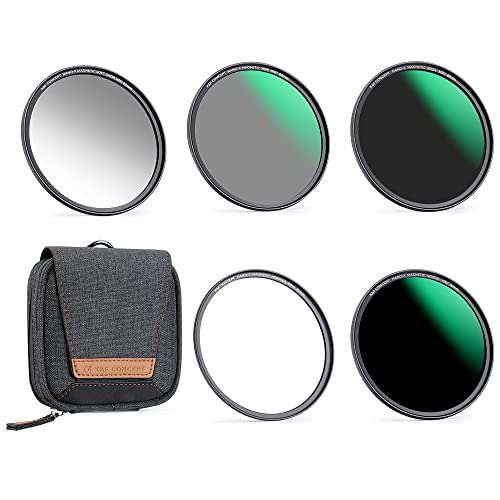
K&F Concept Nano-X Filter Kit
Nano-X coated glass keeps colour close to neutral instead of tinting skies green or magenta. Water and fingerprints bead off the multi-resistant coating, which also cuts reflections. Threads engage smoothly, so cross-threading onto a lens rarely happens.
Pros
- Sharp glass that holds a neutral colour cast
- Coatings shed water and fingerprints fast
- Smooth threads resist cross threading
Cons
- Priced above basic three filter kits
- Single thread size, so check lens diameter first

Hoya Digital Filter Kit II
Hoya pairs a UV filter, circular polariser and neutral density filter in one slim case. Coatings here trace back decades of optical refinement, giving dependable colour under changing light. Photographers who want a known name over a new one land here first.
Pros
- Long-proven glass and coating quality
- Balanced three filter selection covers most needs
- Consistent colour and contrast across the set
Cons
- Fewer ND strengths than dedicated ND kits
- Costs more than entry level three packs
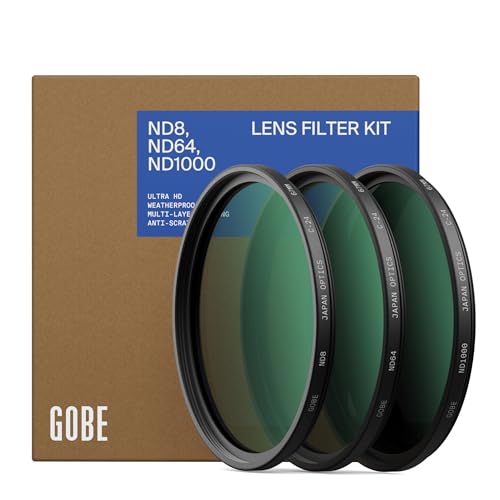
Gobe ND Filter Kit
Three ND strengths, light, medium and strong, ship in one Gobe set for slowing shutter speed in daylight. Multi coated glass holds colour reasonably neutral given the price point. Gobe plants a tree for every kit sold, a small extra beyond the optics.
Pros
- Three ND strengths cover most daylight conditions
- Strong value for long exposure landscape work
- Reasonably neutral colour for a budget kit
Cons
- Strongest ND filter can add a slight cast
- No polariser included in this particular set

K&F Concept Magnetic Filter Kit
A magnetic adapter ring lets a polariser or ND filter snap on in seconds instead of threading. That speed matters when light shifts fast during a sunset shoot. Coated glass keeps the swap-in-swap-out convenience from costing sharpness.
Pros
- Filters swap on and off in seconds
- Coated glass keeps images sharp during quick changes
- Case built specifically for magnetic filters
Cons
- Magnetic hardware raises the price over screw-in kits
- Needs a separate adapter ring per lens size
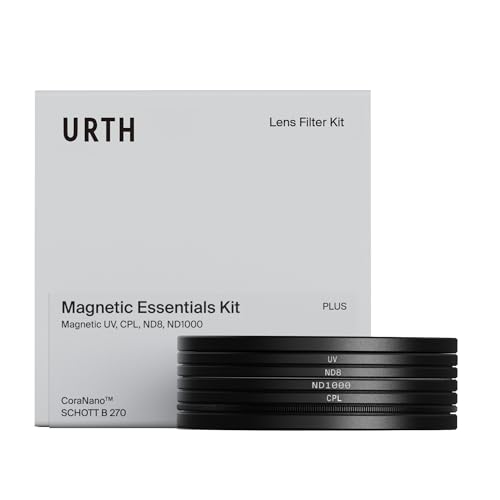
Urth Magnetic Lens Filter Kit Plus+
Urth builds its UV, polariser and ND filters around a shared magnetic mount, stored in a dedicated case. Glass stays neutral, and the housings feel sturdier than budget magnetic kits. A tree gets planted per kit sold, part of the brand’s environmental pledge.
Pros
- Fast magnetic swaps with neutral colour glass
- Sturdier build than most magnetic competitors
- Complete UV, polariser and ND set in one box
Cons
- Priced at the top of the magnetic category
- Still needs one adapter ring per lens size

Tiffen Photo Essentials Filter Kit
Tiffen bundles a UV filter, circular polariser and warming filter for photographers buying their first set. Coverage handles everyday glare and protection without a big outlay. Resolution-critical landscape work asks more of the glass than this kit delivers.
Pros
- Low cost way to start using filters
- Covers everyday protection and glare control
- Familiar brand stocked at most retailers
Cons
- Glass not suited to high resolution critical work
- No strong ND filter for long exposures

Neewer ND Filter Kit
Light, medium and stronger ND stops arrive in one inexpensive Neewer set for testing slow shutter effects. Standard threads fit like any screw-in filter, no adapter required. Its strongest filter can shift colour slightly under bright sun.
Pros
- Inexpensive way to try ND photography
- Three graduated strengths to stack or swap
- Standard screw-in fit works on most lenses
Cons
- Basic glass shows a slight cast at times
- Strengths fall short of a full ND1000
Side by side
| # | Model | Includes | Best for | Score | Price |
|---|---|---|---|---|---|
| 1 | K&F Concept Nano-X Filter Kit | Polariser and neutral density set | Best overall | 9.4 | Check price |
| 2 | Hoya Digital Filter Kit II | UV, circular polariser, neutral density | Best trusted glass | 9.2 | Check price |
| 3 | Gobe ND Filter Kit | ND8, ND64 and ND1000 filters | Best value | 9.0 | Check price |
| 4 | K&F Concept Magnetic Filter Kit | Magnetic CPL and ND filters plus adapter | Best magnetic system | 8.8 | Check price |
| 5 | Urth Magnetic Lens Filter Kit Plus+ | Magnetic UV, CPL and ND plus adapter | Best premium magnetic | 8.6 | Check price |
| 6 | Tiffen Photo Essentials Filter Kit | UV, circular polariser, warming filter | Best budget | 8.3 | Check price |
| 7 | Neewer ND Filter Kit | ND2, ND4 and ND8 filters | Best budget ND set | 8.0 | Check price |
Before you buy
Which filters actually matter Circular polarisers, neutral density filters and UV filters cover almost every situation. A polariser cuts glare off water and glass, deepens blue sky and lifts saturation. Neutral density filters block light so a slow shutter works in daylight, blurring water and clouds. UV filters mainly guard the front element from scratches and dust. Decide which effect matters most before buying a full kit.
How glass quality changes your results A filter sits directly in front of an expensive lens, so weak glass throws away sharpness already paid for. Multi coated optical glass improves light transmission and reduces flare from bright sources. Uncoated or single coated glass is a false economy on a good lens. Coating quality matters more than filter count when comparing kits.
Matching thread size and mounting style Thread diameter appears in millimetres on the lens cap or barrel, next to a diameter symbol. Buy filters sized to that number, or size for the largest lens and add step-up rings for smaller ones. Screw-in filters stay compact and cheap. Magnetic systems snap on faster but need an adapter ring and cost more upfront.
Choosing ND strength for the effect you want Neutral density strength is measured in stops, and the number needed depends on the look. A light ND barely slows the shutter, softening water just slightly. A strong ten-stop ND turns midday into a long exposure with smoothed water and streaked cloud. Kits with several strengths, like the Gobe set, allow dialing in blur without buying separate filters.
Good to know
What filters do I need to start with?
Most photographers start with a circular polariser, a neutral density filter and a protective UV filter. Polarisers cut glare and deepen sky colour, ND filters enable slow shutter effects, and UV filters guard the front element. Many kits bundle all three together.
Does a cheap filter hurt image quality?
It can. Low quality or uncoated glass softens images, adds colour casts and increases flare. Multi coated optical glass avoids most of that. Coating quality matters more than the number of filters included.
How do I find my filter thread size?
Check the inside of the lens cap or the front of the barrel for a number next to a diameter symbol, commonly 67 or 77. Buy filters matching that size. Step-up rings let one large filter fit smaller lenses too.
What does a neutral density filter do?
It darkens the image evenly so a slower shutter works in bright light. That blurs moving water, streaks clouds and adds motion without overexposing. Stronger stops produce longer effective exposures.
What does a circular polariser actually change?
It cuts reflections off water, glass and wet leaves while deepening blue sky and boosting saturation. Rotating the filter ring controls the strength of the effect. Editing software cannot fully recreate this result afterward.
Are magnetic filters better than screw-in filters?
Magnetic filters attach in seconds through an adapter ring, useful when light changes quickly. Screw-in filters cost less and pack smaller. Choose magnetic if filters get swapped often in the field.
Can I stack two filters together?
Yes, a polariser can thread on top of an ND filter. Stacking adds glass thickness and can cause vignetting, especially on wide lenses. Thin profile filters reduce that risk.
Do I still need a UV filter with a digital camera?
Digital sensors do not need UV correction the way film did. Most photographers keep one on purely for physical protection against scratches and dust. A lens hood is an alternative for those who avoid extra glass.
Which filter kit is best for long exposure photography?
Gobe ND Filter Kit covers light, medium and strong stops for water and cloud blur. K&F Concept Nano-X pairs a polariser with ND options for sharper overall glass. Match the strength range to the exposure length wanted.
The bottom line
K&F Concept Nano-X Filter Kit suits most photographers, pairing sharp neutral glass with coatings that protect the front element. Choose the Gobe set for long exposure landscapes on a tight budget, or the Hoya Digital Filter Kit II for proven Japanese glass. Match thread size to your lens and pick screw-in or magnetic mounting based on how often you swap filters in the field.
Marcus Chen
Marcus covered consumer electronics for enthusiast tech publications for six years before joining ChoiceCrest. He specializes in translating manufacturer spec sheets into plain-language buying advice, with a focus on audio, computing accessories and smart-home gear.


