Best Calf Stretchers for Tight Calves and Achilles Pain
For most people the ProStretch Original balances comfort and versatility with a self-adjusting rock. Runners chasing measurable gains do better with the Yes4All slant board and its locked incline range. Anyone without floor space for a board can rely on the OPTP strap instead.
A standing wall stretch fades as calf muscles tire and ankle position drifts.
Boards and rockers hold dorsiflexion at a fixed depth so the muscle can relax into it instead.
We compared incline range, stability under body weight, and shoe-size limits across seven models to see which actually deepen a stretch rather than wobble underfoot.
How to pick the right one
What makes a calf stretcher work better than a wall stretch A wall stretch depends on the user actively holding ankle position, which tires quickly and lets form slip. Slant boards and rocking stretchers hold dorsiflexion passively, so the muscle relaxes into the position instead of fighting it. That passive hold is why physical therapists often recommend a board over standing stretches for plantar fasciitis.
Fixed-angle boards versus rocking stretchers Locked slant boards deliver a consistent, repeatable stretch depth session after session. Rocking stretchers such as the ProStretch let the user shift body weight to self-adjust depth mid-stretch. Runners tracking flexibility gains over weeks tend to prefer a locked angle simply because it is measurable.
Matching incline angle to your goal Angles above roughly 30 degrees load the gastrocnemius, the larger muscle higher in the calf. Angles near 10 to 15 degrees shift emphasis toward the soleus and Achilles tendon lower down. People rehabbing an injury usually start at the shallowest angle a board offers.
Straps and bands for tight spaces or limited mobility Seated strap stretchers work well for anyone without room for a standing board, or who cannot bear weight yet. Resistance bands add adjustable tension for combining stretching with light mobility strengthening. Neither option replicates a weight-bearing passive stretch as fully as a board does.
What we recommend

ProStretch Original Calf Stretcher
A curved rocking base lets each user settle into their own stretch depth instead of locking to one angle. Two footplates fit shoe sizes up to men’s 13 according to the listing. Owners report it doubles for calf, Achilles, and plantar fascia work in a single device.
Pros
- Self-adjusting rock finds each user’s own depth
- Covers calf, Achilles, and plantar fascia in one unit
- Compact enough to store under a desk or bed
Cons
- No locked angle for a fixed, repeatable hold
- Rocking motion feels unstable to first-time users

Yes4All Adjustable Slant Board for Calf Stretching
A peg-and-hole system locks this board into angles from roughly 10 to 40 degrees. Two feet fit side by side across the wider standing surface for a bilateral stretch. Steeper settings bias toward the gastrocnemius, while lower angles shift the load onto the soleus.
Pros
- Wide incline range reaches different muscle depths
- Fixed angle stays put through the whole hold
- Two-foot surface supports stretching both legs together
Cons
- Takes up more storage space than a compact rocker
- Peg adjustment is slower than tool-free locking systems

OPTP Elastic Stretch Strap with Loops
Multiple loops along the strap secure a seated foot at progressively deeper stretch positions. Limited floor space or an injury that rules out standing work make this a practical fallback. Its elastic material gives slightly more than a rigid nylon strap under tension.
Pros
- No standing balance required, works seated or lying down
- Loop spacing allows gradual depth progression
- Packs flat for a gym bag or suitcase
Cons
- Weaker substitute for a weight-bearing calf stretch
- Needs steady manual pulling force to hold the stretch

StrongTek Adjustable Slant Board Calf Stretcher
StrongTek trims the price by limiting the design to three or four preset angles instead of a full adjustable range. Its non-slip textured surface holds footing during standing calf raises as well as static holds. High-density plastic keeps the unit light enough to move between rooms.
Pros
- Costs less than multi-degree adjustable boards
- Textured surface holds steady during use
- Doubles as a platform for standing calf raises
Cons
- Fewer angle choices than premium slant boards
- Plastic build feels less sturdy than wood or metal

RockTape Rocktape Foot and Calf Stretcher Board
Physical therapy use cases shaped this board’s gentler starting incline for post-surgery or plantar fasciitis recovery. A lower initial angle cuts strain compared with steeper athletic slant boards. Textured grip helps users with balance concerns during early rehab sessions.
Pros
- Gentle starting angle fits rehab and early recovery
- Grip texture supports users with balance concerns
- Small footprint suits apartment-size spaces
Cons
- Angle range stays too limited for advanced flexibility work
- Not built for high-intensity athletic stretching

Fivklemnz Adjustable Slant Board Calf Stretcher
Basic multi-angle adjustment comes at an entry-level price next to name-brand boards. A folding hinge lets it lie flat between uses. Its narrower single-foot design suits stretching one leg at a time rather than both together.
Pros
- Folding hinge trims storage space needed
- Priced below premium adjustable boards
- Angle-lock mechanism stays simple to use
Cons
- Single-foot width limits stretching to one leg at a time
- Lower weight capacity than wider dual-foot boards
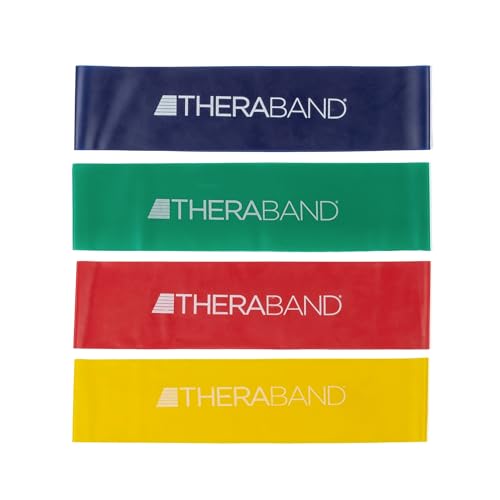
TheraBand Professional Latex Resistance Band for Ankle Stretching
This latex band skips the rigid board entirely, folding down small enough for a gym bag pocket. Color-coded resistance levels let a user progress from light to heavy tension over time. Physical therapists commonly recommend bands like it for early-stage ankle mobility work.
Pros
- Most portable pick of the group
- Color coding supports gradual resistance progression
- Doubles for general ankle mobility exercises
Cons
- No fixed angle for a passive weight-bearing hold
- Latex material can irritate rubber-sensitive skin
How they compare
| # | Model | Design | Best for | Score | Price |
|---|---|---|---|---|---|
| 1 | ProStretch Original Calf Stretcher | Curved rocking base | Best overall | 9.3 | Check price |
| 2 | Yes4All Adjustable Slant Board for Calf Stretching | Approx. 10 to 40 degrees | Best for runners | 9.0 | Check price |
| 3 | OPTP Elastic Stretch Strap with Loops | Elastic with fabric loops | Best for seated stretching | 8.7 | Check price |
| 4 | StrongTek Adjustable Slant Board Calf Stretcher | 3 to 4 preset angles | Best value | 8.5 | Check price |
| 5 | RockTape Rocktape Foot and Calf Stretcher Board | Gentle, low-angle start | Best for post-injury rehab | 8.3 | Check price |
| 6 | Fivklemnz Adjustable Slant Board Calf Stretcher | Multiple preset angles | Best budget adjustable board | 8.1 | Check price |
| 7 | TheraBand Professional Latex Resistance Band for Ankle Stretching | Natural rubber latex | Best portable option | 8.0 | Check price |
Common questions
What is the best calf stretcher for plantar fasciitis?
Boards with a gentle starting incline, built with rehab in mind, are generally favored over steep-angle athletic boards.
How long should you hold a calf stretch each session?
Most guidance points to 30 to 60 seconds per side, repeated two to three times.
Slant board vs rocking stretcher, which is better for runners?
Runners tracking flexibility progress over time often prefer a slant board because its locked angle stays consistent between sessions.
Can a calf stretcher help with Achilles tendon tightness?
Yes, dorsiflexion holds on a board or rocker stretch the Achilles tendon alongside the calf muscles.
Do calf stretchers work both legs at once?
Boards with a wide two-foot surface allow bilateral stretching, while narrower single-foot boards handle one leg at a time.
Is a resistance band as effective as a slant board for calf stretching?
Bands deliver active resistance stretching but cannot replicate the passive, weight-bearing hold a board provides.
What incline angle is best for calf stretching?
Angles above 30 degrees target the upper calf, while angles around 10 to 15 degrees focus on the Achilles and soleus.
Can calf stretchers double as exercise equipment?
Some slant boards also support standing calf raises or squats, adding light resistance training alongside the stretch.
Are calf stretchers safe for beginners?
Yes, starting at the lowest available angle and holding briefly lets beginners build tolerance before progressing.
How much floor space does a calf stretcher need?
Rocking stretchers and folding boards fit under a desk or bed, while strap options need almost no dedicated space.
Our pick
Most people get the widest use out of the ProStretch Original since it handles calves, Achilles, and plantar fascia in one self-adjusting device. Runners chasing consistent, measurable flexibility gains should pick a locked-angle slant board instead. Anyone without floor space or recovering from injury can lean on a seated strap until a board fits their routine.
Derek Holt
Derek has a background coaching recreational and amateur athletes and has worked the sales floor at specialty fitness retailers. He focuses on equipment durability, ergonomics and realistic use cases rather than marketing claims.
You might also need

Core Products Soft Foam Neck Brace: Gentle Support for $16.49?

Why Does a Punching Bag Need to Be the Right Weight for Your Size?

Why Does a Jump Rope’s Weight Change the Workout Difficulty?
