Square Cake Pans Compared: Gauge, Coating and Size
USA Pan’s Square Cake Pan wins the overall pick with warp resistant aluminized steel and a silicone coating that releases cakes clean. Fat Daddio’s anodized aluminum pan fits bakers chasing professional level edges and even heat. Wilton’s Perfect Results pan covers occasional bakers who want reliable results without a premium price.
USA Pan’s Square Cake Pan avoids warping through heavier aluminized steel and a silicone coating that releases cakes clean. Bakers chasing sharp, even layers often choose Fat Daddio’s anodized aluminum pan instead, trading nonstick convenience for heat consistency. Anyone who bakes only occasionally does fine with Wilton’s Perfect Results pan at a lower cost.
Thin gauge pans bow in a hot oven, leaving a cake thinner at the edges than the center. We compared stated material gauge, coating type, size options and owner reports on warping across seven square pans.
How to choose
What to look for in a square cake pan Material gauge, coating type and size decide most of a pan’s long term performance. Thicker steel or aluminum resists warping in a hot oven, keeping cakes even edge to edge. Coating affects both release and cleanup, while uncoated aluminum needs manual greasing but skips coating wear entirely. Match pan size to your recipe rather than assuming every 9 inch square pan measures the same.
Coated vs uncoated: which square pan releases better? USA Pan and Wilton’s Perfect Results release cakes without flouring and clean up fast after baking. Fat Daddio’s and Nordic Ware Naturals skip coating altogether, avoiding the wear and flaking that build up over years. Professional bakers often prefer uncoated pans for consistency across hundreds of bakes. Home bakers usually value the convenience a nonstick coating brings.
Steel or aluminum: which bakes more evenly? Aluminum conducts heat more evenly than steel, cutting the hot spots that cause uneven edges. Steel pans, often aluminized for durability, handle daily use and typically cost less than dedicated aluminum bakeware. Fat Daddio’s anodized aluminum construction targets bakers chasing that heat conduction advantage specifically.
Which pan size fits your recipe? Square cake pans commonly come in 8×8 and 9×9 inch sizes, and swapping one for the other changes bake time and cake height. An 8 inch recipe baked in a 9 inch pan turns out thinner and can dry out if timing isn’t adjusted. Check your recipe’s specified pan size before assuming any square pan works interchangeably.
Our top picks
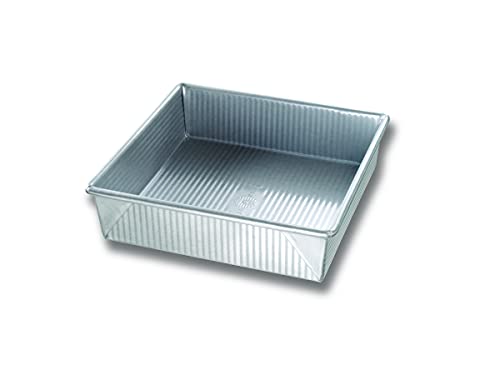
USA Pan Square Cake Pan (9×9)
Aluminized steel resists warping that thinner pans develop after repeated oven cycles. A silicone based coating releases cakes without flour or extra greasing. Owners baking weekly report the coating still performs after years of regular use.
Pros
- Heavier gauge steel resists warping over time
- Silicone coating releases cakes without flouring
- Corrugated surface promotes even air circulation while baking
Cons
- Hand washing is recommended over dishwasher cycles
- Sold in only a few fixed sizes

Fat Daddio’s Anodized Aluminum Square Cake Pan (9×9)
Anodized aluminum spreads heat more evenly than steel, cutting down hot spots that cause uneven browning. Straight sides give cakes crisp, clean edges for layered or stacked desserts. Tiered cake bakers value the consistent sizing across multiple pans.
Pros
- Anodized aluminum heats more evenly than plain steel
- Straight sides produce sharp, professional looking edges
- Consistent sizing across pans aids tiered cake building
Cons
- No nonstick coating, so greasing stays necessary
- Costs more than standard home baking pans

Wilton Perfect Results Premium Non-Stick Square Cake Pan (9×9)
A nonstick coating and moderate steel gauge handle regular home baking without a premium price tag. Rolled edges add rigidity that reduces warping in a standard oven. Occasional bakers cite it as reliable enough without professional grade materials.
Pros
- Costs less than premium anodized or steel pans
- Dishwasher safe coating simplifies cleanup
- Rolled edges add structural rigidity
Cons
- Thinner gauge than USA Pan or Fat Daddio’s
- Coating wears faster under heavy repeated use

Nordic Ware Naturals Square Cake Pan
Natural aluminum skips any coating that can flake or degrade over years of use. Heat spreads evenly across the metal for consistent browning. Bakers wary of nonstick chemicals choose this pan specifically to avoid coated surfaces.
Pros
- No coating to wear off or degrade over years
- Aluminum spreads heat evenly for consistent browning
- Made in the USA with a durable build
Cons
- Needs manual greasing and flouring every use
- Can discolor over time with repeated baking

Chicago Metallic Professional Non-Stick Square Cake Pan
A textured nonstick surface increases coating area, which aids release over a smooth finish. Steel gauge suits regular but not daily baking. Budget conscious bakers report solid release despite the lower price.
Pros
- Textured coating aids release over a smooth surface
- Costs less than premium branded pans
- Dishwasher safe for easy cleanup
Cons
- Lighter gauge steel than USA Pan or Fat Daddio’s
- More prone to minor warping over years of use

Farberware Nonstick Bakeware 9-Inch Square Pan
A double layer nonstick coating aims to beat single coated budget pans on release. Wide, comfortable handles make it easier to move a full pan safely. Parents baking with kids mention the sturdy handles most.
Pros
- Double coating improves release over single layer pans
- Wide handles aid safe handling of a full pan
- Dishwasher safe coating for easy cleanup
Cons
- Coating can discolor faster than silicone based finishes
- Fewer size options than USA Pan or Fat Daddio’s
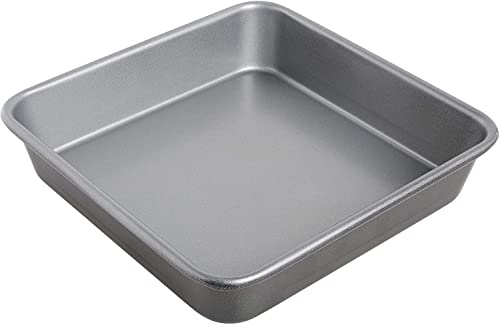
Cuisinart Chef’s Classic Nonstick Square Cake Pan
Heavier gauge steel resists denting better than lighter budget pans during storage and stacking. Nonstick coating handles regular cake and brownie baking without major sticking. Cabinet stackers cite the sturdier build holding shape over time.
Pros
- Heavier gauge resists denting from stacked storage
- Nonstick coating handles regular home baking well
- Dishwasher safe for simpler cleanup
Cons
- Heavier weight makes handling slightly more awkward
- Coating trails top rated silicone based pans
Side by side
| # | Model | Size | Best for | Score | Price |
|---|---|---|---|---|---|
| 1 | USA Pan Square Cake Pan (9×9) | 9 x 9 inches | Best overall | 9.3 | Check price |
| 2 | Fat Daddio’s Anodized Aluminum Square Cake Pan (9×9) | 9 x 9 inches | Best for professional level results | 9.0 | Check price |
| 3 | Wilton Perfect Results Premium Non-Stick Square Cake Pan (9×9) | 9 x 9 inches | Best value | 8.7 | Check price |
| 4 | Nordic Ware Naturals Square Cake Pan | 9 x 9 inches | Best nonreactive uncoated pan | 8.4 | Check price |
| 5 | Chicago Metallic Professional Non-Stick Square Cake Pan | 9 x 9 inches | Best budget | 8.1 | Check price |
| 6 | Farberware Nonstick Bakeware 9-Inch Square Pan | 9 x 9 inches | Best for easy release | 8.0 | Check price |
| 7 | Cuisinart Chef’s Classic Nonstick Square Cake Pan | 9 x 9 inches | Best for heavy gauge durability | 7.9 | Check price |
Good to know
What is the difference between a nonstick and an uncoated cake pan?
Nonstick pans carry a coating, often silicone based, that helps cakes release without added grease. Uncoated pans, usually aluminum, need manual greasing and flouring but avoid a coating that can wear down over years.
Does pan material affect how a cake bakes?
Yes. Aluminum and aluminized steel conduct heat more evenly than thin standard steel, reducing uneven browning and hot spots. Thicker gauge pans in any material also resist warping better in a hot oven.
Can you use a 9×9 pan instead of an 8×8 pan?
You can, but the cake bakes thinner and finishes faster than the recipe’s original timing, since batter spreads over more surface area. Reduce bake time and start checking for doneness a few minutes early.
How do you stop a nonstick cake pan from warping?
Avoid drastic temperature changes, like moving a hot pan straight into cold water, since that thermal shock causes warping over time. A heavier gauge pan, like USA Pan or Cuisinart’s heavy gauge model, resists warping better than thin budget pans from the start.
Are anodized aluminum cake pans worth the extra cost?
For bakers prioritizing even heat distribution and long term durability without coating wear, yes. Occasional home bakers who value convenience over precision often get similar practical results from a quality nonstick coated pan instead.
Is it safe to use metal utensils in a nonstick cake pan?
Best avoided, since metal utensils can scratch and gradually wear down a nonstick coating. Cakes rarely need cutting inside the pan itself, so this mainly matters when loosening edges before removal.
How do you grease an uncoated aluminum cake pan properly?
Coat the interior evenly with butter or shortening, dust with flour, then tap out the excess so a thin even layer covers the bottom and sides. Some bakers use a flour and oil paste instead for more even coverage on aluminum.
What size square cake pan is standard for most recipes?
9×9 inches is the most common size referenced in home baking recipes, though 8×8 inch pans appear often too. Always check the specific recipe, since the two sizes aren’t directly interchangeable without adjusting bake time.
Which square cake pan is best for a beginner baker?
Wilton’s Perfect Results pan suits beginners well, since its nonstick coating forgives inconsistent greasing and it goes straight into the dishwasher after use. USA Pan’s Square Cake Pan is a close second once a beginner bakes often enough to justify hand washing.
Our pick
Home bakers wanting dependable, warp resistant results should pick the USA Pan Square Cake Pan for its heavier gauge and clean nonstick release. Bakers chasing professional level evenness and sharp edges get more from Fat Daddio’s anodized aluminum pan, even with the extra greasing step. Anyone baking only occasionally can rely on Wilton’s Perfect Results pan for solid performance at a lower cost.
Dana Whitfield
Dana spent eight years buying and merchandising for a regional kitchenware retailer before moving into editorial work. She has handled thousands of SKUs across cookware, small appliances and kitchen organization, and focuses on the practical differences that matter once a product is actually in daily use.