What Cage Size Does an African Grey Really Need?
Prevue Pet Products Wrought Iron Select Bird Cage leads for correct bar spacing and a frame no grey can flex. A and E Cage Company Flight Cage suits owners with room for extra width. Yaheetech 69 Inch Rolling Bird Cage is the strongest value pick.
Prevue Pet Products Wrought Iron Select Bird Cage combines safe bar spacing with frame strength that suits a single African grey. A and E Cage Company Flight Cage rewards owners who can give extra width. Yaheetech 69 Inch Rolling Bird Cage delivers the same safety basics for less.
Listings often quote outside dimensions that include the stand, and spacing built for a conure is dangerous for a grey. We compared published bar spacing, wire gauge and coating type, then weighed owner reports about latches being defeated, seed guards cracking and trays warping after months of cleaning.
The top picks, ranked
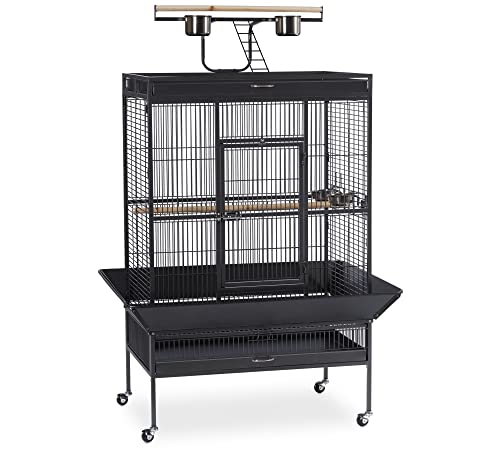
Prevue Pet Products Wrought Iron Select Bird Cage
Three quarter inch bar spacing pairs with a powder-coated frame heavy enough that a grey cannot flex it. A play top with a ladder adds out-of-cage time inside the same footprint. Pull-out grate and tray speed up daily cleaning, and owners report the casters roll smoothly once the frame is squared during assembly.
Pros
- Bar spacing and gauge suit a medium parrot
- Play top adds enrichment in the same footprint
- Slide-out tray speeds up daily cleaning
Cons
- Assembly needs two people and a spare hour
- Weight makes repositioning difficult even with casters

A and E Cage Company Flight Cage
Horizontal room takes priority over height in this flight cage, matching how a grey actually moves. Construction runs noticeably thicker than mass-market cages. A seed skirt keeps mess contained around the base, and multiple feeder doors allow servicing without opening the whole front.
Pros
- Extra width lets a grey move sideways naturally
- Heavier gauge steel resists beak damage
- Feeder doors allow servicing without full access
Cons
- Takes up a substantial amount of floor space
- Ranks among the heaviest cages here to move
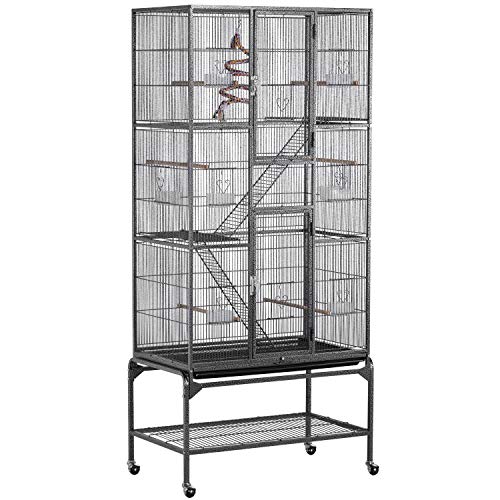
Yaheetech 69 Inch Rolling Bird Cage
A tall footprint pairs with a play top stand and a slide-out tray, at a lower cost than premium wrought iron cages. Yaheetech sells several sizes, so confirm the three quarter inch spacing version before ordering. Owners call it solid for the money but recommend swapping the plastic perches for natural wood.
Pros
- Strong value for the size and included stand
- Lower shelf stores food and cleaning supplies
- Lockable casters keep the cage from drifting
Cons
- Included plastic perches should be replaced
- Latches benefit from an added clip

Prevue Hendryx Wrought Iron Flight Cage
A wider interior replaces the play top here, suiting owners who prioritize movement inside the cage itself. Some versions include a removable divider for temporary separation during introductions. Full-width slide-out tray keeps cleaning straightforward despite the larger footprint.
Pros
- Generous width for climbing and wing stretching
- Full-width tray makes cleaning simple
- Sturdy stand with lockable wheels
Cons
- No play top for out-of-cage perching
- Needs a wide wall or corner to sit properly

VIVOHOME 61 Inch Wrought Iron Bird Cage
Height replaces width in this narrower cage, built for homes with limited floor space. A play top and stand ship included, so a grey with daily out-of-cage time still gets enrichment. Finish holds up to weekly wiping without dulling.
Pros
- Smaller floor footprint than flight cages
- Play top and ladder included at purchase
- One person can assemble it in reasonable time
Cons
- Narrower interior limits sideways movement
- Best suited to birds with daily out-of-cage time

Mcage Large Wrought Iron Bird Cage
Thick bars and simple hardware target owners whose grey has already defeated a lighter cage. Design stays plain rather than decorative, prioritizing durability and easy servicing. Spacing varies across the Mcage range, so confirm the exact listing before ordering.
Pros
- Thick bars stand up to persistent chewing
- Simple hardware is easy to replace if damaged
- Multiple feeder doors reduce full openings
Cons
- Appearance stays plain next to premium cages
- Listing sizes vary, so spacing needs checking

ZENY 53 Inch Bird Cage with Stand
New owners get an affordable, safe enclosure quickly with a rolling stand and slide-out tray. Lighter weight than the wrought iron options above suits a grey that spends most of the day out with the family. Many owners treat it as a first cage before upgrading.
Pros
- Low outlay for a first proper cage
- Light enough for one person to assemble
- Rolls easily between rooms
Cons
- Lighter gauge than dedicated parrot cages
- Interior runs tight for full-time housing
Compared at a glance
| # | Model | Bar spacing | Best for | Score | Price |
|---|---|---|---|---|---|
| 1 | Prevue Pet Products Wrought Iron Select Bird Cage | 3/4 inch | Best overall | 9.4 | Check price |
| 2 | A and E Cage Company Flight Cage | 3/4 inch | Best for wing space | 9.2 | Check price |
| 3 | Yaheetech 69 Inch Rolling Bird Cage | 3/4 inch on the medium parrot version | Best value | 9.0 | Check price |
| 4 | Prevue Hendryx Wrought Iron Flight Cage | 3/4 inch | Best for a pair or a wide corner | 8.8 | Check price |
| 5 | VIVOHOME 61 Inch Wrought Iron Bird Cage | 3/4 inch | Best compact footprint | 8.6 | Check price |
| 6 | Mcage Large Wrought Iron Bird Cage | 3/4 inch on medium parrot models | Best for heavy chewers | 8.3 | Check price |
| 7 | ZENY 53 Inch Bird Cage with Stand | About 3/4 inch on the parrot version | Best budget starter | 8.0 | Check price |
What to look for
What bar spacing is safe for an African grey cage? Three quarter inch to one inch spacing is the accepted range for an African grey. Narrower spacing traps toes and beaks during climbing. Wider spacing risks a head pushing through, which is a serious hazard. Treat any listing that omits spacing as a reason to look elsewhere.
Does width or height matter more for a grey’s cage? Greys climb and sidestep more than they fly inside a cage, so width delivers more usable space than height. Aim for an interior that lets the bird turn and fully stretch both wings without touching bars. Add extra room on top of that minimum for toys and perches.
How do you stop a grey from opening cage latches? Simple slide latches and spring clips rarely stop a determined African grey for long. Locking doors reduce the risk substantially. Stainless steel quick links or bird-safe clips add a second barrier on any door your bird works at. Owners report this is the most common modification made in the first month of ownership.
What coating, perches and cleaning setup work best? Non-toxic powder-coated steel or stainless steel beats galvanized metal, which can shed zinc over time. Round plastic perches should give way to natural wood in varied diameters for foot health. A slide-out tray paired with a removable grate turns daily cleaning into a two-minute task instead of a chore you keep postponing.
Questions worth asking
What bar spacing is safe for an African grey?
Three quarter inch to one inch is the usual recommendation. Narrower spacing risks trapped toes, and wider spacing risks a bird pushing its head through. Confirm the figure on the specific listing rather than the product family.
How big should an African grey cage be?
Bigger works better, and width beats height. A common guideline calls for at least 32 inches wide by 23 inches deep for one grey, with more room strongly preferred for birds housed most of the day.
Do African greys need a play top on their cage?
It is not essential, but a play top adds structured out-of-cage time within the same footprint, useful in smaller homes. Owners with a separate stand may prefer a wider flight cage instead.
Are round cages suitable for parrots?
Most avian sources advise against them. Round cages give no corner for a bird to settle into, and converging bars near the top can trap toes. Rectangular cages remain the safer choice.
How do you stop a grey from opening the cage door?
Add stainless steel quick links, bird-safe padlocks or spring-loaded clips to the latches. Avoid zinc-plated hardware, and check fasteners weekly since a determined grey keeps working at them.
Which perches should replace the ones included with a cage?
Natural hardwood branches in varying diameters support foot health far better than uniform plastic dowels. Many owners add one rope perch and one grooming perch, positioned away from food bowls.
How often should an African grey cage be cleaned?
Liners and food bowls need daily attention, perches and grates weekly, and a full wipe-down of bars and tray monthly. Slide-out trays and removable grates make that routine far easier to maintain.
Is a cage with casters worth choosing?
Yes, if the cage needs moving for cleaning or between rooms. Look for lockable casters so the cage cannot drift while your bird climbs the bars.
The verdict
Prevue Pet Products Wrought Iron Select Bird Cage remains the most complete choice for a single African grey, pairing safe bar spacing with cleaning access you will appreciate daily. Owners who can spare more width should step up to the A and E Cage Company Flight Cage, while the Yaheetech 69 Inch Rolling Bird Cage saves money for natural perches and enrichment. Whatever you choose, plan on adding secure clips to every door.
Olivia Hartley
Olivia spent several years working at an animal shelter and a pet-supply retailer before joining the editorial team. She researches pet gear with an emphasis on safety, comfort and the fine print that owners often miss.

