Burr Grinders Worth Buying for Consistent Grounds
Baratza’s Virtuoso+ suits the widest range of home brewers with a stronger 40mm burr set and a digital timer. Fellow’s Opus reaches espresso fineness for less money. Capresso’s Infinity stays the dependable choice for filter coffee on a tighter budget.
Home brewers chasing consistency across methods land on the Baratza Virtuoso+ most often, thanks to its 40mm conical burrs and digital timer. Anyone who also pulls espresso shots should look at the Fellow Opus instead. Manual grinding with the Hario Skerton Pro delivers comparable quality without a motor or a cord.
Grind quality hinges on burr geometry and adjustment resolution far more than on the number printed on the box, which is what makes these tricky to compare on spec sheets alone. We compared burr size and type, stepped versus stepless adjustment, grind range and cleaning access, then checked those against what owners report about noise, static and how often burrs need replacing.
The top picks, ranked

Baratza Virtuoso+ Conical Burr Grinder
A 40mm conical burr set grinds faster and more evenly than Baratza’s entry models, and a digital timer makes dosing repeatable to a tenth of a second. Forty stepped settings cover French press through fine filter without trouble. Every part is sold separately, so a worn burr or failed switch means a repair rather than a replacement.
Pros
- Even grind across most filter methods
- Digital timer keeps dosing repeatable
- Every component is replaceable long term
Cons
- Steps are too coarse for dialling espresso
- Grinding is noticeably loud

Fellow Opus Conical Burr Grinder
Fellow fits 40mm conical burrs with enough fine adjustment to reach true espresso, a range most grinders in this price bracket miss. Single dose loading with a low retention path leaves very little coffee trapped between uses. Espresso dialling stays workable rather than effortless, since the steps are still fixed rather than stepless.
Pros
- Reaches genuine espresso fineness
- Very little retention between doses
- Anti static design cuts down mess
Cons
- Fixed steps make espresso dialling coarse
- Runs loud during grinding

Capresso Infinity Conical Burr Grinder
A slow turning conical burr set keeps heat and static down, which is why this grinder has stayed a filter brewing recommendation for years. Sixteen settings cover press, drip and pour over without fuss. Build quality leans basic, with a plastic hopper, but grind consistency for the price outperforms it.
Pros
- Consistent filter grind for the price
- Slow motor limits heat and static buildup
- Straightforward to operate day to day
Cons
- Not built for espresso fineness
- Plastic housing feels basic

Eureka Mignon Silenzio Espresso Grinder
Flat 50mm burrs with stepless adjustment let you dial espresso in fractions of a turn, which stepped grinders cannot match. Sound damping inside the housing makes it noticeably quieter than most espresso grinders. Single purpose by design, it offers little benefit to anyone who mostly brews filter coffee.
Pros
- Stepless dialling suits espresso precisely
- Quieter than most espresso grinders
- Solid metal build feels durable
Cons
- Limited value for filter brewing
- Higher outlay for one specific use

KRUPS GX332850 Precision Grinder
An 8 ounce hopper and a cup selector suit households brewing full carafes rather than single servings. Thirty five settings span the filter range, and flat burrs grind reasonably evenly for drip coffee. Fine settings stop short of espresso, and retention in the chamber runs higher than premium grinders.
Pros
- Handles large batches without refilling
- Wide range of filter settings
- Cup selector simplifies daily dosing
Cons
- No espresso capability
- Retains more grounds than premium models

Bodum Bistro Burr Coffee Grinder
Bodum wraps a competent conical burr set in a design meant to sit out on the counter rather than hide in a cupboard. A borosilicate glass catch jar cuts down static compared with plastic alternatives. Twelve settings cover the common filter methods, though the build feels less robust than Baratza’s.
Pros
- Glass jar reduces static cling
- Attractive enough to leave on display
- Simple timer dial for daily use
Cons
- Fewer settings than most rivals here
- Plastic components wear faster over years
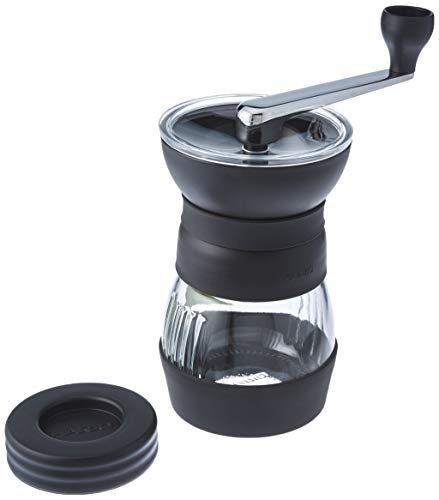
Hario Skerton Pro Manual Coffee Grinder
Hario stabilised the burr assembly on this version, fixing the wobble that plagued the original Skerton and producing a noticeably more even grind. Ceramic burrs stay sharp for years and add no heat during grinding. Filter and press suit it best, since fine espresso grinds take real cranking effort.
Pros
- Even grind for a manual grinder
- Ceramic burrs hold their edge for years
- Larger capacity than most hand grinders
Cons
- Adjusting the burr means removing the handle
- Slow going for fine espresso grinds
Side by side
| # | Model | Burrs | Best for | Score | Price |
|---|---|---|---|---|---|
| 1 | Baratza Virtuoso+ Conical Burr Grinder | 40mm conical steel | Best overall | 9.4 | Check price |
| 2 | Fellow Opus Conical Burr Grinder | 40mm conical | Best for espresso capable range | 9.2 | Check price |
| 3 | Capresso Infinity Conical Burr Grinder | Conical steel | Best value | 9.0 | Check price |
| 4 | Eureka Mignon Silenzio Espresso Grinder | 50mm flat steel | Best for home espresso | 8.8 | Check price |
| 5 | KRUPS GX332850 Precision Grinder | Flat steel | Best for large batch brewing | 8.6 | Check price |
| 6 | Bodum Bistro Burr Coffee Grinder | Conical steel | Best for countertop looks | 8.3 | Check price |
| 7 | Hario Skerton Pro Manual Coffee Grinder | Ceramic conical | Best budget manual | 8.0 | Check price |
How to choose
Conical vs flat burrs: what’s the real difference? Conical burrs sit as a cone inside a ring, spin at lower speed and generate less heat, which is why most home grinders use them. Flat burrs run as two parallel discs and produce a narrower particle distribution, often described as more clarity in the cup. Neither geometry wins outright. Burr quality and alignment matter more than shape alone.
Stepped or stepless: which adjustment do you need? Stepped grinders click into fixed positions, so returning to a known setting for drip or press is simple. Espresso needs finer control, since a tiny particle size shift changes extraction noticeably, which is why grinders like the Eureka Mignon use stepless micrometric adjustment. Buying a stepped grinder expecting espresso results is the most common regret in this category.
How do you deal with retention and static? Old coffee trapped inside a grinder goes stale and turns up in the next brew, while static scatters grounds across the counter. Single dose designs, anti static systems and glass catch jars all cut the problem down. A single drop of water on the beans before grinding also reduces static in almost any grinder.
Is a grinder worth buying if you can’t get parts for it? Burrs dull eventually in any grinder, since they are wearing parts by design. Baratza publishes exploded diagrams and sells every component, turning a failed motor or worn burr set into a repair instead of a write off. Sealed grinders with no parts support become disposable, worth weighing for something used daily.
Good to know
What’s the difference between conical and flat burrs?
Conical burrs form a cone inside a ring and run cooler at lower speed. Flat burrs use two parallel discs and produce a tighter particle distribution. Flat burr grinders often get credit for clarity, though alignment and quality matter more than shape.
Do you need a stepless grinder for espresso?
Only for espresso, where small changes in grind size shift extraction significantly. Drip, pour over and press all work fine with stepped adjustment, which also makes returning to a known setting easier.
Can any burr grinder handle espresso?
No. Many reach fine settings, but the gaps between steps are too coarse to dial in a shot properly. Look for grinders that state espresso capability outright, such as the Fellow Opus or a dedicated espresso model.
How long do burr grinders last before replacement?
Steel burrs in a home grinder typically last several hundred pounds of coffee, and ceramic burrs go further still. Slower grinding, more fines and inconsistent results signal that replacement is overdue.
Are ceramic burrs better than steel burrs?
Ceramic stays sharp longer and adds less heat, which is why manual grinders favour it. Steel cuts faster and holds up better at the higher speeds electric grinders run. Both produce good results when properly made.
Why is my coffee grind coming out inconsistent?
Dull or misaligned burrs are the usual cause, along with oily beans clogging the chamber or a grinder pushed outside its intended range. A clean and a check of the adjustment mechanism fixes most cases.
How do you clean a burr grinder properly?
Brush out the burr chamber every couple of weeks, then disassemble the burrs for a deeper clean every few months. Grinder cleaning tablets pass through and lift oils without a full teardown.
Is a manual burr grinder good enough for daily coffee?
For one or two cups a day, yes. Manual grinders often use burrs comparable to electric models at the same price. Effort and capacity are the real limitations, not grind quality.
Burr grinder vs blade grinder: does it matter?
Burr grinders crush beans to a consistent size, while blade grinders chop unevenly and heat the coffee more. Uneven particles from a blade grinder extract inconsistently, producing both bitter and sour notes in the same cup.
Our take
The Baratza Virtuoso+ remains the grinder most home brewers should buy, pairing an even filter grind with a repeatable timer and years of available parts. Espresso drinkers get better results from the Fellow Opus or a step up to the Eureka Mignon Silenzio. The Capresso Infinity still makes sense as the value pick for drip and press.
Dana Whitfield
Dana spent eight years buying and merchandising for a regional kitchenware retailer before moving into editorial work. She has handled thousands of SKUs across cookware, small appliances and kitchen organization, and focuses on the practical differences that matter once a product is actually in daily use.
