What Makes a Breast Pump Comfortable for Daily Use?
Exclusive pumpers get the steadiest output from the Spectra S1 Plus, thanks to its rechargeable battery and independent suction and cycle controls. Hands-free sessions favor the Elvie Pump. Budget-minded parents often choose the Momcozy S12 Pro, a wearable pump priced well below Elvie or Willow.
Picking between a plug-in pump and a wearable one comes down to output control versus battery independence. Spectra’s S1 Plus leads for exclusive pumping with its rechargeable battery and adjustable settings. Elvie frees both hands during a session, and Momcozy’s S12 Pro covers wearable pumping at a lower cost.
Suction strength and cycle speed vary widely across manufacturer listings. A closed system keeps milk away from the motor; an open system does not. We compared those specs against battery ratings, noise level and bottle thread fit, drawing on manufacturer data and owner reports on comfort and output.
How to choose
What’s the difference between closed and open system pumps? A closed system uses a barrier, usually a diaphragm or valve, to keep milk from reaching the tubing and motor. Manufacturers market this as easier to clean and less prone to mold growth inside tubing. Open systems, common on older or budget pumps, rely on tubing alone and need more frequent inspection. Every pump on this list uses a closed system.
Wearable or plug-in pump: which fits your routine? Wearable pumps like the Elvie Pump or Willow Go fit inside a bra and allow movement during a session, at a higher cost per unit. Plug-in pumps such as the Spectra S1 Plus or Medela Pump in Style typically cost less and deliver stronger, more consistent suction per manufacturer specs. Parents pumping at a desk often prefer plug-in models. Those needing discretion in meetings tend to lean wearable.
What matters most for exclusive versus occasional pumping? Exclusive pumpers, who rely on a pump for most feedings, benefit from adjustable suction, durable motors and easy-to-find replacement parts, all strengths of the Spectra and Medela lines. Occasional pumpers building a small stash can prioritize portability and battery life over raw suction strength. Flange sizing matters either way, since a poor fit affects output regardless of motor quality.
Are budget or wearable pumps worth it for travel? Compact models like the Medela Freestyle Flex or budget wearables like the Momcozy S12 Pro suit travel better than full-size double electric pumps. Smaller motor units and battery operation make the difference. Battery life still varies by model, so check the manufacturer’s rated sessions per charge before a long trip. Willow Go’s reusable milk bags cut down on packed bottles, useful for flights or long drives.
The shortlist, ranked

Spectra S1 Plus
Spectra markets this as a hospital-strength double electric pump with a built-in rechargeable battery, unusual at this price tier. Suction and cycle speed adjust independently of each other. A closed system keeps the motor separate from milk, and many exclusive pumpers cite the quiet motor for daily use.
Pros
- Built-in battery enables cordless pumping sessions
- Suction and cycle speed adjust independently
- Closed system keeps the motor separate from milk
Cons
- Bulkier than wearable pump options
- Tubing and flanges need periodic replacement

Medela Pump in Style with MaxFlow
Medela’s 2-Phase Expression pattern mimics a faster initial rhythm before shifting to slower expression, per the manufacturer. MaxFlow is the brand’s latest closed-system motor upgrade to this long-running line. Included tote and cooler bags suit parents pumping several times a day away from home.
Pros
- Replacement parts are widely available
- 2-Phase Expression pattern reflects decades of iteration
- Included cooler bag suits daily commuting
Cons
- Needs a separate battery pack for cordless use
- Heavier bag than newer compact pumps

Elvie Pump
Elvie’s pump fits inside a nursing bra with no external tubing or cord, controlled through a companion app. Manufacturer listings describe a closed system with a quiet motor rated for discreet use in meetings. Each side runs independently, so suction and output adjust per breast.
Pros
- No tubing or cords to manage mid-session
- Companion app tracks output and session history
- Quiet motor suits use around other people
Cons
- Costs more than plug-in pump kits
- Bra fit and flange sizing take trial and error
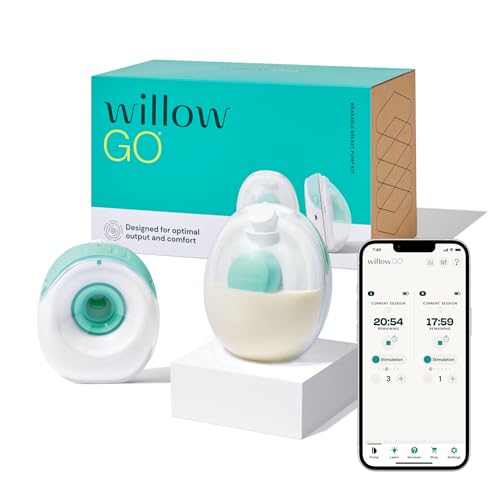
Willow Go
Willow Go pumps directly into reusable milk bags worn inside the cup, so a parent can move during a session without spills, according to the manufacturer. It drops the app requirement of the original Willow Pump while keeping the closed, cordless design. Battery charges over USB-C for travel.
Pros
- Spill-resistant design allows movement while pumping
- Works without an app or Bluetooth pairing
- USB-C charging simplifies travel
Cons
- Reusable bags cost more over time than bottles
- Fit takes a few sessions to learn

Momcozy S12 Pro
Momcozy brings wearable, hands-free pumping to a lower price than Elvie or Willow. Manufacturer listings note adjustable suction and expression modes with an LED display for session time. It fits inside a nursing bra like pricier wearables, using standard flange sizes for replacements.
Pros
- Costs less than most wearable competitors
- Standard flange sizing keeps replacement parts affordable
- LED display shows mode and battery status
Cons
- Battery life trails premium wearables per listing
- Bulkier profile under clothing than Elvie
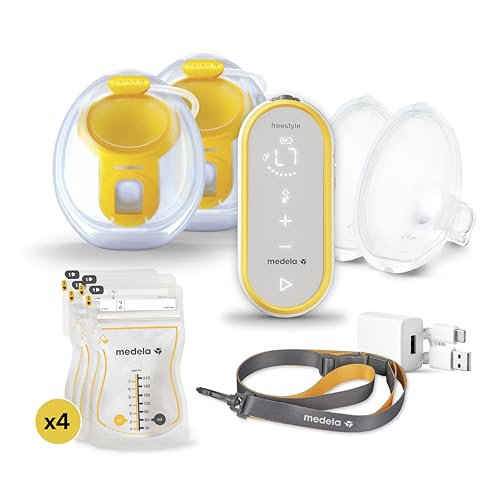
Medela Freestyle Flex
Freestyle Flex shrinks Medela’s closed-system pump into a body small enough for a jacket pocket, per the manufacturer. A touchscreen controls 2-Phase Expression settings, and the motor runs on a rechargeable battery rated for multiple sessions per charge. Tubes connect directly to standard Medela flanges.
Pros
- Motor unit fits in a bag or pocket
- Touchscreen simplifies switching modes mid-session
- Compatible with existing Medela flanges and bottles
Cons
- Touchscreen is harder to operate one-handed
- Battery needs more frequent charging under heavy use

Spectra S2 Plus
Spectra’s S2 Plus drops the S1’s built-in battery to reach a lower price, keeping the same closed system and adjustable suction. It plugs into a wall outlet, so it suits home use better than travel. Many hospitals and lactation consultants recommend this line, per the manufacturer’s professional listing.
Pros
- Same closed-system design as the pricier S1 Plus
- Widely recommended by lactation consultants
- Costs less than battery-equipped models
Cons
- No built-in battery limits cordless use
- Needs a separate battery pack for portability
How they compare
| # | Model | System type | Best for | Score | Price |
|---|---|---|---|---|---|
| 1 | Spectra S1 Plus | Closed system | Best overall | 9.4 | Check price |
| 2 | Medela Pump in Style with MaxFlow | Closed system | Best for exclusive pumping | 9.0 | Check price |
| 3 | Elvie Pump | Closed system | Best hands-free wearable | 8.7 | Check price |
| 4 | Willow Go | Closed system | Best for on-the-go pumping | 8.4 | Check price |
| 5 | Momcozy S12 Pro | Closed system | Best budget wearable | 8.1 | Check price |
| 6 | Medela Freestyle Flex | Closed system | Best compact portable | 8.0 | Check price |
| 7 | Spectra S2 Plus | Closed system | Best budget plug-in | 8.0 | Check price |
Good to know
What’s the difference between hospital-grade and personal-use pumps?
Hospital-grade describes a motor rated for multiple users with a closed system and interchangeable kits, as Spectra applies to the S1 and S2 Plus. Personal-use pumps are built for one user only.
How many suction levels does a breast pump need?
Most pumps compared here offer 8 to 12 adjustable suction levels, enough to match pressure to comfort as milk supply changes over time.
Can wearable pumps output as much as plug-in pumps?
Manufacturer listings for Elvie and Willow show suction ranges comparable to plug-in models, though smaller motors and battery limits can affect longer sessions.
Do breast pumps work with standard baby bottles?
Most flanges thread onto common bottle brands, but check the specific pump kit’s compatibility list, since some closed systems use proprietary connectors.
How long does a breast pump battery last?
Battery life varies by model and manufacturer listing, ranging from a few sessions on compact wearables to a full day on larger rechargeable units.
Is a double electric pump better than a single pump?
Double electric pumps express both sides at once, which lactation consultants generally say saves time over single pumping.
What flange size should I start with?
Flange size is measured in millimeters and depends on individual fit rather than pump brand, so many kits include multiple sizes.
How often should pump parts be replaced?
Manufacturers typically recommend replacing valves and membranes every 60 to 90 days with regular use, and tubing sooner if it cracks or discolors.
Which breast pump is best for exclusive pumping?
The Spectra S1 Plus and Medela Pump in Style with MaxFlow lead here, thanks to adjustable suction, durable motors and widely stocked replacement parts.
The verdict
Parents pumping several times a day get the steadiest output from the Spectra S1 Plus, backed by adjustable settings and a proven closed system. Those needing hands-free discretion should look at the Elvie Pump. Budget-conscious parents get similar wearable convenience from the Momcozy S12 Pro.
Rachel Simmons
Rachel previously worked in child-product retail and brings a practical, detail-first eye to gear reviews, focusing on safety standards, ease of use and the fine print that matters most for new caregivers.


