Choosing a Bowl Cover That Actually Holds Humidity for Dough
Mrs. Anderson’s Baking elastic cover fits directly over a round proofing basket without extra steps. Food Huggers’ silicone stretch lids seal snugly over standard mixing bowls instead. Bee’s Wrap suits a slower, room-temperature proof where some breathability helps rather than hurts.
Mrs. Anderson’s Baking’s elastic proofing cover leads this list because it is sized specifically for round proofing baskets rather than adapted from a general kitchen cover, so it sits snugly without extra tucking or tying. Food Huggers’ silicone stretch lids matter for anyone proofing dough directly in a mixing bowl instead of a rattan basket, since their stretch seals around a wider range of bowl rims. Bee’s Wrap fits best for a slower, room-temperature bulk ferment, where its slightly breathable beeswax cloth works a little differently than an airtight silicone or elastic cover.
A proofing cover’s only real job is keeping dough from drying out and forming a skin while it rises, without needing a fresh sheet of plastic wrap every single time. We compared fit across bowls and baskets, material, and how many times each cover realistically gets reused across seven options.
Our top picks

Mrs. Anderson’s Baking Proofing Basket Cover
Mrs. Anderson’s Baking shapes this cover to fit directly over a round rattan proofing basket, with an elastic edge that holds it in place without separate ties or clips. It replaces a plastic bag draped over the basket, which tends to slip off during a long rise. The fabric holds in enough humidity to keep dough from drying out during both room-temperature and refrigerated proofs.
Pros
- Elastic edge holds the cover in place reliably
- Purpose-built fit for round proofing baskets
- Reusable, cutting down on plastic wrap waste
Cons
- Sized for round baskets, not oval or bowls
- Needs regular washing to stay fresh

Eparé Reusable Bowl and Proofing Basket Cover
Eparé uses a drawstring instead of plain elastic, letting this cover cinch down over bowls and baskets of slightly different rim sizes rather than fitting only one exact diameter. That adjustability suits a baker switching between a mixing bowl for bulk fermentation and a basket for the final proof. The drawstring also holds more securely than elastic alone on an oddly shaped rim.
Pros
- Drawstring adjusts to multiple rim sizes
- More secure fit than plain elastic on odd shapes
- Works across both bowls and proofing baskets
Cons
- Drawstring adds a step compared to a simple pull-on cover
- Costs more than basic elastic-edge covers
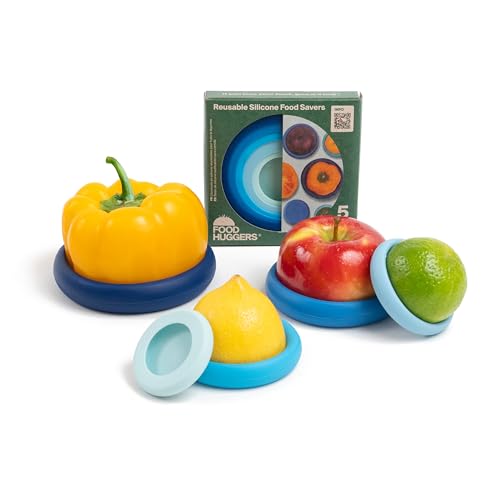
Food Huggers Silicone Stretch Lids
Food Huggers sells these silicone lids in a range of sizes, stretching to seal tightly around a standard mixing bowl’s rim during bulk fermentation. The silicone forms a closer seal than fabric covers, holding in more humidity for doughs that dry out easily. They double as general food storage lids outside of bread baking.
Pros
- Tighter seal than fabric covers
- Multi-size set fits several bowl diameters
- Doubles as general food storage lids
Cons
- Does not fit a rattan proofing basket’s shape well
- Very tight seal can trap more gas than a looser cover

Chuzy Chef Silicone Stretch Lids
Chuzy Chef packages several silicone stretch lid sizes together at a lower cost than some competing sets, covering small prep bowls up to larger mixing bowls used for bulk dough. The stretch and seal quality is comparable to pricier silicone lid brands for everyday proofing use. It suits a baker who wants a range of sizes without paying a premium for each one.
Pros
- Lower cost than premium silicone lid sets
- Range of sizes covers small to large bowls
- Dishwasher-safe for easy cleaning
Cons
- Seal quality is comparable, not superior, to pricier sets
- Not designed to fit rattan basket shapes

Bee’s Wrap Reusable Beeswax Food Wrap
Bee’s Wrap coats cotton cloth in beeswax, letting it mold around a bowl’s rim with hand warmth rather than relying on elastic or a drawstring. The slightly breathable cloth suits a longer, room-temperature bulk ferment where some airflow does not hurt the dough. It is not built specifically for bread, but bakers commonly repurpose it for covering a rising dough bowl.
Pros
- Molds to fit a range of bowl shapes by hand
- Reusable with simple cool-water washing
- Slight breathability suits longer room-temperature proofs
Cons
- Not purpose-built for bread proofing specifically
- Less secure seal than elastic or drawstring covers

Blue Avocado Bowl Huggers Reusable Bowl Covers
Blue Avocado sizes some of its Bowl Huggers covers larger than typical kitchen bowl covers, fitting bigger containers used for bulk dough fermentation rather than a single-serving mixing bowl. The elastic edge holds securely on wider rims that a smaller cover would struggle to stretch over. Fabric construction washes easily between bakes.
Pros
- Larger sizing fits bigger fermentation containers
- Elastic holds securely on wide rims
- Easy to wash between bakes
Cons
- Not sized for smaller banneton-style baskets
- General kitchen cover, not bread-specific design

Norpro Reusable Bowl Covers Set
Norpro bundles several basic elastic-edge covers in different sizes at a lower cost than buying single specialty covers. They work fine for covering a bowl of dough during a standard rise, even if they lack the basket-specific shaping of dedicated proofing covers. The set suits a baker who wants reusable covers on hand without spending much to get started.
Pros
- Lower cost than specialty proofing covers
- Multiple sizes included in one set
- Reusable instead of single-use plastic wrap
Cons
- Not shaped specifically for proofing baskets
- Basic construction compared to purpose-built covers
The lineup, side by side
| # | Model | Material | Best for | Score | Price |
|---|---|---|---|---|---|
| 1 | Mrs. Anderson’s Baking Proofing Basket Cover | Fabric with elastic edge | Best purpose-built cover for round proofing baskets | 9.0 | Check price |
| 2 | Eparé Reusable Bowl and Proofing Basket Cover | Fabric with drawstring closure | Best drawstring fit across bowls and baskets | 8.8 | Check price |
| 3 | Food Huggers Silicone Stretch Lids | Silicone | Best tight seal for standard mixing bowls | 8.7 | Check price |
| 4 | Chuzy Chef Silicone Stretch Lids | Silicone | Best value multi-size set | 8.4 | Check price |
| 5 | Bee’s Wrap Reusable Beeswax Food Wrap | Beeswax-coated cotton cloth | Best breathable option for slower room-temperature proofs | 8.2 | Check price |
| 6 | Blue Avocado Bowl Huggers Reusable Bowl Covers | Fabric with elastic edge | Best durable fabric cover for larger dough containers | 8.1 | Check price |
| 7 | Norpro Reusable Bowl Covers Set | Fabric with elastic edge | Best budget multi-pack of basic covers | 8.0 | Check price |
How to choose
Why covering dough during proofing actually matters Uncovered dough loses moisture from its exposed surface, forming a dry skin that can leave tough streaks baked into the finished crumb. A cover like Mrs. Anderson’s Baking’s or Food Huggers’ traps enough humidity near the dough’s surface to prevent that skin from forming during both a short room-temperature rise and a longer refrigerated retard. The cover does not need to be fully airtight, since dough still needs to expel some gas as it ferments.
Elastic covers, drawstrings, and silicone lids compared Elastic-edge covers like Mrs. Anderson’s Baking’s and Norpro’s slip on quickly but fit one general size range rather than adjusting precisely. Eparé’s drawstring cinches tighter across a wider range of rim sizes, useful for a baker switching between different bowls and baskets. Silicone stretch lids from Food Huggers and Chuzy Chef seal more tightly than fabric, which works well for mixing bowls but does not drape naturally over a rounded rattan basket’s shape.
Matching cover size to the container actually used A cover sized for a standard mixing bowl, like Food Huggers’ or Chuzy Chef’s smaller sizes, will not stretch properly over a larger bulk fermentation container, which is where Blue Avocado’s larger-sized covers have an advantage. Basket-specific covers like Mrs. Anderson’s Baking’s are shaped for a round banneton’s curve rather than a flat-bottomed bowl. Checking a cover’s size range against the actual bowl or basket rim diameter before buying avoids a cover that will not stay on.
Covering dough in the fridge versus at room temperature A longer, slower proof in the refrigerator benefits from a more secure seal, since the dough sits covered for many hours without attention, making Food Huggers’ tighter silicone seal or Mrs. Anderson’s Baking’s elastic cover a safer bet than a looser cloth. Bee’s Wrap’s slight breathability suits a shorter, actively monitored room-temperature rise better than an unattended overnight cold retard. Either way, a cover that has fully dried out or lost its stretch should be replaced rather than relied on for a long proof.
Common questions
Can plastic wrap be replaced entirely with a reusable cover?
Yes, for most proofing needs a reusable elastic, drawstring, or silicone cover holds in enough humidity to replace single-use plastic wrap.
Does a proofing cover need to be completely airtight?
No, dough still needs to release some gas as it ferments, so a snug but not perfectly sealed cover works better than a fully airtight one.
Can a bowl cover be used over a rattan proofing basket?
A basket-shaped cover like Mrs. Anderson’s Baking’s fits better than a flat bowl cover, since it follows the basket’s rounded shape rather than a flat bowl rim.
How do you clean a beeswax food wrap after using it on dough?
A quick rinse in cool water with mild soap, followed by air drying, keeps a beeswax wrap like Bee’s Wrap’s usable for repeated proofing covers.
Are silicone stretch lids better than fabric covers for proofing?
Silicone lids like Food Huggers’ seal more tightly on bowls, while fabric covers like Mrs. Anderson’s Baking’s fit curved baskets and larger containers more naturally.
Can a shower cap be used as a makeshift proofing cover?
Yes, many bakers use a plain shower cap in a pinch, which works similarly to a dedicated elastic-edge cover though it is not purpose-built for kitchen use.
Do bowl covers work for overnight cold proofing in the fridge?
Yes, a snug-fitting cover like a silicone lid or elastic cover holds in enough humidity for an overnight refrigerated proof without drying out the dough.
What size cover fits a standard large mixing bowl?
Multi-size sets like Chuzy Chef’s or Food Huggers’ typically include a size matched to standard large mixing bowls in the eight to twelve-inch range.
Can reusable bowl covers go in the dishwasher?
Silicone lids generally tolerate the dishwasher, while fabric covers with elastic should be hand or machine washed on a gentle setting instead.
Does the type of cover affect how much dough rises?
Not directly, since rise depends on yeast activity and temperature, though a cover that lets dough dry out can form a skin that slightly restricts expansion at the surface.
Our take
Mrs. Anderson’s Baking’s proofing basket cover is the best match for anyone proofing dough directly in a round rattan basket, since its shape and elastic fit were built for that exact use. Bakers working mainly in mixing bowls instead of baskets should choose Food Huggers’ silicone stretch lids for a tighter seal across different bowl sizes. Anyone covering a larger bulk fermentation container is better served by Blue Avocado’s larger-sized cover than by a cover designed for a single mixing bowl.
Dana Whitfield
Dana spent eight years buying and merchandising for a regional kitchenware retailer before moving into editorial work. She has handled thousands of SKUs across cookware, small appliances and kitchen organization, and focuses on the practical differences that matter once a product is actually in daily use.


