Catch Bottles That Make Brake Bleeding Less Messy
The Mityvac Brake Fluid Catch Bottle is the best overall pick, with a wide base and clip that stay put during a bleed. Phoenix Systems Brake Bleeder Catch Bottle offers a tighter seal against air, and the ABN 2-Pack covers two calipers at once for less than a single premium bottle.
The Mityvac Brake Fluid Catch Bottle is the strongest standalone pick for anyone bleeding brakes solo or with a helper on the pedal. Its wide, weighted base resists tipping while the tubing stays attached to the bleeder screw, and the clear body makes it easy to watch for air bubbles. It holds less fluid than some larger shop bottles, so longer bleeds may need a mid-job empty.
A catch bottle looks simple, but base stability, tubing fit, and how well the cap seals against drips separate a bottle that works from one that tips over mid-bleed. We compared capacity, base design, and tubing compatibility with common bleeder screw sizes.
The best picks, ranked

Mityvac Brake Fluid Catch Bottle
Mityvac shapes this bottle with a wide, low center of gravity so it resists tipping while clipped near a wheel well. The attached tubing fits most common bleeder screw diameters without an adapter. A clear body lets you watch fluid color and air bubbles during the bleed.
Pros
- Wide base resists tipping during a bleed
- Clear body shows fluid condition clearly
- Tubing fits most common screw sizes
Cons
- Smaller capacity than shop-style bottles
- No magnetic mount for steel surfaces

Phoenix Systems Brake Bleeder Catch Bottle
Phoenix Systems adds a one-way check valve in the cap, which keeps air from being pulled back toward the caliper between pedal strokes. That matters most on older or low systems where reverse flow risks adding air to the lines. The bottle pairs well with a helper-based manual bleed.
Pros
- Check valve blocks reverse air intrusion
- Compact size fits tight wheel wells
- Durable polycarbonate resists cracking
Cons
- Lower capacity needs more frequent emptying
- Valve cap adds a part that can wear out

Motive Products Brake Fluid Catch Bottle
Motive Products sells this catch bottle as a companion to its pressure bleeder reservoir caps, sized to handle the steadier fluid flow a pressure system produces. It stands up to continuous flow better than bottles designed only for manual pedal bleeds. Shops running a Motive power bleeder often pair the two.
Pros
- Handles steady flow from pressure bleeders
- Wide opening speeds up emptying
- Compatible with Motive reservoir cap kits
Cons
- Overkill for occasional manual bleeds
- Bulkier than compact catch bottles
Astro Pneumatic Brake Fluid Catch Bottle
Astro Pneumatic includes a magnetic strip on the base, letting the bottle stick to a steel subframe or rotor backing plate during a bleed. That frees both hands for turning the bleeder screw without a helper holding the bottle. The magnet loses grip on aluminum components, so placement matters.
Pros
- Magnetic base frees up a hand during a bleed
- Sturdy polycarbonate resists cracking
- Clip also works without the magnet engaged
Cons
- Magnet will not hold on aluminum parts
- Mid-size capacity for longer bleed sessions
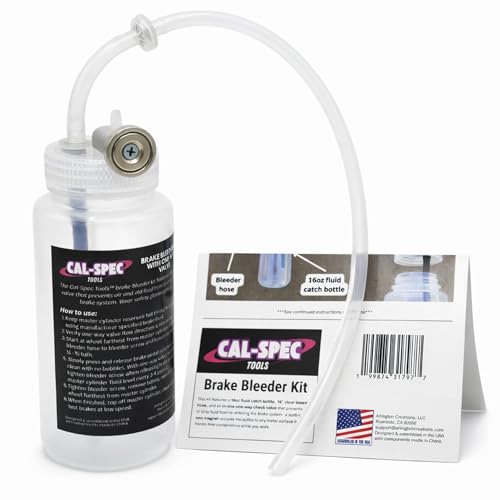
ABN Brake Bleeder Catch Bottle
ABN sells this catch bottle in a pack of two, useful for bleeding front and rear circuits at the same time or keeping a spare on the shelf. Each bottle uses a simple screw cap and attached tube sized for common bleeder nipples. The lower per-bottle cost suits anyone bleeding brakes a few times a year.
Pros
- Two bottles cover front and rear at once
- Lower cost per bottle than single packs
- Simple design with no extra parts to lose
Cons
- Smaller capacity than single premium bottles
- No magnetic or weighted base

OTC Brake Bleeder Bottle
OTC scales this bottle up for shops bleeding multiple vehicles in a row without emptying between jobs. The wider base and taller profile hold more fluid than compact consumer bottles. Technicians doing fleet brake service benefit most from the reduced downtime between bleeds.
Pros
- Large capacity reduces mid-job emptying
- Wide base stable on shop floors
- Durable enough for repeated daily use
Cons
- Bulkier than needed for occasional home use
- Takes up more space in a tool bag

Lisle Brake Bleeder Bottle
Lisle keeps this bottle narrow and short, aimed at vehicles with tight wheel well clearance where a wide bottle will not fit between the rotor and strut. The slimmer shape sacrifices some capacity for better access on compact cars and sports cars. A basic clip holds it against the strut during the bleed.
Pros
- Slim shape fits tight wheel wells
- Lightweight clip holds position on struts
- Easy to store in a small toolbox
Cons
- Lowest capacity in this lineup
- Needs frequent emptying on longer bleeds
The lineup, side by side
| # | Model | Capacity | Best for | Score | Price |
|---|---|---|---|---|---|
| 1 | Mityvac Brake Fluid Catch Bottle | 16 ounces | Best overall catch bottle | 9.2 | Check price |
| 2 | Phoenix Systems Brake Bleeder Catch Bottle | 12 ounces | Best seal against air intrusion | 9.0 | Check price |
| 3 | Motive Products Brake Fluid Catch Bottle | 16 ounces | Best for use with a pressure bleeder | 8.8 | Check price |
| 4 | Astro Pneumatic Brake Fluid Catch Bottle | 14 ounces | Best for magnetic mounting | 8.6 | Check price |
| 5 | ABN Brake Bleeder Catch Bottle | 10 ounces each | Best value 2-pack | 8.4 | Check price |
| 6 | OTC Brake Bleeder Bottle | 32 ounces | Best for shop use | 8.2 | Check price |
| 7 | Lisle Brake Bleeder Bottle | 8 ounces | Best compact option for tight wheel wells | 8.0 | Check price |
What matters most
What a brake bleeder bottle actually does A catch bottle collects old brake fluid as it exits through the bleeder screw, keeping it off brake components, painted surfaces, and the garage floor. Brake fluid strips paint and damages rubber on contact, so containment matters more than it might seem. Most bottles use a length of tubing that pushes onto the bleeder nipple to direct flow straight into the container.
Base and mounting styles compared A wide weighted base, like the Mityvac uses, resists tipping on uneven garage floors. Magnetic bases, such as the one on the Astro Pneumatic bottle, free up a hand but only grip steel, not aluminum hubs or rotors. Simple clip-on bottles cost less but need careful positioning so the tube does not pull loose mid-bleed.
Matching bottle capacity to the job A compact 8 to 12 ounce bottle covers a single caliper bleed without much extra bulk. Shops or anyone flushing an entire brake system benefit from a 32 ounce bottle like the OTC, since it avoids emptying mid-job. Two-packs such as the ABN set let you work front and rear circuits without swapping bottles between corners.
Manual bleeding versus a pressure bleeder setup A standard catch bottle works fine for manual two-person bleeds where a helper pumps the pedal. Pressure bleeder systems push fluid at a steadier rate, so a bottle built for that flow, like the Motive Products option, handles the job better than a basic manual-bleed bottle.
Common questions
What size tubing fits a brake bleeder bottle?
Most bottles ship with tubing sized for the common 10 millimeter and 11 millimeter bleeder screws found on most passenger vehicles. Check the tubing diameter against your specific caliper before buying if your vehicle uses an unusual size.
Can one catch bottle be used on every wheel?
Yes, as long as you empty and rinse it between corners so old fluid does not mix with fresh fluid readings. A two-pack like the ABN set avoids that step entirely.
Do I need a magnetic base for a brake bleeder bottle?
Only if you want a free hand during the bleed and your caliper or subframe is steel. Aluminum components will not hold a magnet, so a clip-on bottle works better there.
How full can a catch bottle get before it needs emptying?
Empty it once fluid reaches about two-thirds full to avoid splashing fluid back up the tube. Larger bottles like the OTC reduce how often this comes up during a full flush.
Is a brake bleeder bottle the same as a vacuum bleeder?
No. A catch bottle only collects fluid during a manual or pressure bleed, while a vacuum bleeder actively pulls fluid through the line using a hand pump. Some vacuum bleeder kits include a bottle similar to these.
Will brake fluid damage the catch bottle itself?
Most bottles use polyethylene or polycarbonate, both of which resist brake fluid for the short contact time during a bleed. Rinse the bottle promptly after use to avoid long-term clouding.
Can a catch bottle be reused for different vehicles?
Yes, after a rinse with water or brake cleaner between uses. Avoid letting residue from DOT 5 silicone fluid mix with DOT 3 or DOT 4 fluid from another vehicle.
Do bleeder bottles work for clutch hydraulic systems?
Yes, the same catch bottle and tubing work on hydraulic clutch bleeder screws, since they use the same type of fluid and similar screw sizes.
Our pick
The Mityvac Brake Fluid Catch Bottle is the best all-around choice, with a base stable enough to trust during a solo bleed and tubing that fits most common screws. Anyone running a pressure bleeder setup should pick the Motive Products bottle instead, since it handles continuous flow better than a manual-bleed design. Buyers bleeding front and rear circuits in one session get the most for their money from the ABN 2-pack.
Tony Russo
Tony trained as an automotive technician and spent years in service and parts retail before moving into writing. He focuses on garage tools, car care products and accessories from a hands-on maintenance perspective.


