Brain Teasers That Keep Kids Thinking, Not Guessing
ThinkFun’s Rush Hour Traffic Jam Logic Game leads this lineup with forty graded challenge cards and a sliding block format that needs no reading. Coogam’s eight puzzle wooden set packs the most variety into one box. For car rides, SmartGames IQ Fit snaps flat with zero loose pieces.
Rush Hour Traffic Jam suits kids around age 8 who want one puzzle that keeps scaling up, since forty challenge cards span five difficulty levels. Its sliding block format teaches sequential planning without a single word of instruction. One tradeoff stands out: it only exercises one kind of spatial reasoning.
Brain teaser puzzles for kids range from single mechanic logic games to boxes bundling eight unrelated wooden shapes, so a fair comparison needs common ground. We lined up stated age range, difficulty progression, material and what owners report about durability and attention span before ranking anything.
The shortlist, ranked

ThinkFun Rush Hour Traffic Jam Logic Game
Kids slide plastic cars and trucks around a gridlocked lot until the red car reaches the exit. Forty challenge cards climb through five difficulty tiers, so one box covers beginner through expert solvers. A fitted grid tray corrals every piece between rounds, keeping small parts from scattering in a bag.
Pros
- Forty cards stretch across years of skill growth
- Grid tray stops pieces from scattering in transit
- No reading required to grasp the sequential logic
Cons
- Only one puzzle mechanic gets tested here
- Expert tier cards frustrate solvers under age 8
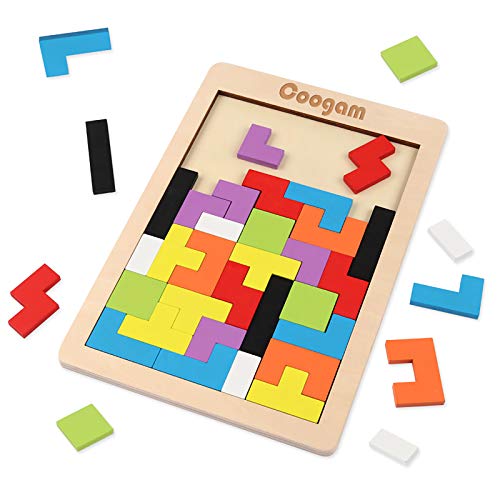
Coogam Wooden Puzzle Brain Teasers Set of 8
Eight distinct wooden brain teasers ship in one box, including interlocking burr puzzles, a wooden IQ ball and ring style disentanglement designs. Solid wood construction shrugs off repeated disassembly better than molded plastic rivals. Difficulty shifts from puzzle to puzzle, so the set builds in its own progression.
Pros
- One purchase replaces eight separate puzzle buys
- Solid wood handles years of repeated handling
- Mixed difficulty fits siblings at different skill levels
Cons
- Most puzzles ship without a printed solution guide
- Small wooden pieces risk choking kids under 6
ThinkFun Chocolate Fix Logic Game
Kids arrange chocolate shaped pieces onto a tray to match a clue card, relying on shape and color logic instead of guesswork. Sixty challenges split across four difficulty levels keep one small box relevant for months. Plastic pieces and a compact tray cost less than multi puzzle wooden sets.
Pros
- Costs less than multi puzzle wooden sets
- Compact tray fits easily inside a backpack
- Sixty challenges delay the need for a replacement
Cons
- Smallest box in this lineup, easy to misplace
- Color matching feels less tactile than wood pieces

ThinkFun Gravity Maze Marble Run Logic Game
Kids build vertical towers on a grid so a dropped marble follows a hidden path to its target. Sixty challenge cards across four difficulty levels turn trial and error into real planning practice. Clear plastic towers reveal how the marble’s route shifts with every adjustment.
Pros
- Visible marble drops make cause and effect obvious
- Sixty cards support replay well past the first month
- Spatial reasoning builds alongside sequential planning skills
Cons
- Loose marbles and towers call for a storage bag
- Setup takes longer than flat tray style puzzles

SmartGames IQ Fit
A flat plastic tray holds 120 challenges where colored pieces snap into place, so nothing rolls loose in a car or backpack. A slide on cover locks the current puzzle mid solve. Four difficulty levels move from simple two piece fits to full tray coverage.
Pros
- Snap in pieces stay fixed during travel
- Sliding cover pauses a puzzle without losing progress
- 120 challenges suit beginners and advanced solvers alike
Cons
- Flat tray format skips any 3D building step
- Cover can jam if pieces sit unseated
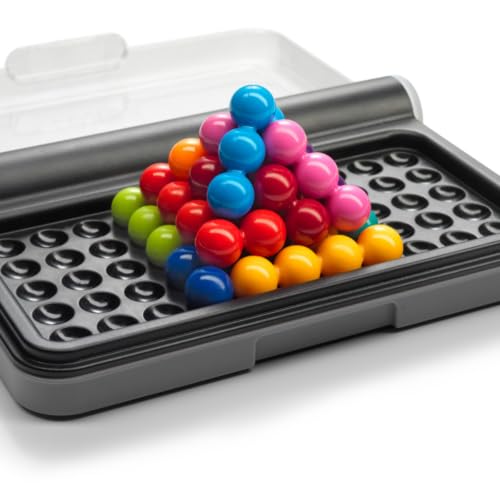
ThinkFun IQ Puzzler Pro
Colorful pentomino style shapes fit into a plastic tray, starting with wide open layouts suited to early solvers. A total of 120 challenges across four difficulty levels lets younger children start easy before tackling denser layouts. Larger pieces than IQ Fit’s ease handling for smaller hands.
Pros
- Larger pieces suit smaller hands than similar tray puzzles
- Easiest starting challenges anywhere in this lineup
- 120 challenges scale up as skills improve
Cons
- Format overlaps closely with SmartGames IQ Fit
- No locking cover for pausing mid puzzle

Hanayama Cast Chain Puzzle
Cast Chain belongs to Hanayama’s metal disentanglement series, each entry rated from level 1 to level 6. Zinc alloy construction gives a heavier, more precise feel than plastic or wood. Older kids and preteens who have outgrown tray puzzles get a genuine challenge with no printed clue cards.
Pros
- Difficulty rating helps match a puzzle to skill level
- Metal build survives drops better than plastic pieces
- Trial and error solving needs no clue cards
Cons
- Small metal parts rule out children under 12
- Each puzzle sells separately, so variety adds cost
The lineup, side by side
| # | Model | Puzzle type | Best for | Score | Price |
|---|---|---|---|---|---|
| 1 | ThinkFun Rush Hour Traffic Jam Logic Game | Sliding block logic | Best overall | 9.4 | Check price |
| 2 | Coogam Wooden Puzzle Brain Teasers Set of 8 | Assorted 3D wooden puzzles | Best value | 9.1 | Check price |
| 3 | ThinkFun Chocolate Fix Logic Game | Single player logic placement | Best budget | 8.8 | Check price |
| 4 | ThinkFun Gravity Maze Marble Run Logic Game | 3D marble run construction | Best for STEM and spatial reasoning | 8.6 | Check price |
| 5 | SmartGames IQ Fit | 2D shape fitting tray | Best for travel and portable play | 8.4 | Check price |
| 6 | ThinkFun IQ Puzzler Pro | 2D shape fitting tray | Best for younger beginners | 8.2 | Check price |
| 7 | Hanayama Cast Chain Puzzle | Metal disentanglement | Best for advanced older kids | 8.0 | Check price |
What to look for
What Makes a Brain Teaser Actually Challenging Four mechanics dominate this category: sliding block logic, flat tray shape fitting, 3D wooden burr puzzles and metal disentanglement. Each trains a different skill, from spatial rotation to sequential planning. Difficulty typically comes from graded challenge cards or a numbered rating scale rather than luck.
Which Puzzle Type Fits Which Age Six year olds do best with flat tray puzzles like IQ Puzzler Pro, since oversized pieces are easy to grip and early challenges leave most of the tray open. Sliding block and marble run games target age 8 and up, once a child can hold a multi step plan in mind. Metal disentanglement puzzles wait until age 12, both for small parts and for the patience they demand.
Does Material Change How a Puzzle Holds Up? Wood delivers tactile feedback and generally survives years of drops better than thin plastic. Plastic tray puzzles keep cost down and often snap pieces into place to resist scattering. Metal feels more substantial in hand but concentrates weight into small parts, worth noting in homes with toddlers nearby.
Best Picks for Car Rides and Waiting Rooms Snap in tray puzzles such as SmartGames IQ Fit travel well, since a sliding cover locks pieces mid solve. Single box logic games like Chocolate Fix pack flat with no loose marbles or towers. Multi puzzle wooden sets take more room but let a child switch games if one stalls a long ride.
Questions worth asking
What age are brain teaser puzzles good for?
Most tray and sliding block logic games list an age range starting at 6 to 8, based on piece size and the planning needed to read clue cards. Hanayama’s metal Cast series recommends 12 and up, due to small parts and higher difficulty.
Is wood or plastic better for a kids’ brain teaser?
Wood holds up better against repeated drops and gives more tactile feedback while solving. Plastic keeps a set’s cost down and often adds snap in trays that stop pieces from scattering, which matters more with younger kids.
Which brain teaser works best for a 6 year old?
ThinkFun IQ Puzzler Pro suits age 6 well, since its 120 challenges start with wide open layouts and pieces larger than similar tray puzzles. Coogam’s wooden set also works with an adult supervising the smaller pieces.
Rush Hour vs Gravity Maze, which one is harder?
Both list an age range of 8 and up with 40 or 60 challenge cards across a similar difficulty spread. Gravity Maze adds a 3D building step before the marble drops, which makes its early challenges feel tougher than Rush Hour’s flat sliding grid.
Can brain teaser puzzles help kids with focus or ADHD?
Owners report that graded, self contained puzzles hold attention longer than open ended toys, since each challenge card has a clear win condition. None of these puzzles is marketed or certified as a therapeutic tool for ADHD.
How many difficulty levels do kids’ brain teasers usually have?
Most ThinkFun and SmartGames titles use four to five levels tied to sets of 40 to 120 challenge cards. Hanayama’s Cast series instead rates each individual puzzle from level 1 to level 6.
Are metal brain teaser puzzles safe for kids?
Hanayama’s Cast puzzles list a recommended age of 12 and up, because of small metal parts and puzzle difficulty. Younger children fit better with plastic tray or wooden puzzles sized for smaller hands.
What are the best brain teasers for long car rides?
SmartGames IQ Fit and ThinkFun Chocolate Fix both pack flat with no loose marbles or towers, which suits travel. IQ Fit’s slide on cover also lets a child pause mid puzzle without losing progress over a bump.
Do wooden puzzle sets need extra supervision?
Coogam’s eight puzzle set includes small interlocking pieces best kept away from children under 6 without supervision. An adult nearby also helps when a puzzle piece needs replacing after it rolls under furniture.
Our pick
ThinkFun’s Rush Hour Traffic Jam earns the top spot for most families, since its full difficulty curve pairs with pieces sturdy enough for daily use. Parents starting a younger child should reach for ThinkFun IQ Puzzler Pro instead, because its 120 challenges open at an easier flat shape level. A preteen who has outgrown tray puzzles gets more mileage from Hanayama’s Cast Chain and its wider Cast lineup, where individual difficulty ratings up to level 6 keep pace with a growing skill set.
Rachel Simmons
Rachel previously worked in child-product retail and brings a practical, detail-first eye to gear reviews, focusing on safety standards, ease of use and the fine print that matters most for new caregivers.