Box Fans That Actually Move Air Without the Noise
The Lasko 3733 is the strongest all-around pick, moving solid airflow on three speeds at a price most households can justify. The Air King 9166 suits garages and job sites that need industrial-grade durability, while the Holmes Dual Blade fits bedrooms where quiet operation matters more than raw CFM.
The Lasko 3733 leads this list because its three-speed motor and 20 inch blade sweep push enough air to cool a full room without a premium price tag. Its main limitation is noise at the highest setting, which some bedrooms will find too loud overnight.
We compared published CFM airflow ratings, decibel levels, speed options and housing durability across each fan rather than running our own wind-tunnel tests.
Our top picks
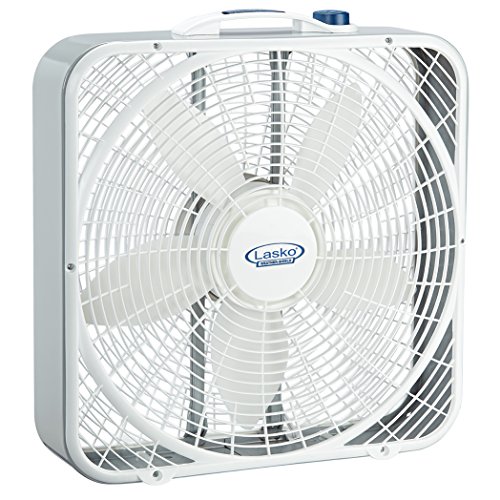
Lasko 3733 20-Inch Box Fan
A 20 inch three-speed motor pushes strong airflow through a lightweight polypropylene housing. Side carry handles make it easy to move between rooms or into a window frame. The simple rotary dial keeps controls intuitive for daily use.
Pros
- Strong airflow for the price point
- Lightweight housing is easy to carry room to room
- Simple rotary controls need no learning curve
Cons
- Highest speed setting runs loud for light sleepers
- No remote or timer function

Air King 9166 20-Inch Industrial Grade Box Fan
A steel blade and heavy-gauge steel housing are built for garages, shops and job sites rather than living rooms. The three-speed, totally enclosed motor resists dust and debris better than typical plastic box fans. Grounded power cord suits commercial extension cord setups.
Pros
- Steel construction withstands shop and job site use
- Totally enclosed motor resists dust buildup
- Grounded cord works with commercial extension setups
Cons
- Heavier than plastic box fans at this size
- Steel blades are louder than foam or polymer blades

Hurricane Classic 20-Inch Box Fan
Three speeds and a lightweight frame deliver dependable airflow for bedrooms and living rooms at a lower price than premium brands. The classic grille design allows easy wipe-down cleaning. A built-in carry handle keeps it portable between seasons.
Pros
- Lower price than name-brand competitors
- Removable grille simplifies dust cleaning
- Lightweight enough for easy seasonal storage
Cons
- Plastic housing feels less sturdy than steel models
- Fewer speed options than premium fans

Comfort Zone CZ200A 20-Inch Box Fan
This no-frills box fan keeps the price low while still offering three speeds and a 20 inch blade sweep. It suits renters and dorm rooms that need basic airflow without extra features. The compact motor housing keeps overall weight down.
Pros
- Lowest price point on this list
- Light enough for easy dorm or apartment storage
- Covers basic cooling needs without extra cost
Cons
- Motor hum is noticeable at higher speeds
- Housing plastic feels thinner than pricier models

Holmes Dual Blade Box Fan HBF220B
Two stacked blades spin in the same housing to move air more smoothly than a single-blade design, reducing the rattling hum common in basic box fans. Three speeds cover light bedroom circulation up to stronger whole-room airflow. The slim profile fits narrow window openings.
Pros
- Dual blade design runs quieter than single-blade fans
- Slim profile fits narrow window frames
- Smooth airflow without sharp vibration noise
Cons
- Costs more than basic single-blade box fans
- Dual blade design is harder to disassemble for cleaning

Genesis 20-Inch 3-Speed Box Fan
A molded top handle and lightweight frame make this fan easy to carry between a bedroom, garage or patio. Three speeds cover light background circulation through stronger direct cooling. The flat base sits stable on hard floors and window sills alike.
Pros
- Molded handle makes transport simple
- Stable flat base works on floors or sills
- Lightweight build suits frequent relocation
Cons
- Lower CFM than industrial-grade steel fans
- Plastic blade flexes slightly at top speed

Pelonis 20-Inch 3-Speed Box Fan
An efficient motor design keeps power draw lower than many comparable box fans while still delivering three usable speeds. The compact rear motor housing reduces overall depth, helpful for tight window installations. A wrap-around grille protects the blade from accidental contact.
Pros
- Lower power draw than many comparable fans
- Compact depth suits tight window spaces
- Wrap-around grille adds a safety margin
Cons
- Lower top-speed airflow than the Lasko 3733
- Limited availability compared to larger brands
How they stack up
| # | Model | Blade Size | Best for | Score | Price |
|---|---|---|---|---|---|
| 1 | Lasko 3733 20-Inch Box Fan | 20 inches | Best Overall | 9.0 | Check price |
| 2 | Air King 9166 20-Inch Industrial Grade Box Fan | Steel | Best for Garages and Job Sites | 8.9 | Check price |
| 3 | Hurricane Classic 20-Inch Box Fan | 20 inches | Best Value | 8.6 | Check price |
| 4 | Comfort Zone CZ200A 20-Inch Box Fan | 20 inches | Best Budget | 8.2 | Check price |
| 5 | Holmes Dual Blade Box Fan HBF220B | Dual stacked blades | Best for Quiet Operation | 8.7 | Check price |
| 6 | Genesis 20-Inch 3-Speed Box Fan | 20 inches | Best for Portability | 8.4 | Check price |
| 7 | Pelonis 20-Inch 3-Speed Box Fan | 20 inches | Best for Energy Efficiency | 8.5 | Check price |
What matters most
What to look for in a box fan Airflow, measured in CFM when published, determines how quickly a fan cools a room, while speed settings let a household match output to the time of day. Housing material decides durability, since steel resists garage and shop conditions better than polypropylene. Noise level matters most for bedrooms, where a dual-blade design like the Holmes HBF220B runs quieter than a standard single blade.
Home use versus garage and job site use Living rooms and bedrooms do well with lighter plastic-housed fans like the Lasko 3733 or Comfort Zone CZ200A, which prioritize portability over ruggedness. Garages, workshops and job sites need steel construction, like the Air King 9166, to survive dust, debris and rough handling. Buyers should match housing material to the environment before comparing price.
Quiet operation for bedrooms and nurseries A dual-blade design, as used in the Holmes HBF220B, spreads airflow across two blades instead of one, which reduces the rattling hum common at top speed. Slim profiles that fit narrow window frames, also found on the Holmes model, help nurseries and small bedrooms avoid a bulky unit blocking the view. Buyers sensitive to noise should run any box fan on its middle speed rather than its highest setting overnight.
Portability and seasonal storage Lightweight frames under 8 pounds, like the Genesis and Comfort Zone models, make it easy to move a fan between rooms or pack it away each winter. A molded top handle, as on the Genesis fan, speeds up that process compared to gripping a bare housing edge. Renters and dorm residents should prioritize weight and handle design over raw airflow numbers.
Good to know
How much airflow does a 20 inch box fan move?
Most 20 inch box fans on this list move enough air to cool a bedroom or living room on medium speed, with top speed suited to larger or hotter rooms.
Are steel box fans louder than plastic ones?
Steel blade models like the Air King 9166 tend to run louder than foam or polymer blades, though the tradeoff is far greater durability in dusty environments.
Which box fan is best for a nursery?
The Holmes Dual Blade HBF220B runs quieter than single-blade designs, making it a better fit for a nursery or light sleeper’s bedroom.
Can a box fan replace air conditioning?
No. A box fan circulates existing air and feels cooling through evaporation and airflow, but it does not lower room temperature the way air conditioning does.
Is a box fan safe to run overnight?
Most box fans, including every model here, are rated for continuous use, though running on medium rather than high speed reduces noise and motor strain overnight.
What is the difference between a box fan and a tower fan?
A box fan moves a high volume of air through a flat square frame, while a tower fan uses a narrower vertical housing that takes up less floor space but typically moves less air per dollar.
Do box fans use a lot of electricity?
Box fans are generally inexpensive to run, and energy-focused designs like the Pelonis model draw less power than standard motors at the same speed.
Can a box fan fit in a window?
Yes, most 20 inch box fans, including the Holmes HBF220B with its slim profile, are designed to sit in a standard window frame facing in or out.
How long do box fans typically last?
With normal household use, a quality box fan commonly lasts several years, though dusty environments can shorten motor life without regular cleaning.
Final word
For most households that want dependable airflow at a fair price, the Lasko 3733 remains the strongest overall pick. Anyone running a fan in a garage, shop or job site should choose the Air King 9166 instead for its steel build and dust resistance. Light sleepers and nurseries are better served by the Holmes Dual Blade, which trades a little airflow for noticeably quieter operation.
Jake Monroe
Jake worked as a residential contractor for over a decade before shifting to full-time writing. He evaluates power tools, hand tools and workshop gear through the lens of someone who has actually used them on job sites, not just read the box.