8 Board Games Kids Actually Ask to Play Again
Candy Land is the simplest first game for three-year-olds who cannot read yet. Ticket to Ride: First Journey suits older kids ready for light strategy and route planning. For a pick that sneaks in counting and fine-motor practice, The Sneaky, Snacky Squirrel Game stands out among these seven options.
Candy Land needs no reading, making it the easiest entry point for toddlers just learning to take turns. Older kids ready for light strategy do better with Ticket to Ride: First Journey. Preschoolers who want counting and fine-motor practice built into playtime should look at The Sneaky, Snacky Squirrel Game.
Picking a kids game is tricky because what delights a three-year-old often bores a seven-year-old within minutes. Rules that take too long to explain kill momentum before the first turn. We compared these seven titles on age fit, attention span match, replay value, and the specific skills each one quietly builds.
What matters most
How to match a game to your child’s age Age fit determines whether a game lands or flops within the first five minutes. Candy Land and The Sneaky, Snacky Squirrel Game suit three and four-year-olds with zero reading required. Ticket to Ride: First Journey and Outfoxed! reward five to eight-year-olds ready for light strategy. Pick slightly below the box’s maximum age rather than above it.
Why simple rules matter more than box size A game that takes longer to explain than to play rarely gets a second round. Look for titles a child can learn in under two minutes, since short setup keeps young attention spans intact. Hi Ho! Cherry-O and Zingo Bingo excel here, letting kids jump in almost immediately.
Are cooperative games better for kids who hate losing? Some children handle defeat poorly, and repeated losses can sour an entire game night. Outfoxed! has the whole table working toward one shared goal instead of pitting players against each other. That structure suits siblings who clash over winning, and it works well across mixed ages at the same table.
What skills do these games actually teach? Good kids games teach without feeling like homework. Hi Ho! Cherry-O covers counting, the Squirrel Game builds fine-motor control, Zingo Bingo reinforces vocabulary, and Sequence for Kids introduces planning. Rotating through a few titles means each game night quietly reinforces a different skill.
The shortlist, ranked

Candy Land
No reading or counting stands between a three-year-old and this game. Kids match colored cards to move along the path, and turns pass in seconds. Bright, simple art keeps the youngest players locked in for a full round.
Pros
- No reading required
- Rules a toddler grasps in one round
- Bright art holds young attention
Cons
- Pure luck, no strategy element
- Kids over six outgrow it fast
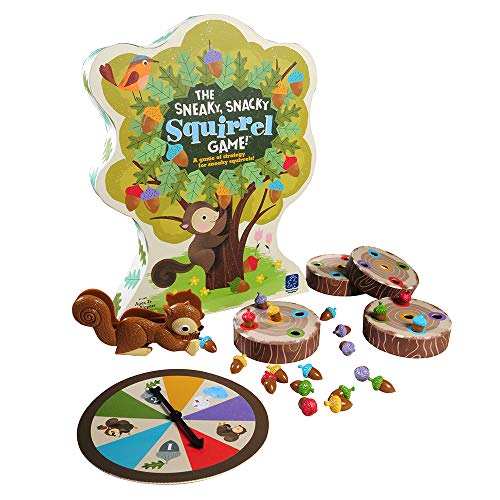
The Sneaky, Snacky Squirrel Game
A squirrel-shaped squeezer trains fine-motor control as kids pick up colored acorns. Matching acorns to a spinner result also reinforces color names. Preschool teachers list it among favorite classroom games for that exact mix of skill and fun.
Pros
- Builds fine-motor grip strength
- Teaches color matching naturally
- Squeezer tool keeps kids engaged
Cons
- Acorn pieces are small and easy to lose
- Offers little challenge past age five
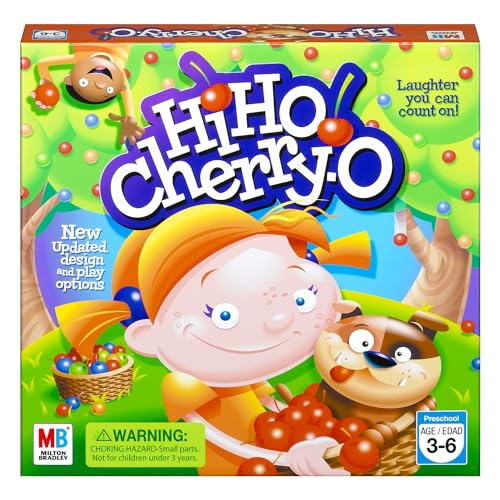
Hi Ho! Cherry-O
Children fill mini baskets by counting cherries onto and off their trees as a spinner dictates. Rounds run about ten minutes, short enough for a toddler’s attention span. Early counting and simple subtraction sneak in without feeling like a lesson.
Pros
- Teaches counting and basic subtraction
- Rounds finish in about ten minutes
- Simple enough for first-time players
Cons
- Very little strategy involved
- Small fruit pieces are easy to misplace
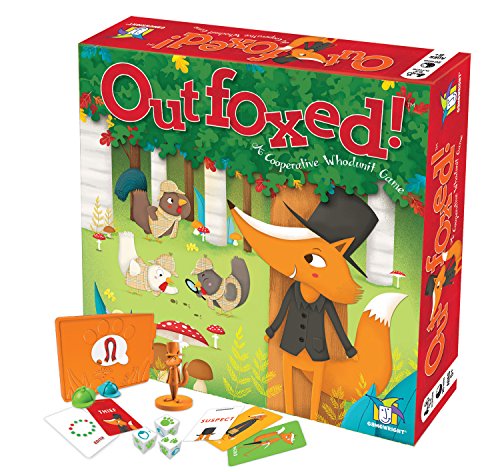
Outfoxed!
Players team up to solve a whodunit before the sly fox escapes with the pie. Nobody loses alone, since the whole table wins or loses together. Owners note the format teaches deduction while keeping siblings from turning game night into a fight.
Pros
- Cooperative format removes sore losers
- Builds early deduction and logic skills
- Works well across a wide age spread
Cons
- Younger players need help reading clue cards
- Setup takes longer than simpler games

Zingo Bingo
A sliding dispenser pops out tiles that players race to match on their own card. Fast rounds build word and number recognition without any drilling. Up to six kids can join at once, which suits classrooms and birthday parties.
Pros
- Quick rounds suit short attention spans
- Builds word and number recognition
- Supports up to six players at once
Cons
- Small tiles are easy to lose
- Play can get loud and competitive

Ticket to Ride: First Journey
This scaled-down version of the train-route classic has kids claim routes and complete tickets on a simplified map. Real planning enters the picture here, one step past pure luck. Parents often report enjoying the game alongside their kids rather than just watching.
Pros
- Introduces genuine strategic planning
- Engaging enough for adults to join in
- Rules scale up as a child matures
Cons
- Rounds run closer to thirty minutes
- Too advanced for children under six

Sequence for Kids
Animal picture cards replace numbers, so pre-readers can play a real strategy game by lining up matches on the board. Blocking an opponent’s row teaches planning ahead. It works as a bridge before kids move on to the adult version of Sequence.
Pros
- Strategy game that needs no reading
- Teaches blocking and forward planning
- Prepares kids for adult Sequence later
Cons
- Cards wear out faster than boxed pieces
- Younger kids need adult guidance early on
The lineup, side by side
| # | Model | Ages | Best for | Score | Price |
|---|---|---|---|---|---|
| 1 | Candy Land | 3 and up | Best for the youngest players | 9.2 | Check price |
| 2 | The Sneaky, Snacky Squirrel Game | 3 and up | Best for preschoolers | 9.0 | Check price |
| 3 | Hi Ho! Cherry-O | 3 and up | Best for early counting | 8.8 | Check price |
| 4 | Outfoxed! | 5 and up | Best cooperative game | 8.7 | Check price |
| 5 | Zingo Bingo | 4 and up | Best for learning and value | 8.5 | Check price |
| 6 | Ticket to Ride: First Journey | 6 and up | Best for older kids | 8.4 | Check price |
| 7 | Sequence for Kids | 3 and up | Best first strategy game | 8.1 | Check price |
Frequently asked questions
What is a good first board game for a 3-year-old?
Candy Land tops the list since it needs no reading or counting, just color matching. The Sneaky, Snacky Squirrel Game is a close second and adds fine-motor practice through its squeezer tool.
Which board games teach kids counting?
Hi Ho! Cherry-O centers on counting cherries onto and off trees, introducing basic addition and subtraction. Zingo Bingo also reinforces number recognition through its fast matching rounds.
Are cooperative board games better for young kids?
For children who struggle with losing, yes. Outfoxed! has everyone working together toward one goal, removing the sting of defeat while still teaching deduction.
Which board game grows with my child?
Ticket to Ride: First Journey and Sequence for Kids both introduce real strategy in simplified form. Each keeps offering more challenge as a child’s thinking develops.
How long should a kids board game take to play?
Aim for ten to twenty minutes for younger children, matching their shorter attention spans. Ticket to Ride: First Journey runs closer to thirty minutes and suits kids six and up.
What board games work well for mixed ages?
Cooperative and fast matching games travel best across ages. Outfoxed! and Zingo Bingo both let a wide age range play together, with older kids helping the youngest.
Do board games actually help kids learn?
Yes, each title here builds a specific skill: counting, color and word recognition, fine-motor control, deduction, or planning. Kids absorb these through play rather than instruction.
Which board game is best for a large group of kids?
Zingo Bingo handles up to six players and moves fast, making it a strong pick for parties or classrooms where several kids want in at once.
Final word
Candy Land remains the friendliest entry point for toddlers just learning to take turns. Older kids ready to plan ahead do best with Ticket to Ride: First Journey. For one game that teaches while it entertains, The Sneaky, Snacky Squirrel Game blends counting, color recognition, and fine-motor fun for preschoolers.
Rachel Simmons
Rachel previously worked in child-product retail and brings a practical, detail-first eye to gear reviews, focusing on safety standards, ease of use and the fine print that matters most for new caregivers.