Bluetooth OBD2 Scanners That Reach ABS and SRS Codes
BlueDriver Bluetooth Pro ranks first for manufacturer specific codes on ABS, SRS and transmission modules, with no subscription attached. OBDLink MX+ samples live data fastest and speaks GM single wire CAN. Topdon TopScan adds actuator commands, so a fuel pump can be cycled from a phone.
BlueDriver Bluetooth Pro fits the mechanic who bills by the job, not by the subscription. Enhanced scans reach ABS, airbag, transmission and body modules on most major makes. Each stored code comes back with fixes documented on the same fault. What it will not do is command an actuator, so component activation still needs a second tool.
Every adapter sold since 1996 reads generic powertrain codes, which is why the listings look interchangeable. We compared supported protocols, module depth beyond the engine, live data sampling behaviour and licence terms. Owner feedback on dropped pairings and stale app updates shaped the order too. Tools that disable basic functions once a subscription lapses ranked lower, because a shop tool has to work on today’s car.
Our top picks
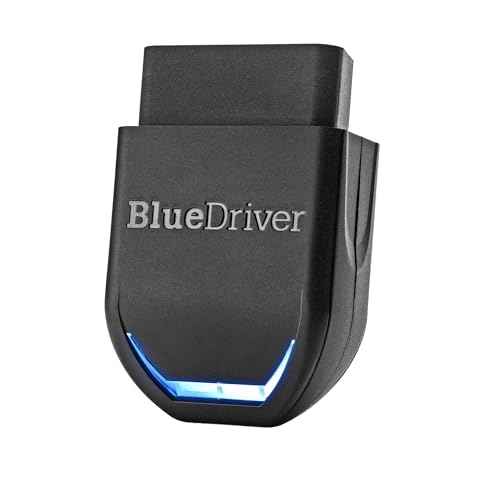
BlueDriver Bluetooth Pro OBDII Scan Tool
Enhanced scans pull manufacturer specific codes from ABS, SRS, transmission and body modules across most major makes. Repair reports tie each stored code to fixes documented on the same fault and vehicle. Mode 6 and freeze frame data are exposed as well, which is how an intermittent misfire gets traced.
Pros
- Reads ABS, SRS and transmission modules, not just powertrain
- Repair reports name documented fixes per code
- App access is included outright with nothing billed monthly
Cons
- Cannot command actuators, so no fan or pump tests
- Runs only inside the BlueDriver app

OBDLink MX+
Sampling speed separates this adapter from the pack, and it shows when fuel trims move under load rather than at idle. Protocol support extends to GM single wire CAN and Ford medium speed CAN, so body and chassis modules actually answer. Sleep mode draw stays low enough to leave the dongle fitted between jobs.
Pros
- High sample rate graphs a lean spike instead of averaging it away
- Talks to GM and Ford networks generic adapters ignore
- Pairs with third party apps as well as its own
Cons
- Enhanced module coverage needs paid app add ons
- Parameter lists assume you know what to watch

Topdon TopScan
Actuator commands run straight from the phone, so a cooling fan, fuel pump or EVAP solenoid cycles without back probing a connector. Reset routines cover oil life, electronic parking brake, steering angle sensor, throttle relearn and battery registration. Depth past the first year depends on renewing the vehicle licence.
Pros
- Cycles components without back probing a connector
- Reset routines match the jobs a workshop books daily
- Scans every module rather than the engine alone
Cons
- Advanced functions need a renewal after year one
- Coverage depth swings by make and model year
Autel MaxiAP AP200
Coverage sells per manufacturer, so a technician who mostly works two makes buys two. All system scanning reads transmission, body control and other modules a generic dongle never sees. Fifteen service functions ship with it, DPF regeneration and injector coding among them on supported vehicles.
Pros
- Pay for the makes that actually roll into your bay
- Service functions match far bulkier handhelds
- Generic OBD2 stays unlocked on every vehicle
Cons
- Each additional manufacturer is a separate purchase
- Menu navigation takes practice before it gets quick

OBDLink CX
Bluetooth Low Energy is the whole point, since BimmerCode and BimmerLink on iPhone require it. Housing sits nearly flush at the port, clear of a knee or a lower trim panel. Capability comes from the paired app rather than the adapter, so the coding software is part of the outlay.
Pros
- BLE pairing holds steady on iPhones
- Small enough to leave fitted permanently
- Recommended adapter for BMW coding apps
Cons
- Function depth rests entirely on the paired app
- Not built as an all makes diagnostic scanner

ANCEL BD310
Two tools share one body: a handheld with its own colour screen, plus a Bluetooth link to the phone app. Pulling a code needs no phone at all, which helps with oily gloves in a cold bay. Coverage stops at generic OBD2, so manufacturer faults belong to the deeper tools here.
Pros
- Reads codes with no phone in the loop
- Voltage readout speeds up a no start call
- Simple enough to hand to an apprentice
Cons
- Generic codes only, no enhanced modules
- Small screen cramps live data graphing

Veepeak OBDCheck BLE+
Spare duty is the job: one in a toolbox drawer, one left in the loaner car. Dual mode Bluetooth covers iPhone and Android, pairing with OBD Fusion, Car Scanner and similar apps. Expect generic powertrain codes and live PIDs, with nothing reaching ABS or airbag systems.
Pros
- Cheap enough to stock one per vehicle bay
- Connects on iOS where many clone boards fail
- Runs across several popular third party apps
Cons
- No access to ABS, SRS or transmission modules
- Useful functions sit behind paid app upgrades
What matters most
What to look for in a shop Bluetooth scanner Generic code reading proves nothing about a tool, since every adapter built since 1996 manages it. Module depth is the real divider, because ABS, SRS and transmission faults never surface in generic mode. Sampling rate decides whether a graph catches a lean spike or smooths it into nothing. Licence terms bite hardest of all, as a tool that goes dark mid job is a liability.
Protocol coverage and why some cars refuse to connect OBD2 spans several physical layers, and CAN is only the newest of them. GM single wire CAN and Ford medium speed CAN sit outside the mandated set, which is why a cheap adapter reads the engine but never the body module. Genuine chipsets handle handshakes that clone boards fumble, and repeated dropouts are the usual symptom. Read the listed protocol table before blaming the vehicle.
Bidirectional control vs read only scanning A code names a circuit. It does not name the failed part. Commanding a cooling fan or an EVAP purge valve confirms the actuator and its driver circuit in seconds. Topdon TopScan and Autel MaxiAP AP200 do this on supported vehicles, while BlueDriver and most dongles stay read only. Weight the feature heavily if you diagnose rather than clear lights.
Picking by the makes you work on most General repair shops gain most from broad enhanced coverage, which points at BlueDriver or Autel per make licences. German specialists get further with OBDLink CX and BimmerCode, since coding and adaptation outrank breadth there. Mobile technicians should check standby draw, because an adapter left in a customer car can flatten a tired battery overnight. Keep a Veepeak spare either way, so one lost dongle never ends a working day.
How they compare
| # | Model | Connection | Best for | Score | Price |
|---|---|---|---|---|---|
| 1 | BlueDriver Bluetooth Pro OBDII Scan Tool | Bluetooth, iOS and Android | Best overall | 9.4 | Check price |
| 2 | OBDLink MX+ | Bluetooth, iOS and Android | Best for live data work | 9.2 | Check price |
| 3 | Topdon TopScan | Bluetooth 5.0, iOS and Android | Best for bidirectional tests | 9.0 | Check price |
| 4 | Autel MaxiAP AP200 | Bluetooth, iOS and Android | Best for all system scans on a budget | 8.8 | Check price |
| 5 | OBDLink CX | Bluetooth Low Energy, iOS and Android | Best for BMW and Mini coding | 8.5 | Check price |
| 6 | ANCEL BD310 | Bluetooth plus onboard display | Best for quick code pulls without a phone | 8.3 | Check price |
| 7 | Veepeak OBDCheck BLE+ | Bluetooth 4.0 dual mode, iOS and Android | Best budget spare | 8.0 | Check price |
Frequently asked questions
What is the best Bluetooth OBD2 scanner for mechanics?
BlueDriver Bluetooth Pro covers the widest set of manufacturer specific codes with no subscription attached. Where live data speed matters more, OBDLink MX+ samples faster and reaches GM and Ford body networks.
Can a Bluetooth OBD2 scanner run bidirectional tests?
Some can. Topdon TopScan and Autel MaxiAP AP200 command actuators such as fuel pumps and cooling fans on supported vehicles. Most dongles only read data.
Do Bluetooth OBD2 scanners work with an iPhone?
Yes, as long as the adapter runs Bluetooth Low Energy or dual mode. BlueDriver, OBDLink CX, OBDLink MX+ and Veepeak OBDCheck BLE+ all connect on iOS.
Which OBD2 scanners read ABS and airbag codes?
BlueDriver, Autel MaxiAP AP200 and Topdon TopScan reach those modules on supported vehicles. Generic dongles such as Veepeak stop at powertrain faults.
How do you connect a Bluetooth OBD2 scanner to a car?
Plug the dongle into the port under the dash, switch the ignition to on, then pair from the app. OBDLink and BlueDriver adapters pair inside their own software instead of the phone Bluetooth menu.
Is a Bluetooth dongle as good as a handheld scan tool?
For codes, live data and common resets, yes. Handheld units still win on drop resistance, guided diagnostics and working when nobody has a charged phone.
Does leaving an OBD2 dongle plugged in drain the battery?
It can on a weak battery. OBDLink adapters drop into a low draw sleep mode, though unplugging remains the safe habit on a car that sits for weeks.
BlueDriver vs OBDLink MX+, which suits a working mechanic?
BlueDriver for enhanced codes and repair reports at no ongoing cost. OBDLink MX+ for fast live data graphing and access to GM single wire CAN.
Do these scanners need a subscription?
BlueDriver does not. Topdon TopScan bundles the first year and charges to renew, while Autel sells coverage per manufacturer as a one time unlock.
Are cheap OBD2 dongles worth keeping as a backup?
Yes, for reading powertrain codes and clearing a check engine light. Veepeak OBDCheck BLE+ fills that role, but it cannot see ABS, SRS or transmission modules.
The bottom line
BlueDriver Bluetooth Pro answers the daily job best: enhanced module scans, documented fixes and no recurring charge. Technicians who diagnose circuits rather than clear lights should take Topdon TopScan for its actuator commands. Chasing an intermittent fuel trim or misfire fault instead? OBDLink MX+ and its sampling speed will catch it first.
Tony Russo
Tony trained as an automotive technician and spent years in service and parts retail before moving into writing. He focuses on garage tools, car care products and accessories from a hands-on maintenance perspective.