9 Indoor Perches That Keep Parrots Comfortable
Prevue Pet Products Naturals Hardwood Branch Perch leads for everyday indoor cages, since its uneven diameter keeps foot muscles working. JW Pet Insight Sand Perch is the value grooming pick and stretches the gap between nail trims. Living World Pedi-Perch uses milder grit for budgies and canaries.
Prevue Pet Products Naturals Hardwood Branch Perch is the perch to build an indoor cage around. JW Pet Insight Sand Perch handles nail conditioning as the value option. Living World Pedi-Perch covers budgies and other small birds with delicate feet.
Perch shopping looks simple and rarely is. A cage full of matching dowels ranks among the common causes of foot problems in captive birds, and coarse grit can wear a foot raw instead of filing a nail. We compared diameter ranges, surface materials, mounting hardware and published sizing guidance, then weighed owner reports on chewing, staining and cleanup.
What we recommend

Prevue Pet Products Naturals Hardwood Branch Perch
Cut from a real hardwood branch, this perch changes thickness along its length. Grip shifts as the bird walks, so no single spot on the foot carries the load all day. Bark texture adds traction, which helps hesitant climbers commit to the step.
Pros
- Irregular thickness works the foot muscles
- Bark surface grips better than a sanded dowel
- Several lengths fit different cage widths
Cons
- Porous wood absorbs droppings and needs replacing
- Strong chewers shorten its working life
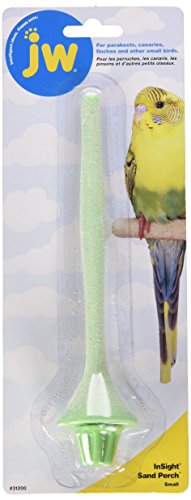
JW Pet Insight Sand Perch
Moulded sand coats the surface and files nails slowly as a bird crosses it. Its top face is flattened, so the foot rests wider than it would on a round tube. Owners report longer gaps between nail trims when it sits alongside two or three plain perches.
Pros
- Stretches the interval between nail trims
- Non porous surface wipes down in seconds
- Sizes run from budgie to large parrot
Cons
- Works only as one perch among several
- Grit can redden feet with constant standing

Living World Pedi-Perch
Finer grit than most sand perches makes this one workable for budgies, canaries and cockatiels. Its platform shape spreads weight across the whole foot instead of a narrow arc. Wing nut hardware fits standard budgie cage bar spacing without drilling.
Pros
- Milder grit than coarse sand perches
- Wide standing surface eases foot strain
- Wing nut fitting comes off fast for washing
Cons
- Undersized for medium and large parrots
- Plastic core gives chewers nothing to work on
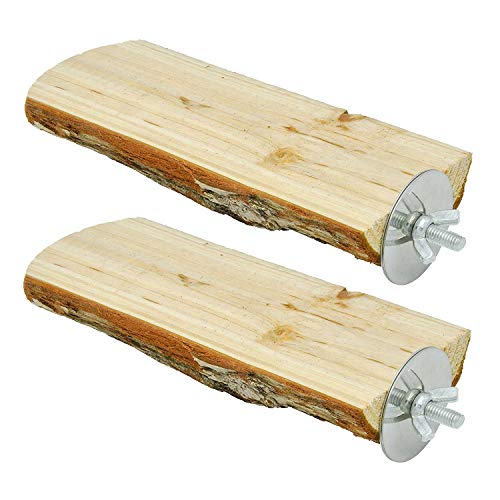
Niteangel Natural Wood Bird Perch
Forked branches deliver several grip thicknesses from a single bolt hole, which matters when bar space is short. Untreated wood doubles as a chew target for light nibblers. Owners report birds move around more on a branching shape than on a straight dowel.
Pros
- Several grip diameters from one mounting point
- Branch angles encourage climbing
- Untreated wood is safe to nibble
Cons
- Shape varies between individual pieces
- Hard to position inside a narrow cage

Super Bird Creations Sandy Bird Perch
Sizing here targets conures, quakers and similar medium parrots. Its diameter leaves the toes partly open rather than clamped tight around a thin bar. Grooming texture conditions nails without the bite of old style concrete perches.
Pros
- Diameter matches medium parrot feet
- Texture holds up through daily use
- Conditions nails without coarse grit
Cons
- Medium is the only size offered
- Wrong choice as the overnight roosting perch

Penn-Plax Bird Life Wooden Perch
Budget cages ship with thin plastic dowels, and these plain wood perches replace them. Packs hold several perches, so heights can be staggered in one session. Wood arrives untreated, which keeps casual chewing safe.
Pros
- Swaps out slippery plastic cage dowels
- Multi pack covers several cage levels at once
- Untreated wood suits light chewing
Cons
- Uniform diameter does little for foot health
- Plain surface offers no grooming benefit

Kathson Bird Perch Stand Rack
A tabletop stand gives a bird somewhere legitimate to land outside the cage, which spares curtain rails and picture frames. Two cups hold food and water, so short sessions run without constant fetching. Owners report the base stays steady under small and medium birds, less so under heavy parrots.
Pros
- Anchors supervised time outside the cage
- Included cups cover short sessions
- Light enough to carry between rooms
Cons
- Base can tip under a large active parrot
- No catch tray, so droppings reach the table
Side by side
| # | Model | Material | Best for | Score | Price |
|---|---|---|---|---|---|
| 1 | Prevue Pet Products Naturals Hardwood Branch Perch | Natural hardwood branch | Best overall | 9.4 | Check price |
| 2 | JW Pet Insight Sand Perch | Sand coated plastic core | Best value | 9.2 | Check price |
| 3 | Living World Pedi-Perch | Fine grooming surface over plastic | Best for small birds | 9.0 | Check price |
| 4 | Niteangel Natural Wood Bird Perch | Untreated natural wood | Best for cage variety | 8.8 | Check price |
| 5 | Super Bird Creations Sandy Bird Perch | Textured grooming surface | Best for medium parrots | 8.6 | Check price |
| 6 | Penn-Plax Bird Life Wooden Perch | Untreated wood dowel | Best simple replacement | 8.3 | Check price |
| 7 | Kathson Bird Perch Stand Rack | Natural wood with metal base | Best out of cage stand | 8.0 | Check price |
What to look for
What to look for in an indoor bird perch Variety beats quantity. Four matching dowels load the same points on a foot from morning to night, and pressure sores follow. Mix thicknesses so toes wrap fully around one perch and only partly around another. Include at least one natural branch with irregular width. Hardware matters too, since bolt and wing nut fittings hold position better than press fit ends that rotate under a landing bird.
Which perch diameter fits budgies, cockatiels and conures Sizing follows the foot, not the cage. Toes should reach roughly two thirds to three quarters of the way around a main perch, stopping short of meeting underneath. Budgies and canaries sit comfortably near half an inch. Cockatiels and conures want closer to three quarters of an inch, while larger parrots need branches thicker than an inch. Too wide leaves a small bird sprawled; too narrow drives nails into its own foot pad.
How to use sand and grooming perches without sore feet Grooming perches earn a place, in small doses. Sand and mineral surfaces slow nail growth enough to stretch the gap between trims. Trouble starts when one sits at the highest point of a cage. Birds roost high, so that bird then stands on grit for ten hours overnight. Mount grooming perches low, near a food bowl or a favourite toy, and check the underside of the feet weekly for redness.
How to clean indoor perches and when to replace them Wooden perches are consumables, not fittings. Droppings and soft food soak into the grain, so scrub with a stiff brush and hot water, then dry fully before anything goes back in. Damp wood grows mould. Retire a perch that stays stained after scrubbing or feels soft under a fingernail. Plastic cored grooming perches wipe clean and outlast wood by a wide margin, which is much of their appeal in a busy household.
Frequently asked questions
How many perches should an indoor cage have?
Three to five suits most cages, set at different heights so the bird chooses. Leave clear climbing paths between them and keep every perch out of the line of fire above bowls. Variety of thickness counts for more than raw number.
Are sand perches safe for birds?
Yes, as one perch among several. Risk appears when a grooming perch becomes the main standing or sleeping spot, because steady contact with abrasive grit wears the foot pad. Position it low and watch for redness or flaking skin.
What size perch does a budgie need?
Around half an inch works for a main perch, with thicker and thinner options nearby. Natural branches cover several widths in one piece, which is why many owners use one as the primary perch and add dowels around it.
Can I use branches from my garden as perches?
Only from bird safe species that have never been sprayed. Apple, willow, elm and eucalyptus get used widely. Scrub, rinse, then bake or dry the branch fully before it enters the cage. Skip cherry, oak, yew and anything you cannot identify.
Do rope perches cause toe injuries?
Frayed strands do. Loose fibres wrap around toes and get swallowed, so inspect weekly and trim anything working loose. Retire a rope perch once the weave starts unravelling rather than waiting for a snag.
Where should perches go inside the cage?
Put the roosting perch highest, in the most sheltered corner, since birds prefer to sleep up top. Nothing should sit directly above food or water. Allow enough clearance that a long tail clears the floor and the bars behind.
How often should bird perches be cleaned?
Scrub soiled perches weekly and do all of them during a full cage clean. Wood must dry completely before it returns, because moisture trapped in grain grows mould. Replace wood that stays discoloured after a proper scrub.
Which is better indoors, natural wood or plastic perches?
Natural wood gives varied thickness and safe chewing but absorbs waste and needs replacing. Plastic cored grooming perches last longer and wipe clean in seconds, though they offer nothing to chew. Most cages benefit from both.
Will more perches stop a bird chewing the furniture?
Often, yes. Destructive chewing is usually boredom hunting for an outlet, so untreated wood perches plus a freestanding stand redirect the instinct. Supervision during out of cage time still matters.
Our pick
Build an indoor cage around the Prevue Pet Products Naturals Hardwood Branch Perch, because irregular thickness does more for foot health than any moulded dowel. Mount the JW Pet Insight Sand Perch lower down for nail conditioning. Keep budgies and canaries on the Living World Pedi-Perch instead, since its grit runs milder.
Olivia Hartley
Olivia spent several years working at an animal shelter and a pet-supply retailer before joining the editorial team. She researches pet gear with an emphasis on safety, comfort and the fine print that owners often miss.