Bird Feeders That Keep Squirrels Out and Seed In
The Brome Squirrel Buster Plus is the strongest overall pick, using a weight-activated mechanism to block squirrels while still serving most backyard songbirds. Buyers who want hummingbirds specifically should choose the More Birds Oasis Hummingbird Feeder instead, while anyone on a budget should look at the Perky-Pet Squirrel-Be-Gone Feeder.
The Brome Squirrel Buster Plus leads this list because its weight-activated perch closes seed access when a squirrel’s heavier weight presses down, without harming the animal or blocking birds. Its main limitation is price, which runs above basic tube or hopper feeders without squirrel-resistant mechanisms.
We compared listed seed capacity, squirrel resistance design, bird species compatibility and weather sealing across each feeder rather than conducting our own backyard observation study.
How to pick the right one
What to look for in a bird feeder Seed capacity decides how often refilling is needed, with hopper and platform feeders generally holding more than small tube feeders. Squirrel and pest resistance matters most for yards with heavy squirrel traffic, where a weight-activated design works better than an open platform. Species compatibility depends on port size and perch design, since small ports favor finches while open platforms welcome larger birds too.
Squirrel-resistant feeders versus open designs A weight-activated feeder like the Brome Squirrel Buster Plus or spring-tension model like the Perky-Pet option actively blocks squirrel access to seed. An open platform feeder like the Woodlink Going Green instead welcomes all wildlife equally, trading squirrel resistance for broader bird species compatibility. Yards with persistent squirrel problems benefit most from the added cost of a dedicated squirrel-resistant mechanism.
Seed feeders versus nectar feeders Standard tube, hopper and platform feeders serve dry seed, suited to the majority of backyard songbirds. A nectar feeder like the More Birds Oasis Hummingbird Feeder serves a completely different diet and bird species, requiring more frequent cleaning and nectar replacement than dry seed storage. Yards wanting to attract both songbirds and hummingbirds typically need two separate feeder types.
Material and weather durability Cedar wood feeders like the Nature’s Way model resist weather naturally without chemical treatment but require more long-term maintenance than metal or plastic. Metal and poly-lumber feeders like the Stokes Select or Woodlink models hold up to rain and sun with less upkeep. Climates with frequent heavy rain benefit from an extended roof overhang regardless of feeder material.
What we recommend

Brome Squirrel Buster Plus Bird Feeder
A spring-loaded perch ring lowers a protective cage over the seed ports when a squirrel’s weight presses down, blocking access without trapping or harming the animal. An adjustable weight setting lets owners also exclude larger birds like grackles while still welcoming smaller songbirds. The seed capacity holds enough for several days between refills depending on bird traffic.
Pros
- Weight-activated mechanism blocks squirrels without harming them
- Adjustable weight threshold can exclude larger nuisance birds too
- Large seed capacity reduces refill frequency
Cons
- Higher price than basic tube or hopper feeders
- More moving parts than simple designs, which need occasional cleaning

Perky-Pet Squirrel-Be-Gone Feeder
A simpler squirrel-resistant design uses spring tension on the perches to tip squirrels off before they reach the seed ports. This keeps the price well below premium weight-activated cage feeders while still reducing squirrel access. The metal construction resists chewing better than plastic-only feeder bodies.
Pros
- Lower price than premium weight-activated squirrel feeders
- Metal construction resists squirrel chewing damage
- Spring-tension perches reduce squirrel access effectively
Cons
- Less precise squirrel exclusion than adjustable weight-based designs
- Smaller seed capacity than the Brome Squirrel Buster Plus

Droll Yankees Classic Tube Feeder
Small feeding ports and short perches on this tube feeder favor finches, chickadees and other small songbirds over larger, more aggressive birds. A durable aluminum top and base resist cracking from sun exposure and cold better than plastic-capped tubes. The clear acrylic tube lets owners see remaining seed level at a glance.
Pros
- Small ports and perches favor finches and chickadees
- Aluminum caps resist cracking better than plastic over time
- Clear tube makes checking seed level simple
Cons
- Not squirrel-resistant without an added baffle accessory
- Smaller capacity than hopper or squirrel-proof cage feeders
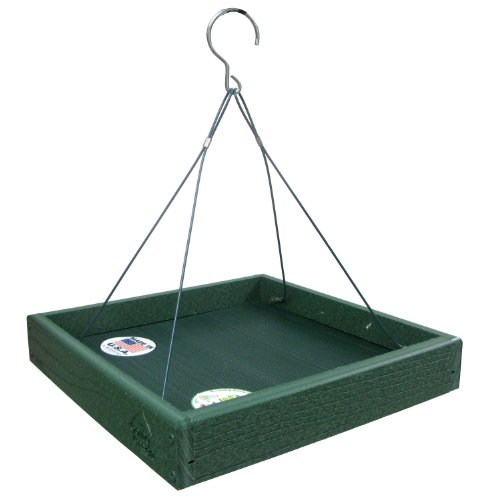
Woodlink Going Green Platform Feeder
An open platform design accommodates a wider range of bird species at once compared to tube feeders with limited perch spots. Recycled poly-lumber construction resists rot and weather damage better than untreated wood platforms. Drainage holes in the platform floor prevent seed from sitting in standing water after rain.
Pros
- Open platform accommodates more bird species at once
- Poly-lumber resists rot better than untreated wood
- Drainage holes prevent waterlogged seed after rain
Cons
- Offers no squirrel or larger animal exclusion
- Open design exposes seed to weather more than enclosed feeders

More Birds Oasis Hummingbird Feeder
This feeder is built specifically for nectar rather than seed, with multiple feeding ports sized for hummingbird beaks. A built-in ant moat blocks crawling insects from reaching the nectar reservoir. The clear reservoir lets owners monitor nectar level and freshness without disassembling the feeder.
Pros
- Built-in ant moat blocks crawling insects from nectar
- Multiple ports allow several hummingbirds to feed at once
- Clear reservoir simplifies checking nectar freshness
Cons
- Only suited to nectar feeding, not seed-eating birds
- Nectar needs more frequent replacement than dry seed

Nature’s Way Cedar Hopper Feeder
Western red cedar construction gives this hopper feeder natural weather resistance without chemical treatment, appealing to buyers who prefer untreated wood. A hinged roof simplifies refilling without removing the entire feeder from its mounting pole. The hopper design holds more seed than a standard tube feeder of similar size.
Pros
- Cedar resists weather naturally without chemical treatment
- Hinged roof simplifies refilling seed
- Hopper design holds more seed than standard tube feeders
Cons
- No built-in squirrel resistance without an added baffle
- Wood requires more long-term upkeep than metal or plastic

Stokes Select Big Seed Hopper Feeder
A large roof overhang on this hopper feeder shields seed from rain better than feeders with minimal roof coverage. Metal mesh feeding trays allow water to drain through rather than pooling around the seed. The high-capacity hopper reduces how often the feeder needs refilling during peak bird season.
Pros
- Extended roof overhang shields seed from rain effectively
- Mesh tray drains water instead of letting seed sit wet
- High seed capacity reduces refill frequency
Cons
- No dedicated squirrel-resistant mechanism included
- Larger size needs a sturdy pole or bracket to support the weight
Side by side
| # | Model | Seed Capacity | Best for | Score | Price |
|---|---|---|---|---|---|
| 1 | Brome Squirrel Buster Plus Bird Feeder | approximately 6.5 cups | Best Overall | 9.0 | Check price |
| 2 | Perky-Pet Squirrel-Be-Gone Feeder | approximately 3 pounds | Best Budget Squirrel-Resistant | 8.3 | Check price |
| 3 | Droll Yankees Classic Tube Feeder | approximately 2 pounds | Best for Small Birds and Finches | 8.4 | Check price |
| 4 | Woodlink Going Green Platform Feeder | Large open platform area | Best Large Capacity | 8.2 | Check price |
| 5 | More Birds Oasis Hummingbird Feeder | approximately 36 ounces of nectar | Best for Hummingbirds | 8.5 | Check price |
| 6 | Nature’s Way Cedar Hopper Feeder | approximately 8 pounds | Best Wooden and Eco-Friendly | 8.1 | Check price |
| 7 | Stokes Select Big Seed Hopper Feeder | approximately 8 pounds | Best Weather Resistant | 8.3 | Check price |
Frequently asked questions
What is the best bird feeder for keeping squirrels away?
Weight-activated feeders like the Brome Squirrel Buster Plus block squirrel access by closing seed ports under a heavier animal’s weight.
How often should a bird feeder be refilled?
Refill frequency depends on capacity and bird traffic, ranging from a few days for small tube feeders to over a week for large hopper feeders.
Can one feeder attract both songbirds and hummingbirds?
Generally no, since hummingbirds need a dedicated nectar feeder like the More Birds Oasis, separate from seed-based feeders for other birds.
What seed port size is best for finches?
Small feeding ports, like those on the Droll Yankees Classic Tube Feeder, favor finches and chickadees over larger birds.
Do wooden bird feeders need special maintenance?
Cedar feeders like the Nature’s Way model resist rot naturally but still benefit from periodic cleaning to prevent mold buildup in the hopper.
Are platform feeders good for attracting more bird species?
Yes, open platform feeders like the Woodlink Going Green accommodate a wider variety of species, including larger birds that cannot use tube feeders.
How does an ant moat work on a hummingbird feeder?
An ant moat holds a small water barrier that crawling insects cannot cross, keeping ants out of the nectar reservoir.
What makes a bird feeder weather resistant?
Features like an extended roof overhang and drainage holes or mesh trays, found on the Stokes Select feeder, keep seed dry during rain.
The bottom line
The Brome Squirrel Buster Plus is the right choice for most yards dealing with persistent squirrel activity around seed feeders. Anyone specifically trying to attract hummingbirds should choose the More Birds Oasis Hummingbird Feeder instead, since standard seed feeders will not serve that purpose. Buyers on a tighter budget who still want squirrel resistance should skip premium weight-activated designs and pick the Perky-Pet Squirrel-Be-Gone Feeder.
Sierra Daniels
Sierra's background is in landscape design and nursery retail. She focuses on lawn and garden equipment, outdoor furniture and gear durability, weighing published specs against how materials actually hold up outside.


