Binoculars Sharp Enough to Tell the Species Apart
The Nikon Monarch 7 Binoculars are the strongest all-around pick, pairing bright ED glass optics with a wide field of view for both birding and hunting. Buyers on a tighter budget should look at the Bushnell Legend Ultra HD instead, while anyone who prioritizes a tiny carry size should pick the Occer 12×25 Compact Binoculars.
The Nikon Monarch 7 Binoculars lead this list because extra-low dispersion glass delivers sharper edge-to-edge clarity than standard glass at a similar price point. Its main tradeoff is cost, since ED glass construction pushes the price above basic roof-prism binoculars.
We compared published magnification, lens diameter, field of view and weight specifications across each pair rather than conducting our own field tests.
The best picks, ranked

Nikon Monarch 7 Binoculars
Extra-low dispersion glass reduces color fringing at the edges of the view, giving a sharper image than standard roof-prism binoculars at this magnification. The 8×42 configuration balances a wide field of view with enough magnification for both birding and big game hunting. A rubber-armored, nitrogen-filled body resists fogging and light impact damage.
Pros
- ED glass reduces color fringing at image edges
- Wide field of view suits both birding and hunting
- Nitrogen-filled body resists internal fogging
Cons
- Priced above basic roof-prism binocular models
- Heavier than compact travel-focused binoculars

Vortex Diamondback HD Binoculars
HD glass elements deliver clarity close to premium-tier binoculars at a lower price point than the Nikon Monarch 7. Vortex backs the Diamondback HD with an unconditional lifetime warranty regardless of ownership transfer. The 10×42 version adds extra magnification reach for distant wildlife compared to standard 8x configurations.
Pros
- HD glass approaches premium clarity at a lower price
- Lifetime warranty transfers even to a used buyer
- 10x magnification reaches farther than standard 8x binoculars
Cons
- Higher magnification narrows field of view slightly
- Slightly heavier than 8×42 configurations at this price tier

Celestron Nature DX ED Binoculars
A close focus distance of around 6.5 feet lets birders study nearby subjects in detail, a feature many hunting-focused binoculars skip. ED glass elements minimize chromatic aberration on high-contrast subjects like birds against bright sky. The 8×42 configuration keeps the field of view wide enough to track fast-moving birds in flight.
Pros
- Close focus distance suits detailed birdwatching
- ED glass reduces color fringing on bright subjects
- Wide field of view helps track birds in flight
Cons
- Not as rugged as hunting-focused binoculars for rough handling
- Slightly less bright in low light than larger objective lenses

Bushnell Legend Ultra HD Binoculars
Fully multi-coated lenses improve light transmission over single-coated budget binoculars without reaching premium ED glass pricing. The rubber-armored housing withstands drops and rough outdoor handling reasonably well. An 8×42 configuration suits general outdoor use from hiking to casual wildlife viewing.
Pros
- Lower price point than ED glass binoculars
- Multi-coated lenses improve brightness over basic optics
- Rubber armor withstands everyday outdoor handling
Cons
- Image clarity falls short of true ED glass models
- Edge sharpness softens more than premium binoculars at this magnification

Zeiss Terra ED Binoculars
Zeiss optical coatings and ED glass elements produce some of the brightest, highest-contrast images available in this binocular class. A compact, lightweight magnesium housing keeps weight down despite the premium glass inside. Schmidt-Pechan prisms with phase correction coating sharpen resolution further compared to uncoated prism designs.
Pros
- Zeiss coatings deliver exceptional brightness and contrast
- Lightweight magnesium housing despite premium glass
- Phase-corrected prisms improve resolution
Cons
- Priced well above most binoculars on this list
- Premium performance may exceed casual users’ needs
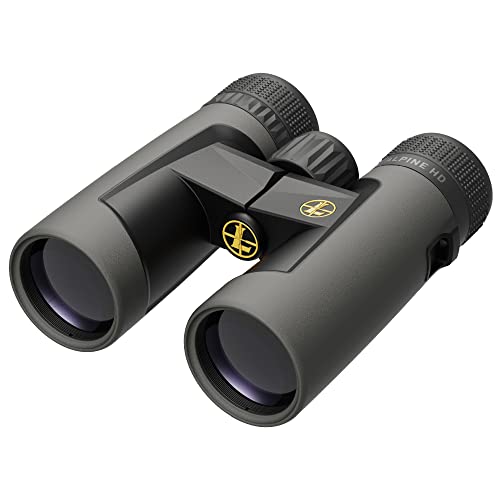
Leupold BX-2 Alpine Binoculars
At well under a pound, this pair is noticeably lighter than full-size 42mm binoculars, aimed at hikers who count every ounce in a pack. A 10×32 configuration trades some low-light brightness for a smaller, more portable body. Twist-up eyecups and a rubber-armored shell still hold up to trail use despite the reduced size.
Pros
- Significantly lighter than full-size 42mm binoculars
- Compact body fits easily in a hiking pack
- Twist-up eyecups suit glasses wearers
Cons
- Smaller objective lens reduces low-light brightness
- Narrower field of view than 42mm configurations

Occer 12×25 Compact Binoculars
A folding compact design fits in a jacket pocket or small bag, trading objective lens size for portability. The 12x magnification reaches farther than most compact binoculars, useful for concerts, sports or quick wildlife glances. Rubber coating protects against minor drops during travel.
Pros
- Folds down small enough for a jacket pocket
- 12x magnification reaches farther than typical compacts
- Rubber coating protects against minor travel drops
Cons
- Smaller objective lens limits low-light performance
- Less durable long term than full-size outdoor binoculars
How they stack up
| # | Model | Magnification | Best for | Score | Price |
|---|---|---|---|---|---|
| 1 | Nikon Monarch 7 Binoculars | 8×42 | Best Overall | 9.1 | Check price |
| 2 | Vortex Diamondback HD Binoculars | 10×42 | Best Value | 8.8 | Check price |
| 3 | Celestron Nature DX ED Binoculars | 8×42 | Best for Birdwatching | 8.6 | Check price |
| 4 | Bushnell Legend Ultra HD Binoculars | 8×42 | Best Budget | 8.3 | Check price |
| 5 | Zeiss Terra ED Binoculars | 8×42 | Best Premium Optics | 9.0 | Check price |
| 6 | Leupold BX-2 Alpine Binoculars | 10×32 | Best Lightweight for Hiking | 8.4 | Check price |
| 7 | Occer 12×25 Compact Binoculars | 12×25 | Best Compact and Travel | 8.0 | Check price |
How to pick the right one
What to look for in binoculars Magnification and objective lens diameter, written as numbers like 8×42, decide zoom strength and how much light reaches the eye. Lens coating affects brightness and color accuracy, with ED glass reducing the color fringing that standard glass shows at edges. Weight and housing material determine comfort over long viewing sessions and resistance to drops or moisture.
Birdwatching versus hunting binoculars Birders benefit from a close focus distance and wide field of view, both strengths of the Celestron Nature DX ED and Nikon Monarch 7. Hunters often prioritize higher magnification and low-light brightness for dawn and dusk glassing, where the Vortex Diamondback HD and Zeiss Terra ED perform well. Both uses benefit from fog-resistant, waterproof housings for outdoor conditions.
Full-size versus compact binoculars Full-size 42mm binoculars like the Nikon Monarch 7 or Bushnell Legend Ultra HD gather more light for brighter images in dim conditions. Compact models like the Occer 12×25 or Leupold BX-2 Alpine sacrifice some brightness and field of view for significantly less weight and bulk. Hikers and travelers typically favor compact designs, while stationary birders and hunters prefer full-size optics.
Budget versus premium optics Premium glass, as found in the Zeiss Terra ED and Nikon Monarch 7, delivers noticeably sharper contrast and brightness, especially in low light. Budget-friendly options like the Bushnell Legend Ultra HD still use multi-coated lenses for reasonable clarity at a fraction of the cost. Casual users who view wildlife occasionally rarely need premium-tier optics to enjoy the hobby.
Good to know
What does 8×42 mean on binoculars?
The first number is magnification power and the second is the objective lens diameter in millimeters, which affects light gathering and brightness.
Is higher magnification always better for binoculars?
Not always. Higher magnification narrows the field of view and amplifies hand shake, so 8x or 10x suits most general outdoor use better than extreme zoom.
What is ED glass in binoculars?
Extra-low dispersion glass reduces the color fringing that appears at the edges of a view through standard glass, improving sharpness.
Are compact binoculars good enough for birdwatching?
Compact binoculars work for casual birdwatching, but full-size models with larger objective lenses generally perform better in low light and distance viewing.
What makes binoculars waterproof?
Most waterproof binoculars use O-ring seals and are purged with nitrogen or argon gas to prevent internal fogging and moisture damage.
Do binoculars need a warranty?
A strong warranty, like Vortex’s lifetime coverage on the Diamondback HD, adds long-term value since optics can be expensive to repair.
What magnification is best for hunting?
Many hunters prefer 8x to 10x magnification, balancing stability and field of view against the need to spot distant game.
Can eyeglass wearers use standard binoculars comfortably?
Yes, models with twist-up or adjustable eyecups, like the Leupold BX-2 Alpine, accommodate glasses wearers by adjusting eye relief distance.
The bottom line
The Nikon Monarch 7 Binoculars are the right choice for most buyers who want sharp ED glass optics across both birding and hunting use. Anyone watching their budget should pick the Bushnell Legend Ultra HD instead, since it covers general outdoor viewing well without premium pricing. Travelers and hikers who prioritize pocket size over brightness should skip full-size optics and choose the Occer 12×25 Compact Binoculars.
Sierra Daniels
Sierra's background is in landscape design and nursery retail. She focuses on lawn and garden equipment, outdoor furniture and gear durability, weighing published specs against how materials actually hold up outside.
You might also need

Minikey Solar Bird Feeder Camera: Is the AI Bird ID Worth the Subscription?

Refresh Sports Glider Ray Pool Torpedo: A Good Pick for Underwater Pool Play?

Sweet Home Collection Patio Chair Cushions: Enough Padding for Daily Outdoor Use?
