Indoor Bike Helmets Built for Comfort on Long Rides
Giro Fixture MIPS leads on open venting and a dial you can work with sweaty fingers. Bell Formula MIPS weighs less, which shows up during hour long sessions. Retrospec Lennon covers budget and shared gym use, with pads that pull out for washing between riders.
Giro Fixture MIPS is the all round pick for trainers, rollers and indoor tracks. Bell Formula MIPS drops weight, which matters once sessions run past an hour. Retrospec Lennon handles casual gym riding and shared household use for far less outlay.
Indoor riding breaks the usual helmet logic, because forward speed is what normally pushes air through vents. Sweat output climbs while cooling collapses. Vent area and pad material suddenly outrank the aerodynamic shaping that dominates helmet marketing. We compared published vent layouts, weights, retention systems and protection technology, then ranked on heat management and comfort during long stationary efforts. Owner feedback on pad durability and fit shape fed into the order.
What we recommend

Giro Fixture MIPS
Large open vents sit above a Roc Loc Sport dial that turns one handed, even mid interval with wet fingers. Its rounded shell accommodates head shapes that narrower road helmets pinch. Pads pull out for washing, and a MIPS liner handles rotational forces if you do come off on rollers.
Pros
- Vent area moves what little air a fan supplies
- Dial adjusts one handed while riding
- Rounded shell suits many head shapes
Cons
- Heavier than performance road helmets
- Plain shell styling
Bell Formula MIPS
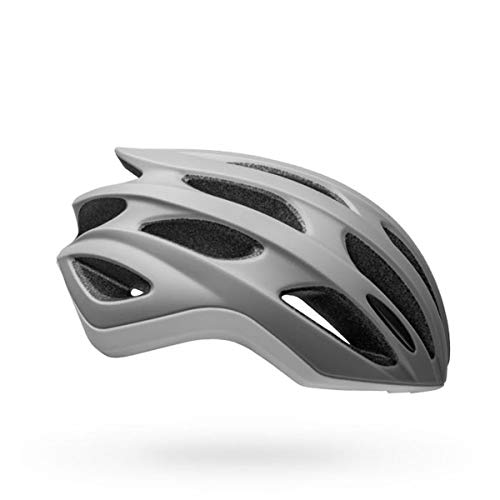
Weight is where this one earns its place, since neck fatigue becomes the limiter when your head stays still for an hour. Vent channels run front to back, which pairs well with a floor fan aimed at your face. Owners report a slightly narrow fit shape, so rounder heads should check sizing carefully before committing.
Pros
- Low weight cuts neck fatigue on long efforts
- Channels work with a floor fan
- Strap junctions sit clear of the ears
Cons
- Narrow fit shape suits fewer heads
- Pads compress after heavy use

Thousand Heritage 2.0
Buy this if the same helmet needs to work on an indoor track and on the ride to the office. A magnetic snap buckle closes one handed and vegan leather straps stay soft against damp skin. Airflow trails sport helmets, so a fan becomes essential during hard efforts.
Pros
- Magnetic buckle fastens without looking
- Soft straps avoid chafing when sweaty
- Reads as everyday wear off the bike
Cons
- Fewer vents than sport helmets
- Heavier than performance models

Retrospec Lennon Bike Helmet
Certified protection, a dial retention system and enough venting for moderate indoor efforts describe the whole helmet. Removable pads matter here, because a household or gym helmet collects sweat from several riders. Anyone can set the dial without instruction, which helps when it passes between users.
Pros
- Cheapest way into a certified helmet here
- Pads come out for washing between riders
- Adjustment anyone can figure out
Cons
- No rotational impact system
- Venting struggles during hard efforts

Schwinn Thrasher Bike Helmet
Twenty one vents and a dial retention system make this reasonable for family members who use the trainer now and then. Stock sits on shelves almost everywhere, so replacing one is easy. Materials feel basic next to the Giro, and daily riders will wear it out faster than they expect.
Pros
- Easy to find and replace anywhere
- Vent count is generous for the tier
- Universal sizing fits most adults
Cons
- Basic pad materials
- No rotational protection system

Bern Watts 2.0
Coverage extends further down the back of the head than any road helmet here, which suits track banking and mixed use spaces. Its solid shell absorbs knocks that would crack a thin vented helmet. Heat builds quickly without a fan, so treat airflow as your job rather than the helmet’s.
Pros
- Protects further down the rear of the head
- Shell survives repeated knocks
- Secure fit that stays put
Cons
- Runs hot without a fan
- Heavier than road helmets

Bontrager Starvos WaveCel
WaveCel replaces a sliding liner with a collapsing cellular structure to manage rotational force. Indoors that structure costs you vent space, so it holds more heat than the Fixture. A Boa dial gives finer adjustment steps than most rear dials. Choose it when protection technology outranks airflow on your list.
Pros
- Different approach to rotational protection
- Boa dial adjusts in fine steps
- Build quality holds up well
Cons
- Warmer than open vent helmets
- Heavier than comparable road models
How they stack up
| # | Model | Protection | Best for | Score | Price |
|---|---|---|---|---|---|
| 1 | Giro Fixture MIPS | MIPS rotational liner | Best overall | 9.4 | Check price |
| 2 | Bell Formula MIPS | MIPS rotational liner | Best for long sessions | 9.2 | Check price |
| 3 | Thousand Heritage 2.0 | Certified impact shell | Best for indoor commuting setups | 9.0 | Check price |
| 4 | Retrospec Lennon Bike Helmet | Certified impact shell | Best budget | 8.8 | Check price |
| 5 | Schwinn Thrasher Bike Helmet | Certified impact shell | Best for occasional family use | 8.6 | Check price |
| 6 | Bern Watts 2.0 | Full coverage skate shape | Best for indoor track and skate parks | 8.3 | Check price |
| 7 | Bontrager Starvos WaveCel | WaveCel cellular liner | Best protection technology | 8.0 | Check price |
How to pick the right one
Why indoor riding changes what a helmet needs to do Outdoors, speed forces air through vents whether the design is clever or not. Park the bike on a trainer and that airflow vanishes completely. Buying logic inverts as a result. Aero helmets with slotted vents become the worst choice indoors, while a cheap, open, heavily vented shell often feels better than an expensive one. Pair whatever you buy with a floor fan aimed at your chest and face. That fan does more cooling work than any helmet feature on the market.
Which indoor setups actually need a helmet Answer this before spending anything. A bike clamped into a fixed trainer frame cannot fall sideways, and plenty of riders reasonably skip a helmet there. Rollers are a different matter, since balance is entirely yours and a wheel wandering off the drum happens fast. Indoor tracks and velodromes normally require one by rule. Smart trainers with a rocker plate allow lateral movement, which brings some fall risk back. Spin classes on fixed studio bikes almost never call for one.
How to stop pads and straps turning sour Sweat lands on the pads indoors instead of evaporating off them at speed, and volume per hour runs far above an outdoor ride at the same effort. Removable, washable pads move from convenience to necessity. Salt residue stiffens webbing and degrades foam, so rinse the straps after hard sessions and dry the helmet somewhere with air moving. Households sharing one helmet should wash pads between riders. Hand wash in mild soap only, since machine cycles and tumble dryers wreck the foam backing.
How to fit a bike helmet correctly Sit the helmet level, with roughly two finger widths between eyebrows and front edge. Side straps should meet in a V just under each ear. One finger should slide under the chin strap, no more. Tighten the retention dial, then shake your head hard; nothing should shift. Replace any helmet that takes an impact, whatever it looks like afterwards. Replace on the maker’s schedule even without a crash, because sweat and age break down foam faster on an indoor only helmet.
Common questions
Do I need a helmet on an indoor trainer?
On a fixed trainer holding the bike in a frame, most riders go without. Rollers, indoor tracks and rocker plate setups allow real falls, so a helmet earns its place there. Judge by whether the bike can physically go over.
Which helmet features matter most for indoor riding?
Vent area comes first, then removable washable pads, then a retention dial you can turn with wet fingers. Aerodynamic shaping does nothing when you are not moving through air.
Will wearing a helmet make me overheat indoors?
It can, since a helmet traps heat at the scalp with no airflow to carry it off. A floor fan aimed at head and chest solves most of that. Fan placement matters more than which helmet you buy.
How often should you replace a bike helmet?
Makers typically say every three to five years, and immediately after any impact. Indoor use shortens that window, because sweat and salt break down foam and webbing faster than dry outdoor riding.
Is MIPS worth it for an indoor only helmet?
MIPS and similar systems reduce rotational force in angled impacts, which is how most real falls happen. Safety researchers broadly consider that worthwhile. Whether it justifies the step up on a helmet that never leaves the house is your call.
Can you wash bike helmet pads?
Yes. Most attach with hook and loop tape. Peel them out, hand wash in mild soap, then air dry completely before refitting. Skip the machine and the tumble dryer, and never put the shell in a dishwasher.
What size bike helmet do I need?
Measure your head circumference about a centimetre above the eyebrows, then read the maker’s own chart. Sizing runs differently between brands, so a medium in Giro will not always match a medium in Bell.
Do indoor cycling classes require helmets?
Almost never, because studio bikes are bolted down and cannot tip sideways. Confirm with your studio, but no helmet is the standard expectation in a spin class.
MIPS vs WaveCel: what is the difference?
MIPS uses a low friction layer that slides a few millimetres during an angled impact. WaveCel uses a cellular structure that collapses and shears instead. Both target rotational force. WaveCel occupies more internal space, which costs vent area indoors.
Our pick
Giro Fixture MIPS is the best all round helmet for indoor riding, because open venting and a one handed dial answer the two problems a trainer actually creates: heat and adjusting with wet hands. Step up to Bell Formula MIPS if session length makes weight a factor. Retrospec Lennon covers occasional or shared household use without fuss. Whichever you choose, a floor fan will improve your comfort more than any helmet upgrade.
Derek Holt
Derek has a background coaching recreational and amateur athletes and has worked the sales floor at specialty fitness retailers. He focuses on equipment durability, ergonomics and realistic use cases rather than marketing claims.