Puzzle Maps, Talking Globes, and Trivia Games for Kids
Melissa & Doug’s wooden world map puzzle wins for hands-on toddlers, since chunky continent pieces survive daily drops. GeoSafari Jr.’s talking globe suits kids who learn by ear rather than by reading labels. Professor Noggin’s trivia card game fits older beginners ready to compete instead of just placing pieces.
Three toys cover most beginner needs. Melissa & Doug’s wooden puzzle uses chunky continent pieces a toddler can grip without help. GeoSafari Jr.’s talking globe reads country facts aloud for kids who are not yet confident readers, while Professor Noggin’s card game adds trivia and turn taking for kids around seven and up.
Continents and oceans are abstract ideas for a young child, so format matters more than content at this stage. A puzzle teaches through touch and placement, a globe teaches through sound, and a card game teaches through repetition and competition. We compared age recommendations, build material, and how directly each toy names real countries, then checked those specs against parent reports of engagement.
How to pick the right one
How to match a geography toy to your child’s age Toddlers around three do best with chunky continent pieces they can grip without needing fine detail. Kids around five to seven manage assemble-yourself globes and large floor puzzles as motor skills and attention span grow. Card games and country level puzzles suit seven and up, once reading and continent recognition are already in place.
Puzzles versus talking globes: which teaches better? Wooden and foam puzzles build spatial memory through physical placement and repeated handling. Talking globes add an audio layer that helps auditory learners and kids not yet comfortable reading labels. Many families keep both, using a puzzle for hands-on play and a globe for casual exploration between sessions.
How much geographic detail suits a true beginner? Seven continents are easier to remember than nearly two hundred countries, so continent level detail works best as a starting point. Once a child names continents and oceans without help, country level puzzles or trivia games add specific knowledge without overwhelming them. Jumping straight to a detailed country map tends to frustrate true beginners rather than teach them.
Building a daily habit around a geography toy Short, repeated sessions stick better than one long session at this age. Naming one new country during breakfast, paired with a puzzle or globe, reinforces what the toy introduces. Rotating between a puzzle and a game format keeps a child engaged as skills develop.
The best picks, ranked
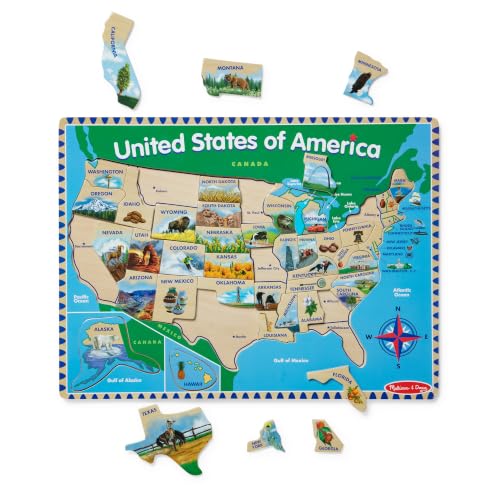
Melissa & Doug Wooden World Map Puzzle
Each continent forms its own chunky wooden piece, color coded so a toddler can match shape to base map without reading a label. Small knobs on some pieces help hands still developing fine motor control grip and lift them. Solid wood construction shrugs off drops that would crack a cardboard puzzle.
Pros
- Solid wood survives daily toddler handling
- Color coding speeds early continent recognition
- Knobbed pieces suit developing fine motor skills
Cons
- No audio or interactive element
- Covers continents only, not individual countries
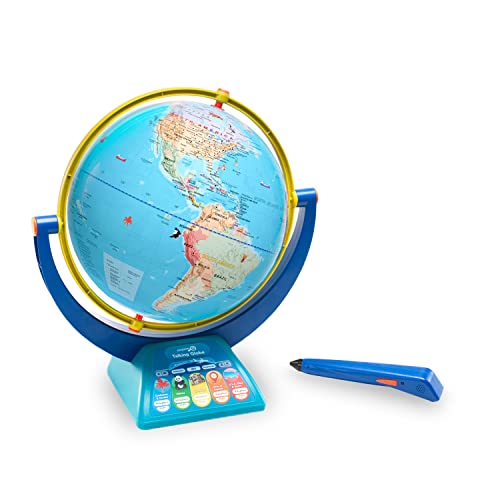
GeoSafari Jr. Talking Globe by Educational Insights
Touch a country on this globe and it speaks facts about local animals, landmarks, and culture, useful for a child who listens better than reads. A built in quiz mode turns exploration into a simple game. Running on batteries, it needs no tablet or app to work.
Pros
- Spoken facts help early or reluctant readers
- Quiz mode turns exploration into a game
- Works without a screen or app
Cons
- Batteries need frequent replacement with heavy use
- Printed country names stay small for early readers

Professor Noggin’s World Geography Card Game
Each card carries three difficulty tiers of trivia on continents, countries, and landmarks, so the game keeps pace as a child’s knowledge grows. Dice and pieces turn it into a standard board game rather than flash cards. Turn taking and light competition come built into how it plays.
Pros
- Three difficulty tiers extend its useful age range
- Builds turn taking alongside geography knowledge
- Compact box travels well for car trips
Cons
- Requires reading ability, so less suited to true beginners
- Needs a second player to work as designed

Learning Resources Puzzle Globe
Foam pieces snap together into a full 3D globe, letting a kid feel how flat continents wrap onto a round world. Taking it apart and rebuilding it repeatedly reinforces shape memory better than a static globe would. It also costs less than any talking or motorized globe here.
Pros
- Builds a hands-on sense of flat to round mapping
- Lightweight foam is safe for young hands
- Priced below interactive globe options
Cons
- Pieces get lost without a dedicated storage bag
- Carries no printed labels or facts

Replogle Explorer 12-Inch Globe
Bright colors and larger text sized for early readers cover this globe’s surface, with no batteries or app pairing required. A metal stand holds it steady on a desk or shelf during homework or story time. It works best alongside an adult pointing out countries as a child looks on.
Pros
- Larger text suits early independent readers
- Needs no batteries or charging
- Pairs well with parent led lessons
Cons
- Skips audio or interactive quiz features
- Depends on an adult to explain locations

National Geographic World Map Puzzle
Printed across oversized cardboard pieces, this floor puzzle labels countries, oceans, and a few landmarks on a scale kids can spread across a room. Its price sits below wooden or interactive alternatives. Cardboard wears down faster than wood once daily assembly starts to add up.
Pros
- Floor format suits group or family assembly
- Costs less than wooden or interactive options
- Prints country and ocean labels directly on pieces
Cons
- Wears faster than wood under frequent use
- 100 pieces challenge a true first time beginner

Waypoint Geographic Etch Puzzle Map of the World
Every country here forms its own piece instead of grouping by continent, adding detail once a child outgrows basic continent puzzles. Wood composite construction holds up to repeated assembly better than cardboard. It suits an older beginner ready to learn individual country shapes and names.
Pros
- Individual country pieces deepen geography knowledge
- Wood composite outlasts cardboard under reuse
- Bridges beginner and advanced map puzzles
Cons
- Too detailed for a true first time beginner
- 195 pieces take longer to finish than smaller sets
The lineup, side by side
| # | Model | Age range | Best for | Score | Price |
|---|---|---|---|---|---|
| 1 | Melissa & Doug Wooden World Map Puzzle | 3 years and up | Best overall | 9.4 | Check price |
| 2 | GeoSafari Jr. Talking Globe by Educational Insights | 4 to 8 years | Best interactive | 9.1 | Check price |
| 3 | Professor Noggin’s World Geography Card Game | 7 years and up | Best for older beginners | 8.9 | Check price |
| 4 | Learning Resources Puzzle Globe | 5 years and up | Best value | 8.7 | Check price |
| 5 | Replogle Explorer 12-Inch Globe | 6 years and up | Best classic globe | 8.5 | Check price |
| 6 | National Geographic World Map Puzzle | 6 years and up | Best budget | 8.3 | Check price |
| 7 | Waypoint Geographic Etch Puzzle Map of the World | 8 years and up | Best for depth of detail | 8.0 | Check price |
Frequently asked questions
What age should a kid start learning geography?
Basic shape and continent recognition can start around age three with chunky puzzle pieces. Detailed country level learning tends to click better from age seven onward, once reading supports it.
Is a talking globe better than a traditional globe for beginners?
It depends on the child. A talking globe helps kids who are not yet confident readers, while a traditional globe works well when a parent guides the exploration directly.
How many puzzle pieces should a beginner start with?
Twenty to forty large pieces suits true beginners between three and five. Kids seven and older usually handle a hundred pieces or more without frustration.
Can a geography toy replace a real map or atlas?
Not fully. It introduces shapes and basic concepts well, but a real atlas adds detail and context that beginner toys intentionally leave out.
What is the difference between a continent puzzle and a country puzzle?
A continent puzzle groups the world into seven large pieces, ideal for beginners. A country puzzle breaks it into close to two hundred pieces, better suited to kids who already know the continents.
Do geography card games require reading ability?
Most do, since questions and answers appear as text on the cards. Some games made for younger kids use pictures instead, so check the age range before buying for a non reader.
Are wooden geography puzzles worth it over cardboard?
For frequent use, yes. Wood resists the wear that cardboard shows after repeated daily assembly, which matters once a puzzle becomes a regular toy.
Which beginner geography toy works best for a kid who does not like reading?
GeoSafari Jr.’s talking globe fits here, since it speaks facts aloud instead of depending on the child reading text.
What geography toy suits a car trip or travel?
Professor Noggin’s card game packs into a compact box and needs no setup surface, which suits travel better than a floor puzzle or standing globe.
Best beginner geography toy for a toddler under five?
Melissa & Doug’s wooden world map puzzle fits toddlers best, since its chunky continent pieces survive drops and need no adult supervision to use safely.
Our pick
Melissa & Doug’s wooden puzzle gives toddlers the sturdiest, most hands-on start with continents. Kids who respond better to sound than text tend to stick with GeoSafari Jr.’s talking globe longer. Once a child is ready to read and compete, Professor Noggin’s card game turns geography into a game the whole family can join.
Rachel Simmons
Rachel previously worked in child-product retail and brings a practical, detail-first eye to gear reviews, focusing on safety standards, ease of use and the fine print that matters most for new caregivers.


