Beginner Blocking Tools That Make Finishing Easier
The Knitter’s Pride Blocking Mat Set is the top pick for most beginners because it offers interlocking mats, a grid, and sturdy pins at a reasonable price, but it lacks a dedicated carrying case.
Blocking transforms your finished projects from wobbly to polished, but the right tools make all the difference. Beginners often feel overwhelmed by the variety of mats, pins, and wires available.
This roundup focuses on simple, effective options that don’t require a craft room. You will find kits, individual mats, and pin sets that work for small and medium projects.
The shortlist, ranked
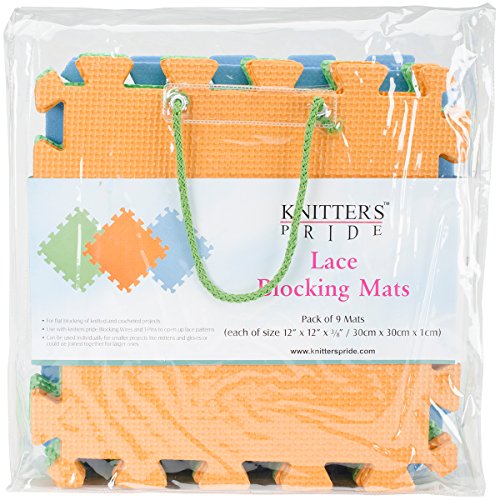
Knitter’s Pride Blocking Mat Set
This set includes nine interlocking foam mats with a printed grid, plus 100 stainless steel T-pins. The mats measure 12×12 inches each, giving you a 36×36 inch blocking surface when fully assembled. Owners report the grid lines stay visible after repeated use, and the pins hold fabric securely without rusting.
Pros
- Grid lines simplify alignment
- Pins are sturdy and rust-resistant
- Mats interlock tightly
Cons
- No carrying case included
- Foam can show pin marks over time
Blocking Basics Starter Kit by Boye
The Boye kit offers a compact solution with four interlocking mats, eight plastic T-pins, and a small mesh laundry bag for washing. It is ideal for small projects like scarves and hats. The mats are thinner than premium options, but they lie flat and are easy to store. Beginners appreciate the low commitment price.
Pros
- Very affordable
- Everything needed for small projects
- Compact storage
Cons
- Thin mats might not hold heavy pieces
- Plastic pins are less durable

KnitIQ Blocking Mats with Grid and Pins
KnitIQ offers a set of six extra-large mats (24×24 inches each) that can be arranged to fit shawls and blankets. The set includes 50 rust-resistant steel pins. The mats have a smooth surface without printed lines, which some users like for a clean look. They are thicker than average, providing good insulation from cold tables.
Pros
- Large coverage area
- Thick and durable foam
- Pins slide in smoothly
Cons
- No grid lines for alignment
- Heavy to move around

Blocking Wires Set for Knitters and Crocheters
This wire set includes six flexible stainless steel wires in lengths of 12, 24, and 36 inches, along with 24 pins and a small storage pouch. The wires help achieve crisp, even edges on lace and geometric patterns. Beginners find the wires easier to use than pinning every few stitches. The set is lightweight and portable.
Pros
- Creates straight edges effortlessly
- Wires are flexible and rust-proof
- Compact storage pouch
Cons
- Learning curve for shaping curves
- Wires can bend if mishandled

Dritz Knitting Blocking Board
The Dritz blocking board is a single rigid foam board with a printed grid and a metal edge for pinning. It measures 18×18 inches and is lightweight enough to move around. This board works well for swatches, scarves, and other flat items. The grid is printed on both sides, with one side featuring a 1-inch grid and the other a 2-inch grid.
Pros
- Lightweight and portable
- Rigid surface for precise pinning
- Two grid options
Cons
- Small surface area
- Pins not included

Clover Blocking Mats with Pins
Clover’s blocking mats are known for their dense foam that resists indentations. The set includes four mats (12×12 inches) with a printed grid, plus 60 rust-resistant pins. The mats have a smooth surface that is easy to clean. They are slightly more expensive, but crafters report they last for years without losing shape.
Pros
- Exceptional durability
- Pins are sharp and sturdy
- Mat surface resists wear
Cons
- Higher price point
- Only four mats in set

Lion Brand Blocking Mat Set
Lion Brand’s set includes four interlocking mats in bright colors, each with a printed grid and 30 T-pins. The colorful design helps you distinguish different sections of your project. The mats are slightly thinner than others but still functional. This set is a great choice for visual learners who like to see a clear layout.
Pros
- Visual color coding
- Grid lines are clear
- Pins are easy to grip
Cons
- Mats are thin
- Fewer pins than other sets
Before you buy
Compared at a glance
| # | Model | Material | Best for | Score | Price |
|---|---|---|---|---|---|
| 1 | Knitter’s Pride Blocking Mat Set | High-density foam | All-around starter kit | 9.4 | Check price |
| 2 | Blocking Basics Starter Kit by Boye | EVA foam | Budget-friendly complete set | 9.1 | Check price |
| 3 | KnitIQ Blocking Mats with Grid and Pins | High-density foam | Large projects on a budget | 9.0 | Check price |
| 4 | Blocking Wires Set for Knitters and Crocheters | Stainless steel wires | Creating straight edges | 8.8 | Check price |
| 5 | Dritz Knitting Blocking Board | Foam board with metal edge | Small projects and swatches | 8.6 | Check price |
| 6 | Clover Blocking Mats with Pins | High-density EVA foam | Premium quality and durability | 9.2 | Check price |
| 7 | Lion Brand Blocking Mat Set | Foam | Color-coded organization | 8.4 | Check price |
Good to know
What is blocking in knitting and crochet?
Blocking is a finishing technique that shapes your finished project by wetting or steaming it and then pinning it to the desired dimensions to dry. This evens out stitches and enhances drape.
How many mats do I need as a beginner?
For most small to medium projects, four to six 12-inch mats are sufficient. If you plan to block large shawls or blankets, consider sets with larger mats or more pieces.
Can I use regular pins instead of T-pins?
Yes, but T-pins are preferred because they have a larger head that is easier to grip and push into foam. Regular sewing pins may be too thin and short.
Are blocking wires necessary?
No, but they are helpful for creating straight edges on lace or projects with points. For beginners, pins alone can achieve good results with careful placement.
How do I clean my blocking mats?
Wipe with a damp cloth and mild soap. Avoid harsh chemicals. Let them air dry completely before storing.
Can I leave pins in the mats overnight?
It is best to remove pins after the project is dry. Leaving them for extended periods can create small holes or indentations in the foam.
What is the difference between wet blocking and steam blocking?
Wet blocking involves soaking the item in water before pinning. Steam blocking uses a steam iron or steamer to relax the fibers without full immersion. Both are effective, but wet blocking is more common for delicate fibers.
Do I need a blocking board for small projects?
A small board or a single mat can work for swatches and small items like hats. A larger set is more versatile if you plan to expand your projects.
How do I know if my blocking tools are good quality?
Look for dense foam that resists indentation, rust-resistant pins, and clear grid lines. Reading customer reviews can also provide insight into durability.
Can I block acrylic yarn?
Yes, but acrylic requires heat to set the shape. You can use steam blocking with care, but avoid direct contact with the iron. Some crafters use a heat gun or steam from a kettle.
Our pick
For most beginners, the Knitter’s Pride Blocking Mat Set offers the best combination of size, grid lines, and included pins at a reasonable price. If you are on a tight budget or only make small items, the Boye Starter Kit is a solid entry point. Invest in a premium set like Clover if you plan to block frequently and want long-lasting durability.
Jake Monroe
Jake worked as a residential contractor for over a decade before shifting to full-time writing. He evaluates power tools, hand tools and workshop gear through the lens of someone who has actually used them on job sites, not just read the box.