Battery Organisers That Stop Loose Cells Shorting
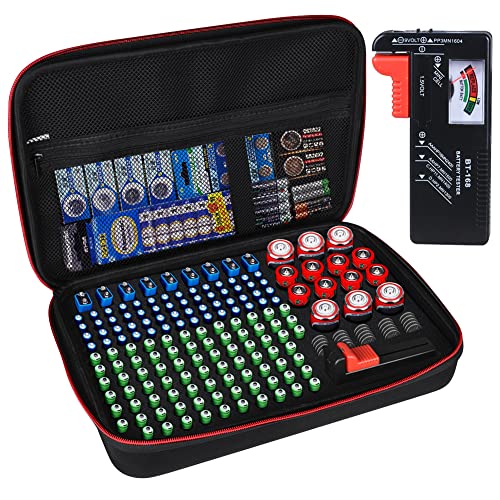
THE BATTERY ORGANIZER storage case wins on scale, with about 180 recessed slots and a tester clipped into the lid. Ontel Battery Daddy matches that count in a book style shell with a button cell section. Whizzotech suits one drawer, holding roughly 93 cells.
THE BATTERY ORGANIZER case fits a household that keeps every cell size on hand. Roughly 180 moulded recesses isolate each terminal, and a lid mounted tester sorts good cells from flat ones in seconds. Bulk is the tradeoff, because the case will not lie flat in a shallow drawer.
Battery storage looks trivial until a 9 volt cell bridges across a set of keys. Both of its contacts sit on one face, so it shorts more readily than any other size. We compared slot counts, supported sizes, terminal isolation, tester style and closure design, then read owner reports on hinge wear and cracked clasps.
Before you buy
What to look for in a battery organiser Four features decide whether a case earns its drawer space. Slot shape comes first, because a recess that isolates each terminal is what prevents a short. Check the size mix next: a tray heavy on AA is useless if your smoke alarms eat 9 volt cells. Closure strength matters more than it sounds, since a loaded 180 slot case weighs enough to pop a weak clasp. A bundled tester rounds it out, saving you from binning cells that still have charge.
How many slots a household actually needs Count your existing stock before choosing a size. Cordless tools, game controllers and a dozen remotes will fill a 180 slot case such as Battery Daddy inside a year. Flats and small houses rarely pass 90 cells, which is where Whizzotech lands. Coin cells deserve a dedicated section, since CR2032 and CR2016 look identical once loose. Oversizing wastes drawer depth, while undersizing pushes the overflow straight back into the junk drawer.
What a bundled tester can and cannot tell you Included testers are load testers, not capacity meters. A small resistor draws current while a needle or LED reports voltage under that load. Good, weak and replace is all they claim, and for alkalines that is enough. Capacity in milliamp hours stays invisible, so no tester predicts remaining runtime. Lithium primary cells hold voltage almost to the end and then collapse, which makes a needle reading misleading. Owners of NiMH rechargeables get far better data from a charger with a refresh cycle.
Best organisers for camera bags, tool kits and cars Bags need different hardware from drawers. Storacell clips to a camera strap and holds twelve AA cells through drops that would spring a hinged lid. COMECASE pushes the same idea further with an EVA shell and a zip, which suits checked luggage. Reversible loading is the habit worth copying: push spent cells in upside down and you never test the same one twice. Run one caddy per size, because mixed AA and AAA rolling loose in a pouch is exactly how terminals meet.
The top picks, ranked

THE BATTERY ORGANIZER Battery Storage Case with Tester
Moulded recesses hold about 180 cells spanning AA, AAA, C, D and 9 volt. Lift the tester out of the lid and a doubtful cell gets a verdict without digging for a multimeter. Every battery sits alone in its slot, so terminals never rest against metal.
Pros
- Each cell sits in its own isolated recess
- Tester lifts out and reads one handed
- Covers all five common household sizes
Cons
- Footprint is too deep for a shallow drawer
- Latches feel light for the loaded weight
Ontel Battery Daddy 180 Battery Organizer
Battery Daddy opens like a book, filling both halves with compartments for around 180 cells. One row handles button cells such as CR2032, which most cases ignore entirely. Rigid shell sides let it stack on a shelf or slide under a workbench.
Pros
- Both halves store cells, which doubles density
- Button cell row covers CR2032 and similar coins
- Hard shell shrugs off knocks inside a cupboard
Cons
- Contents spill if the case opens upside down
- Hinge wears first after years of daily opening
Whizzotech Battery Organizer Storage Case with Tester
Height drops enough for a single kitchen or desk drawer rather than a whole shelf. Around 93 recesses cover AA through 9 volt using the same isolation layout as the big cases. Its removable tester reads all five of those sizes.
Pros
- Slides into a standard drawer without catching
- Clear lid shows remaining stock at a glance
- Recessed slots isolate terminals like larger cases
Cons
- Ninety odd slots fill fast in a busy home
- Thin plastic latch needs a gentle hand
LotFancy Battery Organizer Storage Case with Tester
LotFancy keeps the format basic: moulded slots, a hinged lid and a tester in the box. Layout leans toward AA and AAA, the sizes most homes replace fastest. Plastic runs lighter than the premium shells, so treat it as drawer storage rather than a carry case.
Pros
- Tester ships in the box instead of costing extra
- Slot mix matches how households actually buy cells
- Small enough for a kitchen drawer
Cons
- Lighter plastic flexes under a full load
- Slot count runs short for tool heavy homes
Storacell by Powerpax AA Battery Caddy
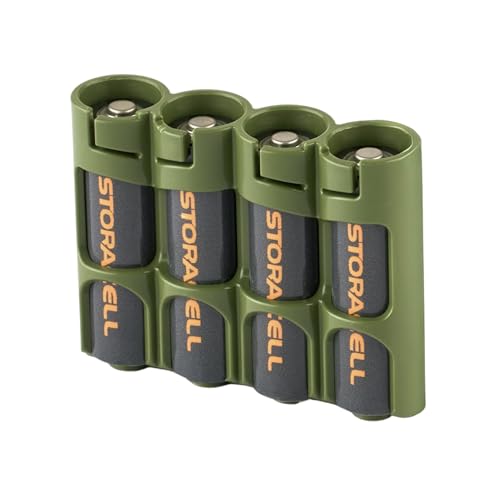
Rigid polypropylene grips twelve AA cells in a solid block that clips to a belt or bag strap. Cells push in from either face, so charged ones point one way and spent ones the other. Photographers and flashlight users pick these because a drop will not scatter the load.
Pros
- Holds cells tight with no rattle inside a bag
- Belt clip keeps spares reachable outdoors
- Flipping a cell marks it as used, no labels needed
Cons
- One caddy handles a single cell size
- No tester in the package

COMECASE Hard Battery Storage Case
An EVA shell absorbs pressure when the case rides in checked luggage or a tool bag. Divided slots keep AA and AAA apart, so contacts never meet in transit. Zip closure beats a clasp on the road, since nothing springs open under load.
Pros
- Zip stays shut when a bag gets crushed
- Moulded EVA resists dents and pressure
- Small footprint for the cell count it carries
Cons
- Tester is not included
- Slots fit only the smaller cell sizes

EBL Battery Storage Case
EBL sizes these cases around its own NiMH AA and AAA cells, giving a snug rattle free fit. Clear plastic lets you read any charge date you write on the cell wrap. Housing rechargeables separately prevents the classic error of loading an alkaline into a charger.
Pros
- Snug fit stops cells sliding around in a bag
- Clear shell shows contents without opening
- Keeps NiMH stock apart from alkalines
Cons
- Each case holds only a handful of cells
- No tester or labelling system included
The lineup, side by side
| # | Model | Capacity | Best for | Score | Price |
|---|---|---|---|---|---|
| 1 | THE BATTERY ORGANIZER Battery Storage Case with Tester | About 180 batteries | Best overall | 9.4 | Check price |
| 2 | Ontel Battery Daddy 180 Battery Organizer | About 180 batteries | Best for large households | 9.2 | Check price |
| 3 | Whizzotech Battery Organizer Storage Case with Tester | Around 93 batteries depending on version | Best value | 9.0 | Check price |
| 4 | LotFancy Battery Organizer Storage Case with Tester | AA, AAA, C, D, 9V | Best budget | 8.8 | Check price |
| 5 | Storacell by Powerpax AA Battery Caddy | 12 AA cells | Best for camera bags | 8.6 | Check price |
| 6 | COMECASE Hard Battery Storage Case | Hard EVA with zip closure | Best for travel | 8.3 | Check price |
| 7 | EBL Battery Storage Case | AA and AAA | Best for rechargeable cells | 8.0 | Check price |
Good to know
Is it safe to keep loose batteries in a drawer?
No. Coins, keys and other cells can bridge two terminals and heat the battery. Individual recesses in an organiser remove that path entirely.
What size battery organiser do I need for a family home?
Around 180 slots covers a house with tools, toys and several remotes. Roughly 90 slots suits a flat or a couple with a few devices.
Do the testers included with battery cases actually work?
Yes, for alkalines. They read voltage under load and separate usable cells from flat ones. Capacity and remaining runtime stay out of reach.
Can you store rechargeable and alkaline batteries together?
It works, but it invites mistakes at the charger. A dedicated case such as the EBL one keeps NiMH cells visibly separate.
Should batteries be stored in the fridge?
No. Room temperature costs alkalines very little charge per year, and condensation inside a fridge corrodes contacts.
How should 9 volt batteries be stored?
Seat each one in a dedicated slot or cap the terminals. Both contacts share a single face, so a 9 volt shorts more easily than any other size.
Which battery organiser is best for a camera bag?
Storacell. Twelve AA cells sit in a rigid block that clips to a strap, and flipping a cell marks it as spent.
How long do batteries last in storage?
Alkalines commonly stay usable for several years when kept cool and dry. Lithium primary cells last longer, and standard NiMH cells self discharge faster unless they are low self discharge types.
Battery Daddy vs THE BATTERY ORGANIZER: which holds more?
Both land around 180 cells. Battery Daddy splits them across two hinged halves and adds a button cell row, while THE BATTERY ORGANIZER keeps everything on one tray under a lid.
What should you do with used but not dead batteries?
Give them a section of their own. Cells too weak for a camera flash still run wall clocks, remotes and kitchen timers for months.
Our take
Buy THE BATTERY ORGANIZER case if your home runs on every size from AAA to 9 volt, because the lid tester turns a drawer sort into a two minute job. Smaller households get more from the Whizzotech case, which does the same job in one drawer instead of a shelf. Anyone carrying spares into the field should add a Storacell caddy, whichever case lives at home.
Dana Whitfield
Dana spent eight years buying and merchandising for a regional kitchenware retailer before moving into editorial work. She has handled thousands of SKUs across cookware, small appliances and kitchen organization, and focuses on the practical differences that matter once a product is actually in daily use.
You might also need

Vollum 8 Liter Insulated Beverage Dispenser Review: Does the Spigot Design Deliver?

JH JIEMEI HOME Ramen Bowl Set Review: Real Donburi Bowls or Just Pretty Glaze?

Breaking Bad Los Pollos Hermanos Apron Review: Fun Fan Gear, But How Functional?