Top Battery Garden Tillers for Easy Soil Prep
The Greenworks 40V 10-Inch Cordless Cultivator is our top pick for most gardeners. It offers a good balance of power, runtime, and price. It handles established beds and new plots without the hassle of cords or gas. The main limitation is that it may struggle with very hard, compacted clay, but for typical garden soil it excels.
Battery garden tillers are changing how we prep soil. They are quiet, clean, and easy to start. No more pulling cords or mixing fuel. Just press a button and go.
We looked at many models to find the best for different needs. From compact cultivators for raised beds to powerful tillers for breaking new ground. Here are our top picks based on specifications and owner reports.
The shortlist, ranked

Greenworks 40V 10-Inch Cordless Cultivator
The Greenworks 40V cultivator is a reliable workhorse for most garden tasks. It has a 10-inch tine width and 6 durable tines that dig deep. The 40V battery provides ample power, and the tool is lightweight at about 14 pounds. Owners report it breaks up soil well and is easy to maneuver.
Pros
- Lightweight and easy to handle
- Good power for most soils
- Battery and charger included
Cons
- May struggle with heavy clay
- Battery runtime is moderate

Sun Joe TJ604E 16-Inch Electric Garden Cultivator
The Sun Joe TJ604E is a corded electric tiller, but we include it as a budget alternative for those who do not mind a cord. It offers a 16-inch tine width and 4 steel tines, covering ground quickly. It is lightweight and easy to store. However, it requires an extension cord, which limits mobility.
Pros
- Affordable price
- No battery charging needed
- Wide tine path
Cons
- Cord limits reach
- Not as powerful as gas
DEWALT 20V MAX 10-Inch Cordless Cultivator
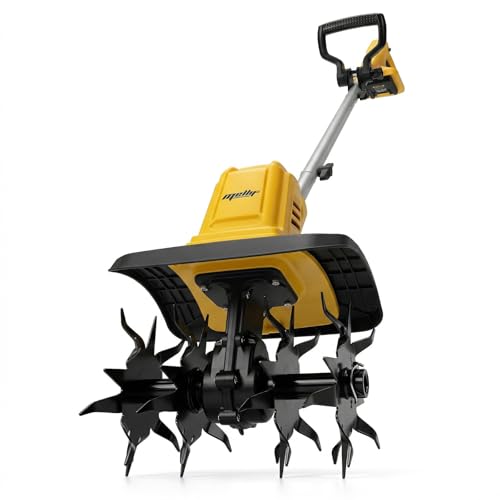
If you already own DEWALT 20V batteries, this cultivator is a smart addition. It uses the same batteries, saving money and space. It has a 10-inch tine width and 6 tines, similar to the Greenworks. It is well-built and offers good torque for its size. Note that the battery is not included, so you need one from your existing set.
Pros
- Works with existing DEWALT batteries
- Sturdy construction
- Good balance
Cons
- Battery not included
- Slightly heavier

RYOBI 40V Brushless 15-Inch Cordless Cultivator
The RYOBI 40V brushless cultivator offers a wider 15-inch tine path, making it efficient for larger garden plots. The brushless motor delivers more power and longer runtime. It folds for compact storage. Users appreciate the adjustable tine depth. However, it is heavier and more expensive than some others.
Pros
- Wide tine path covers more ground
- Brushless motor extends runtime
- Folds for storage
Cons
- Heavier to handle
- Higher price

BLACK+DECKER 20V MAX 8-Inch Cordless Cultivator
The BLACK+DECKER 20V cultivator is compact and nimble, perfect for small flower beds and container gardens. It has an 8-inch tine width and 4 tines. It is very lightweight at just 6 pounds, making it easy to use for extended periods. The battery is included, but runtime is shorter due to lower voltage.
Pros
- Very lightweight
- Ideal for small spaces
- Battery included
Cons
- Less power for tough soil
- Narrow tine width

Earthwise TC70016 16-Inch Electric Corded Tiller
For those who prefer corded power, the Earthwise TC70016 is a strong contender. It has a 16-inch tine width and 4 adjustable tines. It is powerful enough for medium soils and comes at a budget price. The main drawback is the cord management, but it offers unlimited runtime.
Pros
- No battery to charge
- Adjustable tines
- Powerful for the price
Cons
- Requires extension cord
- Cord can be a hassle

Worx WG430 13.5-Inch 7.5 Amp Electric Tiller
The Worx WG430 is a corded electric tiller with a 13.5-inch tine width. It features 4 tines and a 7.5 amp motor, providing solid performance. It is compact and easy to store. It also has a unique design that allows the tines to be reversed for edging. The cord is a limitation, but the power is consistent.
Pros
- Compact and lightweight
- Reversible tines for edging
- Consistent power
Cons
- Corded only
- Narrower than some
The lineup, side by side
| # | Model | Tine Width | Best for | Score | Price |
|---|---|---|---|---|---|
| 1 | Greenworks 40V 10-Inch Cordless Cultivator | 10 inches | Best Overall | 9.4 | Check price |
| 2 | Sun Joe TJ604E 16-Inch Electric Garden Cultivator | 16 inches | Budget Pick | 8.6 | Check price |
| 3 | DEWALT 20V MAX 10-Inch Cordless Cultivator | 10 inches | Best for DEWALT Users | 9.0 | Check price |
| 4 | RYOBI 40V Brushless 15-Inch Cordless Cultivator | 15 inches | Best for Large Beds | 8.9 | Check price |
| 5 | BLACK+DECKER 20V MAX 8-Inch Cordless Cultivator | 8 inches | Best for Small Gardens | 8.4 | Check price |
| 6 | Earthwise TC70016 16-Inch Electric Corded Tiller | 16 inches | Best Corded Value | 8.2 | Check price |
| 7 | Worx WG430 13.5-Inch 7.5 Amp Electric Tiller | 13.5 inches | Best for Compact Power | 8.5 | Check price |
How to choose
Questions worth asking
Are battery garden tillers as powerful as gas tillers?
For small to medium gardens, battery tillers are usually sufficient. Gas tillers offer more power for heavy clay or large areas, but battery models have improved significantly. For typical residential use, a 40V battery tiller can handle most tasks.
How long does a battery tiller run on a single charge?
Runtime depends on battery capacity and soil conditions. A 2Ah battery may run 20 to 30 minutes, while a 4Ah battery can last 40 to 60 minutes. Tougher soil drains the battery faster.
Can I use a battery tiller to break new ground?
Yes, but it may require multiple passes. For sod or compacted soil, you may need to water the area first or use a heavier model. Some tillers have adjustable depth to gradually work deeper.
What is the difference between a cultivator and a tiller?
A cultivator is lighter and designed for weeding and loosening existing soil. A tiller is heavier and can break new ground. Many battery models are cultivators, but some can handle both tasks with the right tines.
Do I need to buy a battery and charger separately?
Some models come with a battery and charger, others are sold as ‘tool only’ to use with your existing batteries from the same brand. Check the product description.
How do I maintain a battery tiller?
Keep the tines clean and sharp. Remove soil after each use. Charge the battery according to the manual. Store the tiller in a dry place. Check for loose bolts periodically.
Can I use a battery tiller in wet soil?
It is best to avoid tilling wet soil as it can clog the tines and strain the motor. Wait for the soil to dry a bit for easier tilling and better aeration.
What safety gear should I wear when using a tiller?
Always wear safety glasses to protect your eyes from flying debris. Sturdy closed-toe shoes or boots are essential. Gloves can provide better grip and protect your hands. Avoid loose clothing that could get caught.
Are battery tillers easy to store?
Yes, most are compact and some fold for storage. They are lighter than gas tillers and do not require fuel or oil, making them easy to store in a shed or garage.
What is the best way to till a garden bed?
Start by removing any large rocks or debris. Moisten the soil if it is very dry. Guide the tiller in a systematic pattern, overlapping passes slightly. For deeper tilling, make multiple passes at increasing depth.
The verdict
If you want a reliable battery tiller for typical garden beds, choose the Greenworks 40V cultivator for its balance of power and weight. For those with larger areas, the RYOBI 40V brushless model offers a wider path and better runtime. If you are on a tight budget and can manage a cord, the Sun Joe TJ604E is a great value. Ultimately, the Greenworks is our overall recommendation for most home gardeners.
Sierra Daniels
Sierra's background is in landscape design and nursery retail. She focuses on lawn and garden equipment, outdoor furniture and gear durability, weighing published specs against how materials actually hold up outside.