Choosing a Barbell: Whip, Knurl and Sleeve Spin
CAP Barbell’s The Beast OB-86B leads this group on versatility, pairing a 28.5 mm shaft with bronze bushings and a 1000 pound rating. Snatch and clean work favors the Synergee Games bar on needle bearings. Heavy pullers should take the XMark Voodoo for its diamond knurl.
Most home gyms should start with CAP Barbell’s The Beast OB-86B. A 28.5 mm shaft resists flex under heavy squats, bronze bushings need no upkeep, and dual knurl marks fit both lifting styles. Its limitation shows in fast turnover, where bushings lag behind needle bearings.
Two things separate barbells once you get past the weight: how the sleeves rotate and how much the shaft bends. We compared listed shaft diameter, stated tensile strength, bushing versus bearing construction, knurl pattern and marking placement. Owner feedback on finish durability and sleeve wobble broke the ties.
What we recommend

CAP Barbell The Beast OB-86B
Black phosphate coats a 28.5 mm shaft, so humid garage air bites slower than it does on bare chrome. Bronze bushings turn well enough for rows, presses and the occasional clean, with no cleaning routine attached. Dual knurl rings mark powerlifting and Olympic grip widths on the same bar, rated to 1000 pounds.
Pros
- Dual knurl rings serve both grip standards
- 1000 pound rating clears heavy squat work
- Phosphate coating slows rust in damp garages
Cons
- Bushings turn over slower than needle bearings
- No center knurl to anchor a low bar squat

Synergee Games Olympic Barbell
Needle bearings carry this bar. Sleeves keep turning while the shaft rotates in a snatch, which takes the twisting load off wrists and elbows at the catch. Synergee lists 190,000 PSI tensile strength on a 28 mm shaft with dual rings.
Pros
- Bearings spin fast enough for full turnover
- Dual rings cover snatch and bench grips
- Moderate knurl survives high rep conditioning
Cons
- Bearing races collect chalk and need cleaning
- Knurl too shallow for maximal deadlift grip

XMark Voodoo Commercial Olympic Bar
Diamond knurl runs deep on the Voodoo, biting into a hook grip at the moment chalk starts to fail. Under black manganese phosphate sits a stiff 28 mm shaft that keeps press paths predictable. XMark lists 185,000 PSI tensile strength and a 1500 pound load rating.
Pros
- Deep knurl holds through a failing hook grip
- 1500 pound rating suits maximal attempts
- Minimal whip keeps bar path repeatable
Cons
- Sharp knurl tears calluses on high rep sets
- Bushing sleeves slow Olympic turnover

Titan Fitness Performance Series Olympic Barbell
Between a starter bar and a competition bar sits Titan’s Performance Series. Bronze bushings and a 28.5 mm shaft cover squat, bench and pull cycles at the same level. Chrome sleeves run quietly, and the listed 190,000 PSI rating matches bars sold a class above.
Pros
- Dual knurl rings fit mixed programming
- 190,000 PSI rating is strong for the class
- Sleeves stay quiet under loaded reps
Cons
- Chrome scuffs where the bar meets J-cups
- Knurl depth lands squarely mid pack

Body-Solid Tools OB86 Olympic Bar
Hard chrome over 7 feet of steel describes the bar many commercial gyms still stock. Its 600 pound rating covers everything short of elite squat and deadlift numbers. Medium knurl and a smooth center section keep front racks and overhead presses off raw skin.
Pros
- Medium knurl tolerates daily training volume
- Chrome wipes down in seconds after sessions
- Smooth center section spares the neck on cleans
Cons
- 600 pounds caps very heavy squat work
- Chipped chrome spots rust in damp rooms
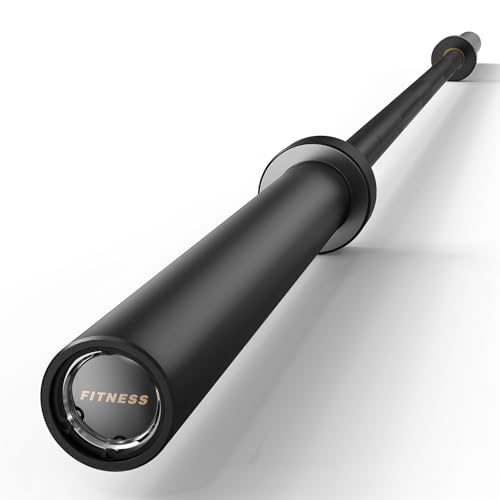
papababe Olympic Barbell
Basics arrive intact here: 7 feet of chrome, bushing rotation, a 700 pound rating. Knurl sits mild, which spares fresh hands but slips once a deadlift passes the knees. Rows, presses and moderate squats in a first home gym are the honest use case.
Pros
- Manageable to load and rack without a spotter
- Mild knurl suits hands still building calluses
- Standard 2 inch sleeves accept any Olympic plate
Cons
- Shallow knurl slips on heavy pulls
- Owners report sleeve play developing over time

Yes4All Olympic Barbell 6 ft
Six feet answers one specific problem: a 7 foot bar that will not clear rack uprights or a low basement wall. Storage gets simpler too, since the shorter shaft hangs on a single wall bracket. Loadable sleeve length shrinks with the frame, so plan accessory lifts rather than maximal squats.
Pros
- Clears narrow racks and low ceilings
- Hangs on a basic wall bracket between sessions
- Takes standard Olympic plates and collars
Cons
- Shorter sleeves hold fewer plates
- Not built for maximal squats or pulls
What matters most
What to look for in an Olympic barbell Four numbers describe almost any bar. Shaft diameter sets grip feel and stiffness: 29 mm barely flexes, 28 mm whips on a heavy pull, and 28.5 mm splits the difference. Tensile strength, quoted in PSI, estimates how much stress the steel takes before it stops springing back. Load rating is a separate and far more conservative figure, usually set by the sleeve assembly rather than the shaft. Finish matters last but ages first, since phosphate resists moisture better than bare chrome.
Bushings versus needle bearings Bronze bushings rotate under the collar with nothing to service. They stay quiet, last for years, and handle squats, presses, rows and slow pulls without complaint. Needle bearings spin far faster, which counts when a bar rotates in a snatch and the plates have to follow. That speed costs maintenance, because chalk and dust eventually reach the races. Pick bushings unless the Olympic lifts appear in your program weekly.
Best barbell for heavy deadlifts and low bar squats Grip fails before the back does on most deadlift attempts. Deep diamond knurl, like the pattern on the XMark Voodoo, keeps a hook grip locked once chalk wears thin. Low bar squatters also want a center knurl to stop the bar sliding down the shirt, though it scrapes the neck during cleans. Markings tell a similar story: powerlifting rings sit narrower than Olympic rings, and dual marked bars carry both sets.
Fitting a bar to a small rack or basement Measure inside your uprights before ordering anything. Standard 7 foot bars want roughly 48 inches of clear width, which rules them out of several folding racks and tight basement corners. That gap is where the Yes4All 6 foot bar earns its place, at the cost of loadable sleeve length. Ceiling height deserves a check too, since overhead pressing needs about 18 inches above your standing reach.
The lineup, side by side
| # | Model | Length | Best for | Score | Price |
|---|---|---|---|---|---|
| 1 | CAP Barbell The Beast OB-86B | 7 feet with 2 inch sleeves | Best overall | 9.4 | Check price |
| 2 | Synergee Games Olympic Barbell | 20 kg | Best for Olympic lifts and CrossFit | 9.2 | Check price |
| 3 | XMark Voodoo Commercial Olympic Bar | 28 mm | Best for powerlifting | 9.0 | Check price |
| 4 | Titan Fitness Performance Series Olympic Barbell | 20 kg | Best value | 8.8 | Check price |
| 5 | Body-Solid Tools OB86 Olympic Bar | 7 feet | Best for general strength training | 8.5 | Check price |
| 6 | papababe Olympic Barbell | 7 feet | Best budget | 8.3 | Check price |
| 7 | Yes4All Olympic Barbell 6 ft | 6 feet | Best for compact spaces | 8.0 | Check price |
Good to know
How much does an Olympic barbell weigh?
Men’s bars weigh 20 kg, roughly 44 pounds. Women’s bars weigh 15 kg on a 25 mm shaft. Budget 7 foot bars vary by a pound or two, so read the listed weight.
What is the difference between a 28 mm and 29 mm barbell?
A 28 mm shaft flexes more, which helps the bar whip during a clean and suits smaller hands. Going to 29 mm adds stiffness that powerlifters want under a maximal squat.
Do I need needle bearings for a home gym?
Only if snatches and cleans appear in your weekly program. Synergee’s Games bar earns its bearings there. Bronze bushings feel identical during squats, presses and rows.
What does tensile strength mean on a barbell?
It reports the stress the steel absorbs before bending permanently, measured in PSI. Home training runs fine from 165,000 PSI upward, and 190,000 PSI approaches competition grade.
Which barbell is best for deadlifts?
XMark’s Voodoo, because its diamond knurl keeps a hook grip from opening once chalk fails. Milder bars start sliding as the weight passes the knees.
Will a 7 foot barbell fit my rack?
Most racks need about 48 inches of inside width plus clearance for the sleeves. Measure first, then choose a 6 foot bar if the numbers are tight.
Is a center knurl necessary?
For low bar squats it helps, keeping the bar planted instead of creeping down your back. Cleans are the counterargument, since that same knurl scrapes the neck on the rack position.
Can you use an Olympic barbell with standard 1 inch plates?
No. Olympic sleeves measure 2 inches, so 1 inch plates slide loose and sit off center. Adapter sleeves exist, though they add unbalanced weight.
How do you stop a barbell from rusting?
Brush chalk out of the knurl with a nylon brush after each session, then wipe the shaft down. Phosphate finishes such as the one on The Beast handle humidity better than bare chrome.
Our take
Buy The Beast OB-86B from CAP if one bar has to cover squats, presses, pulls and an occasional clean. Weekly snatch and clean practice justifies paying up for the Synergee Games bar and its needle bearings. Anyone training near a one rep max on deadlifts gets more from the XMark Voodoo, provided torn hands on conditioning days are an acceptable trade.
Derek Holt
Derek has a background coaching recreational and amateur athletes and has worked the sales floor at specialty fitness retailers. He focuses on equipment durability, ergonomics and realistic use cases rather than marketing claims.

