Wireless vs Wired Backup Cameras: What to Match
AUTO-VOX M1W ranks first for a digital wireless signal that avoids the lag older analog wireless cameras show. Furrion Vision S suits RV and trailer owners needing long-range signal across a longer vehicle. Yada’s Digital Wireless Backup Camera fits budget buyers wanting basic coverage on a daily driver.
AUTO-VOX M1W is the strongest pick here because its digital wireless transmission avoids the signal interference and lag that plagued earlier analog wireless backup cameras. Installation needs no cable routed through the vehicle, which simplifies setup compared to wired systems. The main limitation is a shorter effective range than dedicated RV and trailer camera systems.
Backup camera shopping gets confusing because wireless, wired, and solar-powered systems each solve a different installation problem, and the wrong type can mean a weak signal or an unnecessarily complex install. We compared signal range described in each listing, power source, and owner reports on video lag and reliability.
The top picks, ranked

AUTO-VOX M1W Wireless Backup Camera
This camera transmits a digital wireless signal to a dash-mounted monitor, which avoids the static and dropout older analog wireless systems showed. Installation requires only a power connection to the reverse light circuit, with no video cable routed through the cabin.
Pros
- Digital signal avoids the lag of older analog wireless cameras
- Simplified install with no cable routed through the cabin
- Infrared LEDs improve visibility in low light
Cons
- Effective range is shorter than dedicated RV or trailer systems
- Monitor mounting takes some dash space

Furrion Vision S
Furrion designed this system specifically for RVs and trailers, with a signal range built to cover the longer distance between a tow vehicle and a trailer-mounted camera. A built-in monitor supports split-screen viewing when paired with a second camera for side visibility.
Pros
- Extended range suits the distance between tow vehicle and trailer
- Split-screen monitor supports a second camera for side views
- Weatherproof housing handles outdoor trailer exposure
Cons
- Higher cost than standard passenger vehicle backup cameras
- Oversized for simple sedan or small SUV installs

Garmin BC 40 Wireless Backup Camera
This camera pairs directly with compatible Garmin navigation units, displaying the reverse feed on the same screen already mounted for navigation rather than adding a separate monitor. It suits owners who already use a Garmin dash-mounted GPS unit.
Pros
- Uses an existing Garmin screen instead of adding a new monitor
- Simple power-only installation
- Infrared LEDs help in low-light reversing
Cons
- Only works with compatible Garmin navigation units
- Not useful for owners without a Garmin device already mounted

AUTO-VOX Solar CS-2 Backup Camera
This camera runs on a built-in battery topped off by a small solar panel, which removes the need to tap into the reverse light wiring at all. It suits renters, lessees, or owners who do not want to modify factory wiring for a backup camera install.
Pros
- No wiring into the reverse light circuit needed
- Solar panel reduces how often the battery needs manual charging
- Adhesive mount keeps install fully non-permanent
Cons
- Battery still needs occasional charging in low-sun conditions
- Not triggered automatically by reverse gear like wired systems
Pyle PLCM7500 Heavy-Duty Backup Camera System
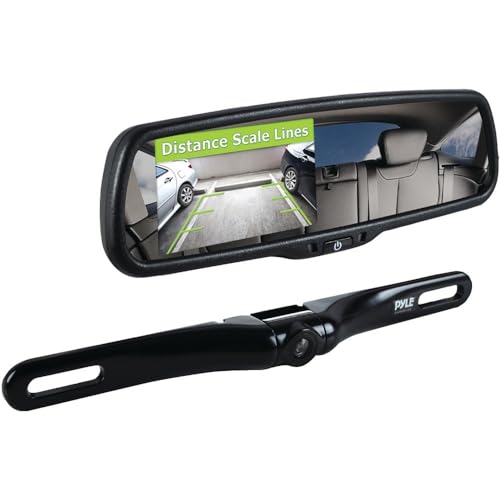
Pyle builds this as a wired system aimed at trucks, trailers, and commercial vehicles needing a reliable connection over a hardwired cable rather than wireless transmission. Multiple camera inputs allow monitoring more than one angle at once on a single display.
Pros
- Wired connection avoids any wireless interference risk
- Multiple camera inputs support monitoring several angles
- Heavy-duty housing suits commercial truck and trailer use
Cons
- Cable routing adds significant installation time and effort
- Overkill for a simple passenger car install

LeeKooLuu Wireless Backup Camera Kit
LeeKooLuu bundles a wireless camera and dash monitor at a lower combined cost than buying premium components separately. The digital signal performs adequately for passenger cars and small SUVs without the extended range of RV-focused systems.
Pros
- Lower combined cost than buying camera and monitor separately
- Simple power-only installation
- Adequate signal performance for passenger cars and small SUVs
Cons
- Signal range is shorter than premium wireless systems
- Build quality is less refined than higher-priced competitors

Yada Digital Wireless Backup Camera
Yada offers a basic digital wireless backup camera at a lower price point, covering the core function of reverse visibility without extra features like split-screen support or extended range. It suits occasional drivers wanting a straightforward safety upgrade.
Pros
- Lowest price point among cameras compared here
- Simple installation similar to pricier wireless models
- Covers the core reverse visibility function reliably
Cons
- No split-screen or extended range features
- Lower build quality than premium wireless systems
Compared at a glance
| # | Model | Signal Type | Best for | Score | Price |
|---|---|---|---|---|---|
| 1 | AUTO-VOX M1W Wireless Backup Camera | Digital wireless transmission | Best Overall | 9.3 | Check price |
| 2 | Furrion Vision S | Digital wireless, extended range for trailers | Best for RVs and Trailers | 9.1 | Check price |
| 3 | Garmin BC 40 Wireless Backup Camera | Digital wireless, Garmin-compatible pairing | Best for Garmin Navigation Integration | 8.8 | Check price |
| 4 | AUTO-VOX Solar CS-2 Backup Camera | Digital wireless transmission | Best No-Wiring Install | 8.6 | Check price |
| 5 | Pyle PLCM7500 Heavy-Duty Backup Camera System | Wired, hardwired video cable | Best for Heavy-Duty Trucks and Trailers | 8.4 | Check price |
| 6 | LeeKooLuu Wireless Backup Camera Kit | Digital wireless transmission | Best Value Kit with Monitor | 8.2 | Check price |
| 7 | Yada Digital Wireless Backup Camera | Digital wireless transmission | Best Budget | 7.9 | Check price |
What to look for
Wireless versus wired, the core installation tradeoff Wireless systems like the AUTO-VOX M1W need only a power connection to the reverse light circuit, skipping the need to route a video cable through the cabin. Wired systems like the Pyle PLCM7500 take longer to install but avoid any risk of wireless interference, which matters more on larger trucks and trailers.
Why range matters more for RVs and trailers than cars A passenger car camera only needs to transmit a few feet to the dash, while a trailer-mounted camera on an RV may need to reach a signal much farther to the tow vehicle’s cab. Furrion’s Vision S is built specifically for that longer distance, unlike standard passenger car wireless cameras.
No-wiring options for renters and lessees Owners who do not want to tap into factory wiring, whether due to a lease or personal preference, can use a solar or battery-powered camera like the AUTO-VOX Solar CS-2 instead of a hardwired system. The tradeoff is manual reverse-gear triggering is not automatic.
When an existing navigation screen saves a monitor purchase Owners who already have a compatible Garmin navigation unit mounted can skip adding a separate monitor entirely by choosing the Garmin BC 40, which displays directly on that existing screen.
Frequently asked questions
Is a wireless backup camera as reliable as a wired one?
Modern digital wireless cameras like the AUTO-VOX M1W perform reliably for most passenger vehicles, though wired systems avoid any theoretical risk of wireless interference entirely.
Do backup cameras need a separate monitor?
Most standalone backup camera kits include a dedicated monitor, though some, like the Garmin BC 40, pair with an existing compatible navigation screen instead.
Can a backup camera be installed without any wiring?
Yes, solar or battery-powered options like the AUTO-VOX Solar CS-2 use adhesive mounting and require no wiring into the vehicle’s electrical system.
What range do I need for a trailer-mounted backup camera?
Trailer and RV setups need significantly more range than standard passenger car cameras since the signal must travel farther between the trailer and the cab. Systems like Furrion’s Vision S are built for that distance.
Do backup cameras work well at night?
Most include infrared LEDs that illuminate the area behind the vehicle for visibility in low light, though picture quality varies by camera resolution and LED strength.
Can one monitor display more than one backup camera?
Some systems, like the Pyle PLCM7500, support multiple camera inputs for monitoring several angles on one screen, which suits trucks and trailers with more than one blind spot.
Does a backup camera turn on automatically when reversing?
Hardwired and power-tap cameras connected to the reverse light circuit turn on automatically when the vehicle shifts into reverse. Battery-powered models without that wiring connection typically need manual activation.
Is a wired backup camera harder to install than wireless?
Yes, wired systems require routing a video cable from the camera to the monitor, which takes more time and effort than a wireless system’s power-only connection.
The bottom line
AUTO-VOX M1W is the best overall pick for most passenger vehicle owners because its digital wireless signal installs easily without the lag of older analog systems. RV and trailer owners need the extended range of Furrion’s Vision S instead, since standard passenger car cameras were not built for that distance. Anyone who wants to avoid wiring into their vehicle entirely should choose the AUTO-VOX Solar CS-2 for its battery and solar power setup.
Tony Russo
Tony trained as an automotive technician and spent years in service and parts retail before moving into writing. He focuses on garage tools, car care products and accessories from a hands-on maintenance perspective.