Backpack Leaf Blowers vs Handheld: Which Wins Big Yards?
Husqvarna 350BT leads on balance, pairing 692 CFM with a harness that shifts load onto the hips. Echo PB-580T drives 215 MPH through a tube mounted throttle, which suits acreage and packed wet piles. Makita EB7660TH runs a four stroke engine and skips fuel mixing entirely.
Husqvarna 350BT is the backpack leaf blower most homeowners should buy. Its 50.2cc engine moves 692 CFM, and the load reducing harness keeps that weight off your lower back through a full session. Larger lots justify the Echo PB-580T, while the Makita EB7660TH removes fuel mixing from the routine.
One headline CFM figure explains very little on its own. Air speed dislodges stuck debris, volume rolls it along, and harness geometry decides whether you finish the yard or quit halfway. We compared published airflow and weight figures, engine displacement and stroke type, throttle placement, and what long term owners report about vibration and starting reliability.
The top picks, ranked

Husqvarna 350BT
A 50.2cc two stroke pushes 692 CFM, which is enough volume to roll damp leaves and light gravel rather than skim over them. Load reducing straps route weight through a hip belt, so your shoulders are not carrying 22.5 pounds alone. Tube length adjusts, letting taller users avoid stooping.
Pros
- 692 CFM moves wet leaves, not just dry ones
- Hip belt shifts load off the shoulders
- Adjustable tube length suits different heights
Cons
- Two stroke design needs mixed fuel
- Air speed trails the 215 MPH Echo
Echo PB-580T
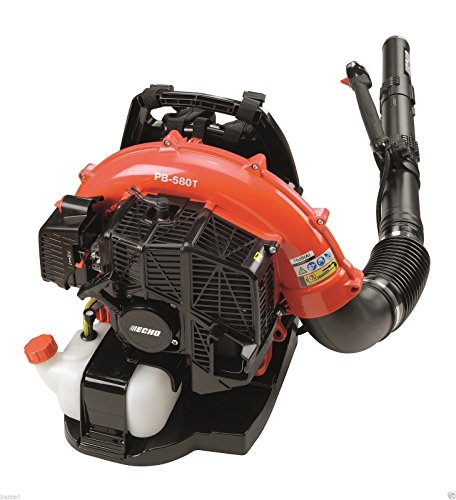
215 MPH out of the tube is the headline, and that velocity is what breaks matted leaves off wet turf. Displacement runs to 58.2cc, sized for acreage rather than a suburban lawn. Throttle controls sit on the tube itself, so your hand never leaves the working position.
Pros
- 215 MPH breaks matted debris off wet ground
- Tube mounted throttle keeps one hand free
- Widely used by landscaping crews season after season
Cons
- 510 CFM is lower volume than the Husqvarna
- Feels front heavy once the tank is full

Makita EB7660TH
Four stroke engineering means straight gasoline goes in the tank, with no mixing ratio to remember or get wrong. Displacement of 75.6cc delivers 670 CFM at 200 MPH, covering volume and velocity together. Weight climbs to 24.1 pounds, the heaviest here, so the padded anti vibration handle earns its place.
Pros
- Straight gasoline, no oil mixing required
- 670 CFM and 200 MPH cover both jobs
- Anti vibration handle padding reduces hand fatigue
Cons
- 24.1 pounds is the heaviest in this group
- Four stroke engines need periodic oil changes

Ryobi RY38BP
At 17.7 pounds this is one of the lighter gas backpacks, roughly five pounds under the Makita. A 38cc engine still produces 520 CFM, which handles a medium suburban lot through fall. Variable speed trigger control lets you throttle back near flower beds instead of running flat out.
Pros
- 17.7 pounds is light for a gas backpack
- 520 CFM covers a typical suburban lot
- Variable speed trigger for delicate areas
Cons
- Harness padding is thinner than pro models
- 175 MPH struggles with packed wet debris

Greenworks Pro BPB80L
Push button starting replaces the pull cord, and the 80V brushless motor produces 580 CFM without fuel or spark plugs. Bare weight of 14.6 pounds is the lowest here before a battery goes on. Run time is finite, so a second pack matters for anything past a quick sweep.
Pros
- Starts instantly with a button, no pull cord
- 580 CFM without fuel, oil or plugs
- Quiet enough for early morning use near neighbours
Cons
- 145 MPH is the lowest air speed here
- Run time ends when the battery does
Poulan Pro PR48BT
A 48cc engine reaching 200 MPH gives real reach across an open lawn, matching the Makita on velocity. Cruise control locks the throttle, sparing your finger during a long driveway run. Volume tops out at 475 CFM, the lowest of the gas units, so deep wet piles need more passes.
Pros
- 200 MPH gives long reach on open ground
- Cruise control holds throttle without finger pressure
- 48cc displacement for a mid sized machine
Cons
- 475 CFM is the lowest volume among gas models
- Straps carry less padding than the Husqvarna

Troy-Bilt TB2BP EC
Displacement of 27cc is the smallest here, producing 500 CFM at 150 MPH for driveways and small lawns. JumpStart compatibility lets a drill spin the engine over if pull starting bothers your shoulder. Total weight sits at 16.9 pounds, easy to shoulder for short sessions.
Pros
- 16.9 pounds is easy to carry and store
- JumpStart tool removes the pull cord effort
- 500 CFM is enough for dry leaves on a small lot
Cons
- 27cc engine bogs down in soaked leaf piles
- Harness offers minimal padding
The lineup, side by side
| # | Model | Engine | Best for | Score | Price |
|---|---|---|---|---|---|
| 1 | Husqvarna 350BT | 50.2cc 2-cycle | Best overall | 9.4 | Check price |
| 2 | Echo PB-580T | 58.2cc 2-cycle | Best for large properties | 9.2 | Check price |
| 3 | Makita EB7660TH | 75.6cc 4-stroke | Best low maintenance engine | 9.0 | Check price |
| 4 | Ryobi RY38BP | 38cc 2-cycle | Best value | 8.8 | Check price |
| 5 | Greenworks Pro BPB80L | 80V brushless | Best cordless | 8.6 | Check price |
| 6 | Poulan Pro PR48BT | 48cc 2-cycle | Best mid range power | 8.3 | Check price |
| 7 | Troy-Bilt TB2BP EC | 27cc 2-cycle | Best budget | 8.0 | Check price |
What to look for
How much CFM do you need for your yard size? CFM measures volume of air moved, and MPH measures how fast it leaves the tube. Volume rolls a pile forward; speed knocks stuck material loose. Dry leaves on a quarter acre are comfortable at 400 to 500 CFM. Pine needles, wet leaves and gravel push you toward 600 CFM and up, where the Husqvarna 350BT and Makita EB7660TH sit. Buying more airflow than the yard needs mostly buys extra weight.
What makes a backpack blower comfortable to wear? Thirty minutes of wear reveals everything the spec sheet hides. A hip belt that transfers load off the spine matters more than shaving two pounds off the machine. Shoulder strap width, back pad shape and vibration damping at the handle decide whether your hands go numb. Ryobi’s 17.7 pound RY38BP can feel worse than a well strapped 22 pound unit if the padding is thin. Judge harness quality first, weight second.
Gas vs battery backpack blowers: which suits you? Gas keeps running as long as you carry fuel, which is why crews still choose it for acreage and soaked leaves. Battery packs like the 80V Greenworks Pro BPB80L start instantly, need no plugs or filters, and run quietly enough for a residential street at seven in the morning. Their limit is duration and top air speed. Frequent short cleanups favour battery; long autumn sessions on a large property still favour gas.
Two stroke, four stroke and the upkeep each needs Two stroke engines run a gasoline and oil mixture at the ratio printed in the manual, and getting that wrong shortens engine life quickly. Four stroke units such as the Makita EB7660TH take straight gasoline but require oil changes on a schedule. Both need air filter cleaning and an occasional spark plug. Battery models skip all of it. Whatever you run, wear hearing protection, since gas backpack blowers are loud enough to damage hearing over a season and many towns restrict operating hours.
Good to know
Are backpack leaf blowers better than handheld ones?
For anything above a small patio, yes. Load rides on your hips and shoulders rather than one forearm, so you can carry far more airflow for far longer. Handhelds still win for quick porch sweeps and tight corners.
What CFM is good for a backpack leaf blower?
Around 400 to 500 CFM clears dry leaves on a typical suburban lot. Wet leaves, pine needles or acreage justify 600 CFM and above. The Husqvarna 350BT at 692 CFM sits comfortably in that upper tier.
Is CFM or MPH more important on a leaf blower?
CFM does the moving, since volume is what pushes a pile across a lawn. MPH lifts debris that is stuck to wet ground or packed into grass. Strong machines pair both, which is why the 670 CFM and 200 MPH combination on the Makita works so broadly.
Do gas backpack blowers need mixed fuel?
Two stroke models do, at the ratio specified in the manual. Four stroke engines like the Makita EB7660TH take straight gasoline and need oil changes instead. Battery units avoid fuel altogether.
How heavy is too heavy for a backpack blower?
Most land between 15 and 24 pounds. Harness design matters more than the number, since a padded 22 pound machine can sit better than a bare bones 17 pound one. Consider your session length before chasing the lightest option.
Can a backpack blower move wet leaves?
Yes, with enough volume behind it. Soaked leaves clump and cling, so aim for 500 CFM as a floor and 600 CFM or more if wet cleanup is routine. High air speed helps break the initial bond with the ground.
Are battery backpack blowers powerful enough?
For dry leaves on a normal lot, current 80V machines are genuinely capable and much quieter. Sustained work on wet acreage still favours gas, mainly because run time and top air speed remain lower.
How loud are backpack leaf blowers?
Gas models run loud enough that hearing protection is not optional. Battery units are noticeably quieter, which matters where local ordinances restrict noise or set operating hours.
What is the best backpack leaf blower for a small yard?
Something light with modest displacement makes more sense than a professional machine. The Troy-Bilt TB2BP EC at 16.9 pounds or the cordless Greenworks Pro BPB80L both suit short, frequent cleanups better than a 24 pound four stroke.
How long do backpack leaf blowers last?
Gas units commonly run for many seasons when fuel is mixed correctly and filters are cleaned. Stale fuel left in the tank over winter causes more failures than hours of use, so drain or stabilise before storing.
Final word
Husqvarna 350BT is the sensible default, matching 692 CFM to a harness that spreads the load properly. Step up to the Echo PB-580T when wet acreage needs 215 MPH behind it, or the Makita EB7660TH if you would rather change oil than mix fuel. For light, frequent cleanups near neighbours, the Greenworks Pro BPB80L makes the quietest case.
Sierra Daniels
Sierra's background is in landscape design and nursery retail. She focuses on lawn and garden equipment, outdoor furniture and gear durability, weighing published specs against how materials actually hold up outside.

