Baby Sunglasses That Actually Stay On Little Faces
For most babies, the Baby Banz Infant Sunglasses are the top pick because they offer excellent coverage with a fully adjustable strap and soft foam padding, ensuring they stay put even on the most active wiggle worm. Their main advantage is the wraparound design that blocks light from all angles, but their main limitation is that the foam can get warm on hot days.
Protecting your baby’s eyes from harmful UV rays is important, but getting them to keep sunglasses on can be a battle. Many parents struggle with sunglasses that slip off or get tossed aside. This roundup focuses on pairs designed with secure straps and comfortable materials that babies are more likely to tolerate.
We looked at a variety of styles, from flexible frames to strap-on designs, to find options that grow with your child. Whether you need sunglasses for a newborn or a toddler, we compared features like lens material, flexibility, and adjustability to help you make an informed choice.
Our top picks

Baby Banz Infant Sunglasses
Baby Banz are a favorite among parents for their secure fit and excellent coverage. The adjustable strap and soft foam padding ensure they stay in place, while the wraparound lenses protect from all angles. They come in a range of bright colors and are suitable for babies 0-2 years.
Pros
- Adjustable strap keeps them on securely
- Soft foam padding is comfortable for baby
- Wraparound design blocks peripheral light
Cons
- Foam can make baby’s face warm
- May be bulky for very tiny faces
Copper Pearl Baby Sunglasses
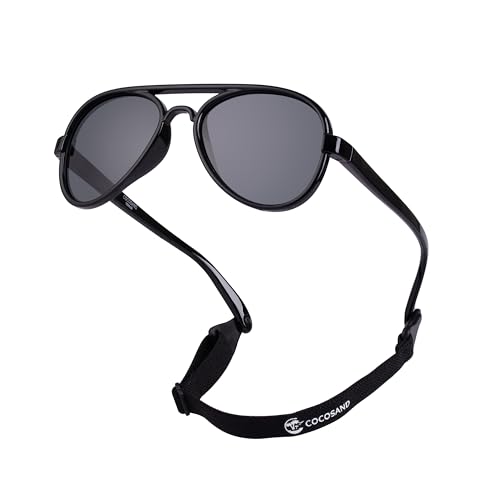
Copper Pearl sunglasses are known for their trendy designs and high-quality construction. They feature polarized lenses that reduce glare, making them great for car rides and stroller walks. The flexible frame is durable and can bend without breaking, which is essential for baby handling.
Pros
- Polarized lenses reduce glare
- Flexible frame bends without breaking
- Stylish patterns that parents love
Cons
- No strap included (but can be added)
- Slightly heavier than some other models

Totsbots Baby Sunglasses
Totsbots offers a pack of two sunglasses at a great price, making them a practical choice for parents who lose or break things easily. They feature a soft, pliable frame that is comfortable for babies and provide 100% UV protection. The strap is adjustable and helps keep them in place.
Pros
- Great value with two pairs
- Soft frame is gentle on baby’s skin
- Adjustable strap is easy to fit
Cons
- Not polarized
- Lenses may scratch easily

Julbo Looping Infant Sunglasses
Julbo Looping sunglasses are designed for active babies with a comfortable, curved fit that stays on during play. The frame is highly flexible and includes a retractable strap that can be used or removed. The lenses are impact-resistant and provide full UV protection.
Pros
- Retractable strap is convenient
- Highly flexible frame
- Impact-resistant lenses
Cons
- More expensive than some options
- Strap may be too long for very small heads

Roshambo Baby Sunglasses
Roshambo baby sunglasses are made from a soft, unbreakable material that can withstand chewing and bending. They float in water, making them great for pool days. The polarized lenses offer clear vision, and they come with a soft pouch for storage.
Pros
- Virtually indestructible
- Float in water
- Polarized lenses
Cons
- No strap, so they may fall off easily
- Limited color options

Baby Soybu Sunglasses with Strap
Baby Soybu sunglasses are specifically designed for newborns and infants with a soft, lightweight frame that won’t irritate delicate skin. The strap is adjustable and gentle, and the lenses provide full UV protection. The simple design is easy to put on and take off.
Pros
- Very lightweight
- Soft materials for sensitive skin
- Adjustable strap
Cons
- Not polarized
- Limited size range

iPlay Baby Sunglasses
iPlay Baby Sunglasses are designed for older babies and toddlers with a larger frame that fits growing heads. They feature a comfortable strap and flexible frame, making them easy to wear for extended periods. The lenses are impact-resistant and offer good coverage.
Pros
- Good for toddler size
- Adjustable strap
- Impact-resistant lenses
Cons
- Not polarized
- Some toddlers may find them too tight
The lineup, side by side
| # | Model | UV Protection | Best for | Score | Price |
|---|---|---|---|---|---|
| 1 | Baby Banz Infant Sunglasses | UV400 | Best Overall | 9.4 | Check price |
| 2 | Copper Pearl Baby Sunglasses | UV400 Polarized | Best for Style | 9.1 | Check price |
| 3 | Totsbots Baby Sunglasses | UV400 | Best Value | 8.9 | Check price |
| 4 | Julbo Looping Infant Sunglasses | UV400 | Best for Active Babies | 9.2 | Check price |
| 5 | Roshambo Baby Sunglasses | UV400 Polarized | Best for Durability | 9.0 | Check price |
| 6 | Baby Soybu Sunglasses with Strap | UV400 | Best for Newborns | 8.7 | Check price |
| 7 | iPlay Baby Sunglasses | UV400 | Best for Toddlers | 8.5 | Check price |
How to pick the right one
Good to know
At what age should babies start wearing sunglasses?
Babies can start wearing sunglasses as early as 6 months old, but it’s never too early to protect their eyes. Some brands even offer sunglasses for newborns. The key is to ensure a proper fit and that they are comfortable.
Are expensive baby sunglasses worth it?
Expensive sunglasses often offer better lens quality, polarization, and more durable materials. However, inexpensive options can still provide adequate UV protection. Consider your budget and how much wear you expect. Since babies lose or break sunglasses easily, a cheaper pair might be a practical choice.
What does UV400 mean?
UV400 means the lenses block nearly 100% of UVA and UVB rays, up to 400 nanometers. This is the standard for good UV protection in sunglasses. Always look for UV400 labeling when buying sunglasses for your baby.
Can babies wear adult sunglasses?
No, adult sunglasses are not suitable for babies because they don’t fit properly and may not provide adequate coverage. Baby sunglasses are designed with smaller frames and flexible materials to be safe and comfortable for infants.
How do I know if the sunglasses fit my baby?
The sunglasses should sit comfortably on the nose and ears without pinching or slipping. For strap-on models, the strap should be snug but not tight. Check that the lenses cover the eyes and block light from the sides. Adjust the strap as your baby grows.
What are the benefits of polarized lenses for babies?
Polarized lenses reduce glare from reflective surfaces like water, sand, and pavement. This can make outdoor time more comfortable for babies, especially in bright conditions. However, polarization is not a requirement for UV protection; it’s an added comfort feature.
How often should I replace baby sunglasses?
Replace baby sunglasses as soon as they show signs of damage, such as scratches, cracks, or broken frames. Also, if your baby outgrows them, replace them with a larger size. Regular inspection is important to ensure continued protection.
Do babies need sunglasses on cloudy days?
Yes, UV rays can penetrate clouds, so protection is needed even when it’s overcast. However, the intensity is lower, but it’s still good practice to have your baby wear sunglasses whenever they are outdoors during daylight hours.
Can baby sunglasses be worn while in a car?
Yes, sunglasses can be helpful in the car to reduce glare and protect against UV rays that enter through windows. However, ensure they do not obstruct the baby’s vision or interfere with the car seat straps.
What is the best way to clean baby sunglasses?
Use a soft, lint-free cloth to gently wipe the lenses. If needed, you can use a small amount of mild soap and water, but avoid harsh chemicals. Never use paper towels, as they can scratch the lenses.
Final word
For most babies, the Baby Banz Infant Sunglasses are the best choice due to their secure strap and excellent coverage. If style is a priority, the Copper Pearl sunglasses offer a fashionable look with polarized lenses. For active toddlers, the Julbo Looping provides a sporty and secure fit. Ultimately, choose a pair that offers UV400 protection and a secure fit, and don’t forget to check the size as your baby grows.
Rachel Simmons
Rachel previously worked in child-product retail and brings a practical, detail-first eye to gear reviews, focusing on safety standards, ease of use and the fine print that matters most for new caregivers.