Baby Harnesses Compared for Safety and Comfort
Skip Hop Zoo Little Kid Safety Harness Backpack wins because toddlers see a backpack, not a restraint, and the tether unclips at the back. Mommy’s Helper Kid Keeper Safety Harness wraps the torso for escape artists. Accmor Baby Anti Lost Wrist Link folds into a pocket for airports.
Skip Hop Zoo Little Kid Safety Harness Backpack is the easiest one to get onto a toddler, because the tether hangs off a bag they already want to wear. Children who work their way out of shoulder straps need the Mommy’s Helper Kid Keeper Safety Harness instead. Airports and market stalls suit the Accmor Baby Anti Lost Wrist Link.
Safety engineering barely differs across these products, so acceptance is what separates them. A harness a child refuses protects nobody, which is why design appeal carries weight here alongside security. We compared strap layouts, buckle types, adjustment ranges, tether lengths and attachment points, padding and stated washing methods. Parent reports on slipped straps, tethers caught in pushchair wheels and which styles get worn without a fight filled in the rest.
The best picks, ranked

Skip Hop Zoo Little Kid Safety Harness Backpack
An animal face does more work here than any buckle, because children ask to put it on. Inside sits a real compartment for a snack and one small toy, with the tether clipping to the back beyond a toddler’s reach. Unclip that tether and it carries on as an ordinary preschool bag.
Pros
- Children ask to wear it
- Tether unclips for normal bag use
- Holds a snack and a small toy
Cons
- Determined toddlers slip the shoulder straps
- Less secure than a chest harness
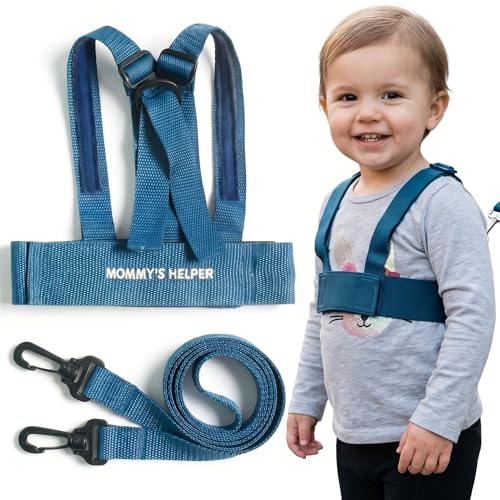
Mommy’s Helper Kid Keeper Safety Harness
Chest and shoulder straps wrap the torso, far harder to wriggle out of than two backpack straps. Buckles open under adult pressure and resist small fingers that have already mastered simple clips. A padded chest strap stops the webbing digging in across a long walk.
Pros
- Torso straps resist escape attempts
- Adjusts across a wide size range
- Buckles defeat small fingers
Cons
- Reads as a restraint to onlookers
- No storage for snacks or toys
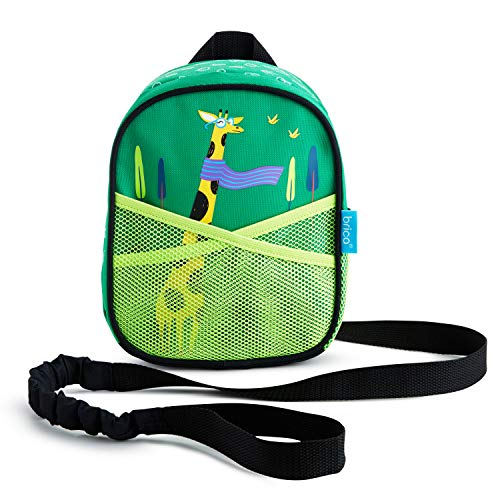
Munchkin Brica By-My-Side Safety Harness Backpack
Wide padded shoulder straps make the difference on an outing that runs past an hour, where thin webbing starts to chafe. Its tether attaches at the back and comes off once you reach somewhere safe. Storage stays modest, sized for the essentials a toddler insists on carrying.
Pros
- Widest strap padding in this group
- Stays comfortable on longer outings
- Tether detaches for ordinary use
Cons
- Smaller compartment than rivals
- Padding traps heat in summer

Diono Sure Steps Toddler Safety Harness
Adjustment runs wide enough to cover early walking through the preschool years, stretching what you get from one purchase. Straps sit securely across the chest and back, with reinforced stitching at the load points. Its adult handle is padded, which counts after an hour of holding on.
Pros
- Wide adjustment extends usable years
- Padded handle suits long holds
- Reinforced stitching at load points
Cons
- More straps to set when fitting
- Higher outlay than simple designs
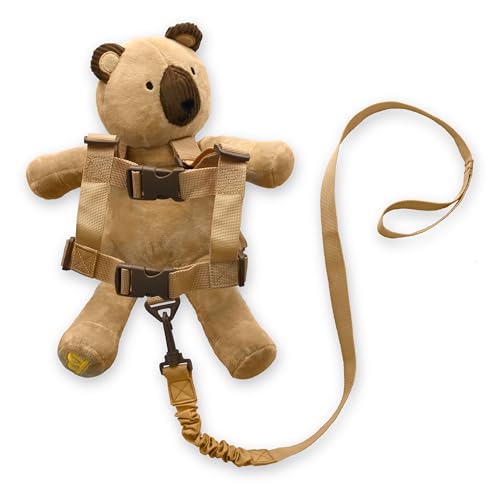
Goldbug Animal 2 in 1 Harness Buddy
A plush animal rides on the back and doubles as a toy, which is precisely why resistant children accept it. The tether runs from the animal and detaches, leaving the plush to be carried on its own. Construction is light rather than heavy duty, so treat it as a guiding harness.
Pros
- Doubles as a comfort toy
- High acceptance from resistant children
- Plush detaches to be carried alone
Cons
- Lighter build than full harnesses
- Plush picks up dirt quickly
Lehoo Castle Toddler Leash Backpack
Animal styling, a detachable tether and room for a small drink bottle at the lowest outlay here. Polyester runs lighter than premium options, though buckles and stitching hold up through ordinary use. Sensible as a second harness to leave at a grandparent’s house or in a car boot.
Pros
- Lowest outlay for a full backpack harness
- Works well as a spare unit
- Tether removes for normal use
Cons
- Lighter materials than premium options
- Straps loosen during a long outing

Accmor Baby Anti Lost Wrist Link
A coiled link runs wrist to wrist and lives in a pocket until the crowd closes in. Fitting takes seconds, and a locking buckle stops small hands releasing it. Control extends to one limb rather than the torso, so this works as a supplement rather than the main harness.
Pros
- Packs down to pocket size
- Fits and removes in seconds
- Useful in queues and terminals
Cons
- Less control than a torso harness
- Wrist hurts if the child pulls hard
How to pick the right one
Backpack, full harness or wrist link: which do you need? Backpack styles draw the least attention and win the most cooperation, though shoulder straps can be shrugged off by a child determined to get out. Full chest harnesses wrap the torso and adjust further, at the cost of looking like a restraint. Wrist links control one limb and pack into a pocket. Choose by how hard your child tests the boundary, not by what looks best in the aisle.
How should a baby harness fit? Fit sits between two errors. Too loose and a shoulder strap slides off an arm. Too tight and the child cannot move or breathe comfortably. Aim for straps that stay put with about two fingers of slack at the chest. Press each buckle to confirm it needs adult force to release, since toddlers master simple clips within days. Recheck partway through an afternoon, because webbing works loose with movement.
How long should a harness tether be? Short tethers keep a child within arm’s reach, which is what a station platform or roadside demands. Longer and coiled versions allow wandering, then tangle around legs, pushchair wheels and shop displays. A padded adult handle changes how an hour of holding feels. Detachable tethers matter later, when the harness is no longer needed and the backpack carries on being a backpack.
When does a toddler harness make sense? Harnesses pay off in genuinely hazardous places: car parks, station platforms, busy markets and airport terminals. In a quiet park, holding hands does the same job with less fuss. Nothing here replaces supervision, and a tether guides rather than restrains a running child. Introduce one at home as a game a week before the first outing, because first contact in a crowded station reliably ends in refusal.
The lineup, side by side
| # | Model | Type | Best for | Score | Price |
|---|---|---|---|---|---|
| 1 | Skip Hop Zoo Little Kid Safety Harness Backpack | Backpack with detachable tether | Best overall | 9.4 | Check price |
| 2 | Mommy’s Helper Kid Keeper Safety Harness | Chest and shoulder harness | Best escape resistance | 9.2 | Check price |
| 3 | Munchkin Brica By-My-Side Safety Harness Backpack | Padded backpack harness | Best padded comfort | 9.0 | Check price |
| 4 | Diono Sure Steps Toddler Safety Harness | Adjustable full harness | Best adjustability | 8.8 | Check price |
| 5 | Goldbug Animal 2 in 1 Harness Buddy | Plush harness with tether | Best for reluctant toddlers | 8.6 | Check price |
| 6 | Lehoo Castle Toddler Leash Backpack | Backpack with detachable tether | Best value | 8.3 | Check price |
| 7 | Accmor Baby Anti Lost Wrist Link | Wrist to wrist link | Best for airports and queues | 8.0 | Check price |
Good to know
At what age can a child use a safety harness?
Most are aimed at confident walkers, commonly from around twelve to eighteen months through the preschool years. Age and weight ranges differ between products, so check the specific manufacturer’s stated range before buying.
Are baby harnesses safe to use?
Used correctly, yes. Fit the straps snugly, keep the tether short in crowds and never attach it to a pushchair, trolley or fixed object. The tether guides a child; it is not for pulling them along.
Can toddlers get out of a backpack harness?
Some can, by working the shoulder straps down over the arms. Chest harnesses with a torso strap are considerably harder to escape, which is why parents of persistent escape artists usually move to one after a few outings.
How do you get a toddler to accept a harness?
Introduce it at home as part of a game, let the child pick the design and let them wear the backpack without the tether for the first few days. Meeting an unfamiliar harness in a busy station is the usual reason a child refuses.
Can you use a harness on a plane?
Wrist links help in the terminal and during boarding. In the seat itself, only harnesses specifically certified for aviation use may attach to an aircraft seatbelt, so confirm the rules with your airline before you fly.
How do you wash a harness or leash backpack?
Most are spot clean or gentle hand wash with mild soap, then air dry away from direct heat. Machine cycles weaken the webbing and stitching the harness depends on, so read the care label before risking it.
Wrist link vs harness: which suits a busy city?
Harnesses give more control because they hold the torso rather than one limb. Wrist links suit short crowded stretches when carrying a full harness is impractical. Plenty of families use a harness for main outings and keep a link in a coat pocket.
How long do children use a safety harness?
A year or two is typical, running from confident walking until a child reliably stays close and holds hands. Backpack styles keep going as ordinary bags well after the tether is retired.
Should you attach a harness tether to a pushchair?
No. Attaching a tether to a pushchair, trolley or any fixed object creates an entanglement risk and takes the adult out of the loop. Hold the handle yourself, and keep the tether short where hazards are close.
The verdict
Skip Hop Zoo Little Kid Safety Harness Backpack is the one to buy first, because acceptance outweighs every specification and toddlers genuinely want to wear it. Move to the Mommy’s Helper Kid Keeper Safety Harness once a child starts working their way out of shoulder straps. Keep an Accmor Baby Anti Lost Wrist Link in a coat pocket for terminals and queues.
Rachel Simmons
Rachel previously worked in child-product retail and brings a practical, detail-first eye to gear reviews, focusing on safety standards, ease of use and the fine print that matters most for new caregivers.


