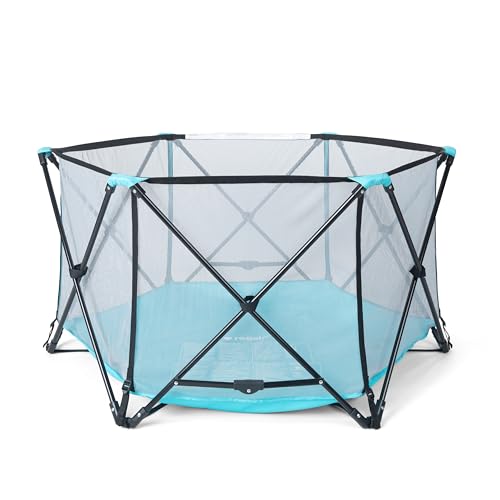
How to Pick a Baby Carrier That Works for Travel
Ergobaby Omni 360 Baby Carrier takes the travel pick on four carry positions and a padded lumbar waistband that holds up over long walks. BabyBjorn Baby Carrier Mini packs smaller for the newborn months. Infantino Flip Advanced 4-in-1 Carrier covers a similar range for far less outlay.
Ergobaby Omni 360 Baby Carrier is the one to pack for a long trip, with four carry positions and a waistband that spreads a toddler’s weight onto the hips. Newborn trips call for the smaller BabyBjorn Baby Carrier Mini. Infantino Flip Advanced 4-in-1 Carrier delivers similar versatility on a tighter budget.
A travel carrier has two jobs that pull against each other: stay comfortable through a three hour airport day, and disappear into a cabin bag. We compared seven widely sold carriers on seat design and hip positioning, stated weight ranges, ventilation, how easily one adult fits them alone, and folded bulk. Nothing here comes from personal testing. Claims reflect published specifications and what owners commonly report.
The shortlist, ranked
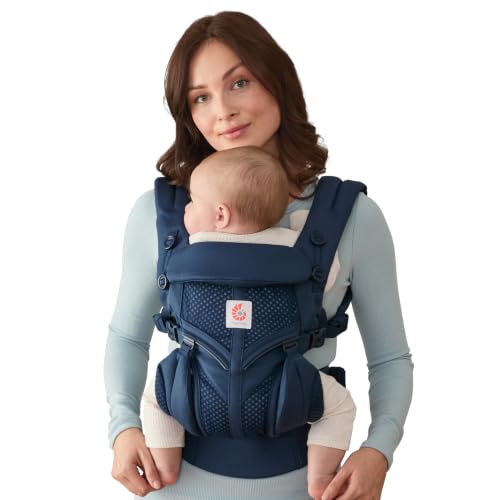
Ergobaby Omni 360 Baby Carrier
Four positions cover face in, face out, hip and back, so one carrier spans the newborn months into toddlerhood. Its seat holds the hips in an M shape with knees above the bottom. A padded lumbar waistband moves weight off the shoulders, which shows by hour three of an airport day.
Pros
- Hip healthy M shape seat
- Covers newborn through toddler
- Waistband shifts load onto the hips
Cons
- Bulkier in a bag than a wrap
- More straps to set before first use

BabyBjorn Baby Carrier Mini
Built for the first months only, the Mini goes on over the head in one piece and buckles at the front. One adult manages that without help or a mirror. Head support holds a newborn’s neck steady, though the carrier is outgrown around 24 lb.
Pros
- Fits solo without a second pair of hands
- Light and small in a cabin bag
- Head support suits newborns
Cons
- Outgrown within the first year
- No hip or back carry
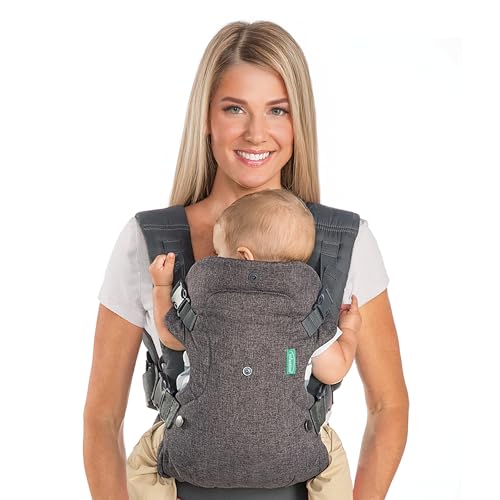
Infantino Flip Advanced 4-in-1 Carrier
A convertible seat narrows for a small infant and widens for a toddler, covering four positions without a separate insert. Machine washable fabric handles what travel with a baby does to a carrier. Padding runs thinner than premium models, so long stretches tell on the shoulders.
Pros
- Four positions without an insert
- Seat width converts as baby grows
- Machine washable after travel spills
Cons
- Less padding than premium carriers
- Sits warmer against the body
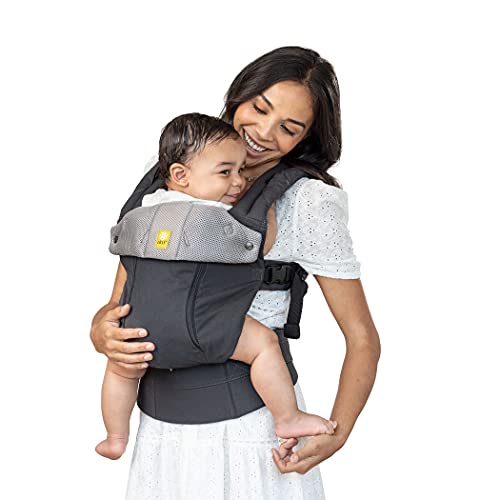
LILLEbaby Complete All Seasons Carrier
A zip down front panel opens onto breathable mesh, which separates comfortable from unbearable in a humid destination. Six positions include a fetal setting for newborns and a back carry for toddlers. All those adjustments take one session at home to learn properly.
Pros
- Mesh panel moves air in hot weather
- Six positions span a long age range
- Wide seat supports the hips
Cons
- Many adjustments to learn first
- Bulky to pack

Baby Tula Free-to-Grow Carrier
Panel width and height both adjust, so a newborn fits without an insert and a toddler still fits years later. Knee to knee support keeps the hips seated properly across that whole span. Cotton fabric holds its shape through repeated washing, though no hip carry setting exists.
Pros
- No newborn insert required
- Panel adjusts in width and height
- Cotton holds shape through washing
Cons
- No hip carry position
- Premium position in the range

Boba Baby Wrap Carrier
Stretchy jersey moulds around a newborn for a contained hold that settles many babies quickly. Rolled up, it takes less bag space than any structured carrier here. Learning the wrapping sequence takes a few attempts, and the fabric layers add warmth in summer.
Pros
- Snug hold settles newborns
- Packs smaller than structured carriers
- Spreads weight evenly across the back
Cons
- Wrapping technique takes practice
- Layers feel warm in heat
WildBird Ring Sling Carrier
Thread the woven tail through two rings and the fit adjusts in seconds, which suits stop start travel days. Folded flat, it slides into a nappy bag alongside everything else. All the weight lands on one shoulder, so it works for short carries rather than a full day out.
Pros
- Adjusts and comes off in seconds
- Folds flat into a nappy bag
- Woven fabric breathes in heat
Cons
- Weight rests on one shoulder
- Secure fit takes practice
What to look for
What makes a baby carrier good for travel? Three things separate a travel carrier from a home one: packed size, how fast one adult can fit it, and comfort past the first hour. Cabin bags fill quickly, so folded bulk counts against everything else you carry. Security queues and boarding reward a carrier you can put on standing up. Padded waistbands matter more as the child gets heavier, because a toddler belongs on the hips rather than the shoulders.
How do you check a carrier is safe and hip healthy? A safe carry holds the hips in an M shape, knees higher than the bottom, with the spine supported and the airway clear. T.I.C.K.S. sums up the checks: tight, in view at all times, close enough to kiss, keep chin off the chest, supported back. Confirm the stated minimum weight before using any carrier with a newborn. Narrow seats that leave legs dangling do not support the hips the same way.
Wrap, ring sling or structured carrier for a trip? Structured carriers spread weight across both shoulders and the hips, which is what a two mile terminal walk demands. Wraps mould closest around a newborn and roll into a small bundle. Ring slings come on and off fastest, at the cost of loading one shoulder. Many families pack both types: a structured carrier for long stretches, a sling for errands and hotel corridors.
How do you keep a baby cool in a carrier abroad? Body heat from the wearer adds to the ambient temperature, so a carrier runs hotter than the forecast suggests. Mesh panels and woven fabrics move air better than thick canvas. Dress the baby in one light layer, since the carrier acts as another. Take shade breaks, offer feeds more often, and check the neck and back where heat builds first.
How they compare
| # | Model | Positions | Best for | Score | Price |
|---|---|---|---|---|---|
| 1 | Ergobaby Omni 360 Baby Carrier | Front in, front out, hip, back | Best overall | 9.4 | Check price |
| 2 | BabyBjorn Baby Carrier Mini | Front in, front out | Best for newborns | 9.2 | Check price |
| 3 | Infantino Flip Advanced 4-in-1 Carrier | Front in, front out, back, narrow or wide seat | Best value | 9.0 | Check price |
| 4 | LILLEbaby Complete All Seasons Carrier | Six, including fetal and back carry | Best for hot climates | 8.8 | Check price |
| 5 | Baby Tula Free-to-Grow Carrier | Front in, back | Best for a long usable range | 8.6 | Check price |
| 6 | Boba Baby Wrap Carrier | Front in, newborn hold | Best for newborn closeness | 8.3 | Check price |
| 7 | WildBird Ring Sling Carrier | Hip, front in | Best for quick errands | 8.0 | Check price |
Questions worth asking
Can you wear a baby carrier through airport security?
Rules vary by airport and country. Many checkpoints let you walk through wearing your baby, while some ask you to remove the carrier for separate screening. Confirm with the airline and airport before you travel rather than at the barrier.
What is a hip healthy or ergonomic carrier?
Ergonomic carriers hold a baby in a seated M shape, with the fabric supporting thigh to thigh and the knees higher than the bottom. That position supports healthy hip development. Wide seat structured carriers and correctly tied wraps both achieve it.
At what age can you start using a baby carrier?
Many carriers work from birth once the baby meets the stated minimum weight and the design provides head and neck support. Some need an insert or a newborn setting to get there. Follow the manufacturer’s minimum weight and age guidance for the specific model.
Which packs smaller, a wrap or a structured carrier?
Wraps and ring slings win on packed size, rolling into something the size of a jumper. Structured carriers hold their shape through the panel and waistband, so they take up more of a cabin bag. That difference decides plenty of travel purchases.
How do you keep a baby cool in a carrier?
Pick mesh or woven fabric over thick cotton, dress the baby in a single light layer and plan shade breaks. Your own body heat transfers through the panel, so a baby in a carrier runs warmer than one in a pushchair.
Can you use a travel carrier for a back carry?
Some structured models allow it once the baby has the trunk control and weight the manufacturer specifies, which helps with heavier toddlers. Wraps and ring slings generally do not. Check the individual manual, since support for back carrying varies within brands.
How do you know a carrier fits correctly?
The baby should sit tight against you, high enough to kiss, with a visible face and a supported back. Sagging fabric, a gap at the chest, or shoulder strain all point to loose straps. Readjust the waistband first, then the shoulder straps.
Do you need a newborn insert?
Modern carriers increasingly adjust the panel instead, which removes the insert entirely. Older designs and some narrow carriers still need one to raise a newborn high enough. Check the weight range listed for use without an insert before buying an extra piece.
Can you use a baby carrier in an aircraft seat?
Most airlines require carriers to be removed for taxi, takeoff and landing, since only certified restraints may attach to an aircraft seatbelt. Wearing a carrier around the cabin is usually fine. Ask the airline directly, because policies differ by carrier and route.
The verdict
Ergobaby Omni 360 Baby Carrier is the strongest all round travel choice, combining a hip healthy seat, four positions and a waistband built for long days. Families travelling with a newborn will pack the BabyBjorn Baby Carrier Mini more happily. Infantino Flip Advanced 4-in-1 Carrier covers the same positions for families watching what they spend.
Rachel Simmons
Rachel previously worked in child-product retail and brings a practical, detail-first eye to gear reviews, focusing on safety standards, ease of use and the fine print that matters most for new caregivers.