Baby Bottles Designed to Make Feeding Time Easier
Dr. Brown’s Natural Flow Options+ leads on venting, routing air past the milk and converting to a three part bottle later. Philips Avent Natural Response suits babies moving between breast and bottle. Comotomo wins over babies who reject firm silicone, thanks to a squeezable body.
Dr. Brown’s Natural Flow Options+ Anti-Colic Baby Bottle is the safest first purchase, since the vent comes out once feeding settles down. Babies moving between breast and bottle usually take Philips Avent Natural Response more easily. After a refusal, Comotomo is the one to try next.
No specification sheet predicts whether your baby accepts a nipple, and that single unknown decides everything else. We compared nipple shapes, available flow rates, venting mechanisms, part counts, materials and pump compatibility across seven current bottles. Owner reports on leaking collars, clouding plastic and washing routines filled in the rest. Feeding worries belong with your health visitor or paediatrician rather than a shopping list.
Our top picks

Dr. Brown’s Natural Flow Options+ Anti-Colic Baby Bottle
An internal tube carries air to the back of the bottle instead of letting it bubble through the milk. Pull that vent out once your baby stops needing it and five parts become three. Until then, expect the longest washing up of any bottle here.
Pros
- Vent routes air away from the milk
- Converts to a simple three part bottle
- Flow rates run preemie to level 4
Cons
- Most parts to clean in this group
- Leaks if the vent seats wrongly

Philips Avent Natural Response Baby Bottle
A wide, gently sloped nipple encourages a latch closer to the breast. Milk leaves the Natural Response tip only while the baby actively sucks, so a pause does not flood the mouth. Three parts go into the steriliser, which counts at three in the morning.
Pros
- Nipple shape suits breastfed babies
- Only three parts to reassemble
- Screws onto Avent pumps directly
Cons
- Wide base misses narrow bottle warmers
- Some babies find the flow slow at first
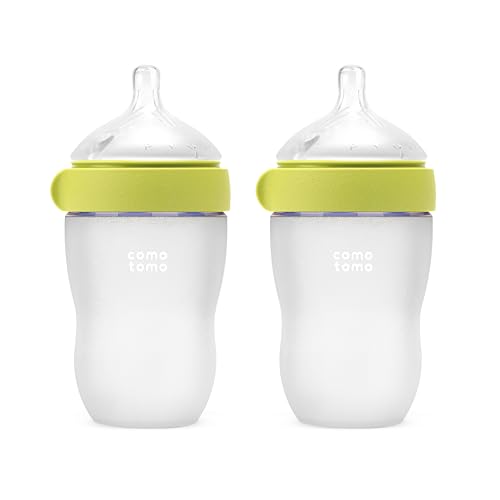
Comotomo Baby Bottle
Soft silicone forms the whole body, so this bottle squeezes rather than resists. Its nipple flexes far more than the firm ones used elsewhere, which is why refusers often accept it. Reach a hand straight through the wide neck and wash it without a brush.
Pros
- Pliable nipple wins over refusers
- Wide neck cleans without a brush
- Grippy surface suits small hands
Cons
- Squat shape misses many warmers
- Silicone collects dust and lint
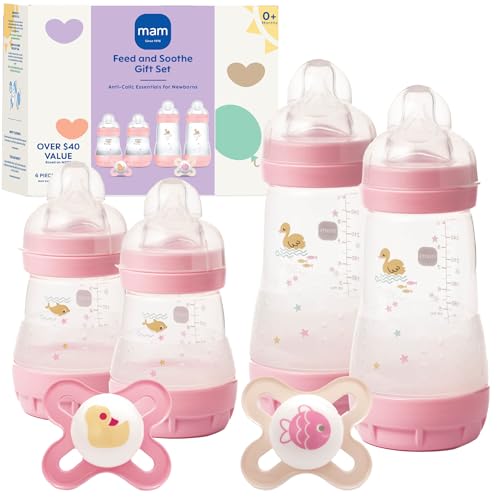
MAM Easy Start Anti-Colic Baby Bottle
Add a little water, microwave the disassembled parts and the bottle sterilises itself in a few minutes. That removes any need to pack a steriliser for a hotel or a relative’s spare room. Air enters through a vented base rather than the milk, and the textured body resists slipping.
Pros
- Sterilises without extra equipment
- Vented base cuts swallowed air
- Textured surface is easy to hold
Cons
- Base leaks if not tightened fully
- Four parts rather than three

Tommee Tippee Closer to Nature Baby Bottle
Three parts, a wide flexible nipple and shelf space in most supermarkets describe this bottle accurately. Replacing a lost nipple means a walk to the corner shop rather than a delivery wait. Its squat shape gives an older baby something to grip once they take over the feed.
Pros
- Three part assembly rinses quickly
- Spare nipples are easy to find
- Shape suits babies holding their own bottle
Cons
- Valve venting trails dedicated systems
- Nipples soften and need replacing

Lansinoh Baby Bottle with NaturalWave Nipple
NaturalWave shaping follows the tongue movement a baby uses at the breast, aiming for one latch across both methods. Its narrow body slips into standard warmers and bottle bags without a fight. Pumping parents get direct compatibility with Lansinoh pumps.
Pros
- Nipple shape supports one consistent latch
- Narrow body fits standard warmers
- Screws onto matching pumps
Cons
- Narrow neck needs a bottle brush
- Fewer flow rates than rivals

Nanobebe Flexy Silicone Baby Bottle
A pinched waist runs down the middle of this silicone bottle, sized for a baby learning to hold their own feed. Weight is minimal, and drops onto tile leave no cracks. Filling and pouring take practice, because the body flexes under a full load.
Pros
- Light enough for a baby to hold
- Survives repeated drops onto hard floors
- Three parts come apart in seconds
Cons
- Flexible body makes pouring awkward
- Smaller accessory range than mainstream brands
Before you buy
How do you choose a baby bottle nipple? Nipples decide acceptance, so start there rather than with the bottle body. Wide sloped shapes generally suit babies who also breastfeed, while narrow shapes fit smaller mouths and slide into standard warmers. Flow rate matters equally. Too fast brings gulping, coughing and dribbling, while too slow brings a frustrated baby and a forty minute feed. Begin on the slowest rate and move up only when your baby is visibly working for it.
Do anti colic and venting systems actually work? Three mechanisms hide behind that one label. Internal tubes route air to the base of the bottle, away from the milk entirely. Vented bases let air in underneath as milk leaves. Valve rings in the collar do the simplest version of the same job. More complex systems handle air better and add parts to wash. A baby feeding comfortably on a plain bottle gains nothing from the extra pieces.
How many parts should a baby bottle have? Part count turns into real time once you multiply it by six feeds a day. Three piece bottles rinse, sterilise and reassemble inside a minute. Five piece systems with a narrow vent tube need a dedicated brush and proper drying space. Buy one or two before a full set. Confirm your baby takes the nipple, then buy enough to cover a whole day of feeds.
Glass, plastic or silicone baby bottles? Plastic weighs least and survives being dropped in a car park. Glass resists scratching, staining and odour and sterilises endlessly, but it breaks when a toddler throws it. Silicone lands between the two and bounces. Check your steriliser and warmer before committing, since wide neck bottles frequently sit in neither. Replace nipples that discolour, swell, thin or tear, whatever the bottle is made of.
Compared at a glance
| # | Model | Venting | Best for | Score | Price |
|---|---|---|---|---|---|
| 1 | Dr. Brown’s Natural Flow Options+ Anti-Colic Baby Bottle | Internal vent tube, removable | Best overall | 9.4 | Check price |
| 2 | Philips Avent Natural Response Baby Bottle | Wide, breast shaped | Best for combination feeding | 9.2 | Check price |
| 3 | Comotomo Baby Bottle | Soft squeezable silicone | Best for bottle refusers | 9.0 | Check price |
| 4 | MAM Easy Start Anti-Colic Baby Bottle | Self sterilises in a microwave | Best for travel sterilising | 8.8 | Check price |
| 5 | Tommee Tippee Closer to Nature Baby Bottle | Wide neck, flexible silicone | Best value | 8.6 | Check price |
| 6 | Lansinoh Baby Bottle with NaturalWave Nipple | NaturalWave shaped | Best for latch consistency | 8.3 | Check price |
| 7 | Nanobebe Flexy Silicone Baby Bottle | Food grade silicone | Best for small hands | 8.0 | Check price |
Frequently asked questions
How many baby bottles do you need?
Four to six covers a day of feeds with time to wash between uses. Families feeding exclusively by bottle often prefer eight. Buy one or two of your chosen design first, since a nipple your baby refuses turns a full starter set into storage.
When should you move up a nipple flow rate?
Watch the baby rather than the calendar. Working hard, growing frustrated or taking a very long time over a feed suggests the flow is too slow. Gulping, coughing, dribbling and pulling away suggest it is too fast.
Do anti colic bottles actually help?
Venting systems reduce the air swallowed during a feed, which many parents find eases wind and fussiness. Results differ between babies. Feeding discomfort that persists is worth raising with your health visitor or doctor rather than solving through bottles alone.
Are glass or plastic baby bottles better?
Glass will not scratch, stain or hold odours and tolerates endless sterilising, but it weighs more and breaks. Plastic is lighter and more practical away from home. Plenty of families use glass in the kitchen and plastic or silicone in the changing bag.
How often should baby bottle nipples be replaced?
Manufacturers generally suggest every two to three months, and sooner at the first sign of discolouration, thinning, stickiness, swelling or a tear. Check the tip during every wash, since a split nipple releases milk far too quickly.
Can baby bottles go in the dishwasher?
Most modern bottles are rated for the top rack, though repeated hot cycles cloud plastic over time. Small vent parts and valves wash more reliably by hand with a dedicated brush. A dishwasher cycle does not replace sterilising for newborn equipment.
Why is my baby bottle leaking?
Three causes account for nearly all leaks: an over tightened collar, a misaligned vent piece and a nipple stretched out of shape. Loosen the collar slightly, check each seal sits flat, and replace nipples that no longer grip the rim.
Will a breastfed baby take a bottle?
Many do, particularly with a wide nipple and a slow flow that requires active sucking. Offering the first bottles through someone other than the breastfeeding parent often helps. Continued refusal is worth discussing with a health visitor or lactation consultant.
What size bottle should you start with?
Smaller bottles suit the newborn weeks, when feeds are small and frequent. Most families move to the larger size around three or four months. Nipples and collars usually fit both sizes within one range, so only the bodies need replacing.
Our take
Dr. Brown’s Natural Flow Options+ Anti-Colic Baby Bottle is where we would start, because the vent works and the system simplifies to three parts once your baby outgrows it. Families moving between breast and bottle should try Philips Avent Natural Response first. Reach for Comotomo if your baby has already turned down a firmer nipple.
Rachel Simmons
Rachel previously worked in child-product retail and brings a practical, detail-first eye to gear reviews, focusing on safety standards, ease of use and the fine print that matters most for new caregivers.