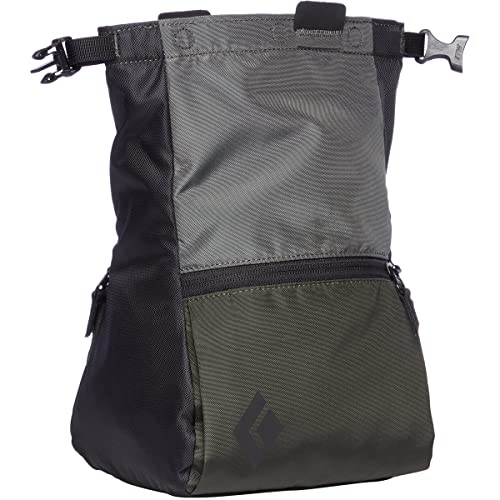
Automatic Hiking Poles That Keep Up With Your Pace
The Cascade Mountain Tech Carbon Fiber Quick Lock poles are the top pick for most hikers because they combine lightweight carbon construction with reliable flick locks. They suit day hikers and backpackers who want easy adjustments without fumbling. The main limitation is that the carbon shaft may not withstand heavy impacts as well as aluminum.
Automatic hiking poles use lever or twist locks that let you adjust length in seconds. They provide stability on uneven terrain and reduce strain on your knees. Finding the right pair means balancing weight, grip, and lock strength.
We compared popular models from Cascade Mountain Tech, TrailBuddy, and others. Owners report that reliable locks and cushioned grips make the biggest difference on long hikes. This guide highlights the strengths and tradeoffs of each pole to help you choose.
The best picks, ranked
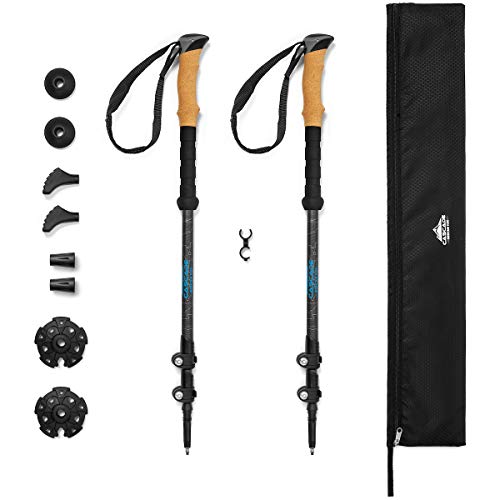
Cascade Mountain Tech Carbon Fiber Quick Lock
These poles combine a carbon fiber shaft with quick lock levers for fast, secure adjustments. They weigh just over a pound per pair, making them ideal for long distances. The cork grips mold to your hand and wick moisture well.
Pros
- Very lightweight
- Secure quick locks
- Comfortable cork grips
Cons
- Carbon can be brittle on hard impacts
- Not for heavy bushwhacking
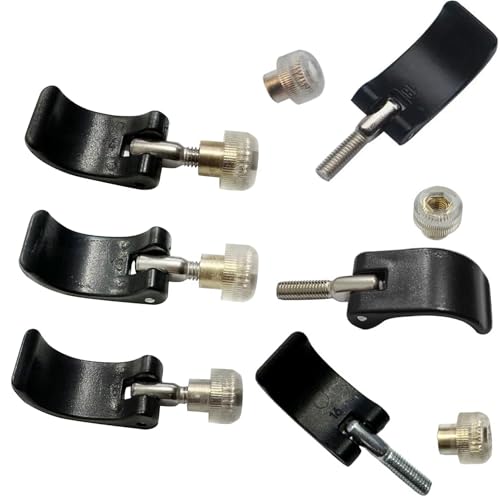
TrailBuddy Trekking Poles Quick Lock
TrailBuddy poles offer a sturdy aluminum build with quick lock adjustments. They come with a pair of mud baskets and snow baskets. The foam grips extend below the handle for low grip situations.
Pros
- Affordable price
- Strong aluminum construction
- Includes extra baskets
Cons
- Heavier than carbon models
- Locks may need occasional tightening

Black Diamond Trail Sport 2
Black Diamond’s Trail Sport 2 uses a two-section aluminum shaft with FlickLock technology. The locks are proven and easy to operate even with gloves. The EVA grips provide a comfortable hold in all weather.
Pros
- Trusted FlickLock system
- Durable aluminum
- Interchangeable baskets
Cons
- Two sections may be less compact
- Grip not as breathable as cork
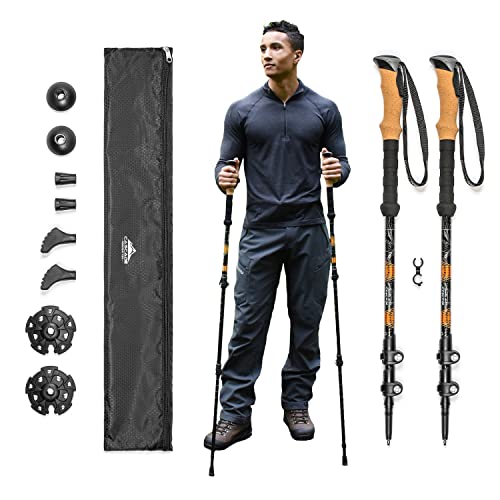
Cascade Mountain Tech Aluminum Quick Lock
This aluminum version from Cascade offers the same quick lock ease at a lower price. It is durable and handles rough terrain well. The cork grips add comfort during long hikes.
Pros
- Lower cost than carbon
- Sturdy for rocky trails
- Cork grips reduce sweat
Cons
- Heavier than carbon
- Locks can slip if not fully tightened

TrailBuddy Carbon Fiber Quick Lock
TrailBuddy’s carbon fiber poles provide a lightweight alternative without breaking the bank. They feature quick lock adjustment and anti-shock springs to reduce vibration. The cork grips are comfortable and absorb moisture.
Pros
- Lightweight carbon
- Anti-shock built in
- Good price for carbon
Cons
- Anti-shock adds a bit of bounce
- Not as rigid as solid carbon

Foxelli Carbon Fiber Trekking Poles
Foxelli poles come with a generous accessory kit including snow baskets, mud baskets, and rubber tips. The quick lock system is simple and reliable. The EVA grips are comfortable and durable.
Pros
- Includes many accessories
- Lightweight
- Easy to adjust
Cons
- EVA grips can get slippery when wet
- Baskets may not fit all conditions

Rythmos Trekking Poles
Rythmos poles are an entry level option that still offers quick lock adjustability. They are made of aluminum and are quite durable for the price. The foam grips are comfortable for short to moderate hikes.
Pros
- Very affordable
- Sturdy aluminum
- Simple to use
Cons
- Heavier than most
- Foam grip wears over time
Side by side
| # | Model | Shaft Material | Best for | Score | Price |
|---|---|---|---|---|---|
| 1 | Cascade Mountain Tech Carbon Fiber Quick Lock | Carbon fiber | Ultralight backpacking | 9.4 | Check price |
| 2 | TrailBuddy Trekking Poles Quick Lock | Aluminum 6061 | Budget conscious hikers | 9.1 | Check price |
| 3 | Black Diamond Trail Sport 2 | Aluminum | Rugged trails | 9.0 | Check price |
| 4 | Cascade Mountain Tech Aluminum Quick Lock | Aluminum | All around use | 8.8 | Check price |
| 5 | TrailBuddy Carbon Fiber Quick Lock | Carbon fiber | Weight conscious trekkers | 8.7 | Check price |
| 6 | Foxelli Carbon Fiber Trekking Poles | Carbon fiber | Hikers wanting extras | 8.5 | Check price |
| 7 | Rythmos Trekking Poles | Aluminum | Everyday casual hikes | 8.0 | Check price |
What to look for
Common questions
How do automatic hiking poles differ from twist lock poles?
Automatic poles use a lever or cam that flips open and closed for quick adjustment. Twist lock poles require rotating the shaft sections to tighten. Levers are faster and easier, especially with gloves.
Are carbon fiber poles worth the extra cost?
Carbon fiber poles are lighter and reduce arm fatigue on long hikes. They also dampen vibrations better than aluminum. However, they are more expensive and can crack under heavy impact. If you hike mostly on smooth trails, carbon is a good investment.
Can I use automatic poles for snowshoeing?
Yes, but you need to swap the standard baskets for larger snow baskets. Many poles come with snow baskets included, or you can purchase them separately. The locking mechanism works the same in cold conditions.
How do I determine the correct pole length?
Stand upright with the pole tip on the ground. Your elbow should be bent at about 90 degrees. For downhill, extend the poles slightly. For uphill, shorten them. Most poles have length markings for reference.
Do I need anti-shock poles?
Anti-shock systems absorb impact, which can reduce stress on joints. However, they add weight and a slight bounce with each step. Some hikers find them uncomfortable. If you have knee issues, they might help, but try them before committing.
How do I maintain the locking mechanism?
Keep the locks clean and free of dirt. Tighten any screws if the lever becomes loose. Most quick locks have a tension adjustment. Periodically check that the locks are secure before each hike.
Can I replace the tips on my hiking poles?
Yes, the carbide tips are replaceable. You can also use rubber tips for walking on pavement. Check the manufacturer’s instructions for how to remove and replace them. Some poles come with extra tips.
What is the weight difference between aluminum and carbon poles?
Carbon fiber poles typically weigh about 4 to 8 ounces less per pair than aluminum poles. For example, a pair of carbon poles might weigh 1 pound 2 ounces, while aluminum poles are around 1 pound 10 ounces. This difference becomes noticeable on long hikes.
Final word
For most hikers, the Cascade Mountain Tech Carbon Fiber Quick Lock poles offer the best combination of weight, comfort, and reliable locking. If you need maximum durability for rocky terrain, choose the Black Diamond Trail Sport 2 despite the higher price. Budget conscious hikers will appreciate the TrailBuddy aluminum poles for their solid performance and low cost.
Sierra Daniels
Sierra's background is in landscape design and nursery retail. She focuses on lawn and garden equipment, outdoor furniture and gear durability, weighing published specs against how materials actually hold up outside.