Travel Dog Beds That Pop Open or Inflate on Their Own
The Ownpets Pop Up Travel Dog Bed wins on speed: its spring frame snaps open the instant it leaves the bag. Cold-weather campers should choose the Coleman Self-Inflating Pet Pad for its foam insulation. Occasional travelers on a budget get solid value from the Bedsure Waterproof Travel Dog Bed.
A spring frame or self-inflating foam core lets these beds set up without a hand pump. The Ownpets Pop Up Travel Dog Bed snaps into shape the second it clears its pouch, ideal for quick stops, though its spring works best for smaller dogs. Campers facing cold nights get more warmth from the Coleman Self-Inflating Pet Pad instead.
Not every bed sold for travel actually opens on its own; some still need foam unrolled by hand. We compared setup mechanism, packed size, insulation, and owner reports on durability after repeated car trips and campsite use.
Before you buy
What does “automatic” mean on a travel dog bed? Two mechanisms earn that label: a spring frame that pops open on its own, or a self-inflating foam core that draws in air once its valve opens. Neither needs a hand pump or assembly tools. Beds that only roll or fold flat are still travel beds, just not automatic ones. Read the listing’s setup description closely before assuming a bed opens itself.
Pop-up spring frames vs self-inflating foam Spring frames like the Ownpets open instantly, which suits quick stops such as vet visits or highway rest areas. Self-inflating foam, as in the Coleman pad, takes a few minutes to expand fully but adds real insulation against cold ground. Winter campers gain more from the foam’s insulation than from instant setup speed. Warm-weather day trippers usually prefer the faster spring frame.
Best bed for car rides vs backpacking trips Car trips favor bolstered, non-slip beds like the Kurgo Wander that stay put on a seat through turns. Backpacking calls for ultralight, foldable pads like the Ruffwear Highlands that clip onto a pack strap. Weight barely matters in a car but becomes the deciding factor once a person is carrying the bed on foot. Match the bed to how it travels, not only to where the dog sleeps.
Picking insulation for cold weather travel A thermal reflective layer, as used in the K&H self-warming bed, adds warmth from the dog’s own body heat with no batteries involved. Self-inflating foam pads add a second insulating barrier against cold tent-camping ground. Thin roll-up pads without insulation leave a dog closer to cold pavement overnight. Winter or high-altitude trips call for insulation as a deliberate choice, not an afterthought.
The shortlist, ranked

Ownpets Pop Up Travel Dog Bed
A flexible spring ring inside the rim forces the bed into a full circle the moment it exits its carry pouch. Assembly tools and pumps play no part in the process. Vet waiting rooms, campsites, and quick roadside stops all suit this setup speed.
Pros
- Opens in seconds with no pump or tools
- Folds flat for trunk storage
- Wipeable water-resistant shell
Cons
- Spring can weaken after years of heavy use
- Not sized for large breeds

Coleman Self-Inflating Pet Pad
Opening the valve draws air in as the internal foam expands, replacing any need for a manual pump. That foam layer blocks cold rising up from tent-camping ground far better than an air-only mattress. Multi-night camping trips with a dog benefit most from this insulation.
Pros
- Foam insulates against cold campsite ground
- No manual pump needed to inflate
- Rolls small enough for a backpack
Cons
- Full inflation takes several minutes
- Rocky or thorny ground risks punctures
Kurgo Wander Dog Bed
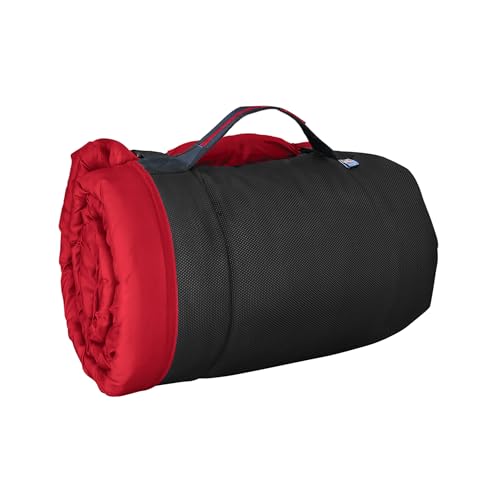
Raised bolster sides give a dog something to brace against through turns and sudden stops. A water-resistant base keeps spills and dirt off car seats and cargo liners. Daily commuters with a dog note it stays in place better than flat pads during braking.
Pros
- Bolsters steady a dog through car motion
- Non-slip base resists sliding
- Water-resistant base protects upholstery
Cons
- No pop-up or self-inflating mechanism
- Bulkier to pack than flat pads

Ruffwear Highlands Pad
Layered foam folds down into a rectangle small enough to clip onto a backpack strap. Unfolding replaces inflation entirely, so there is no valve to puncture on rocky trails. Hikers already carrying their own sleeping pad add this one for the dog on multi-day routes.
Pros
- No puncture risk since nothing inflates
- Clips straight onto a backpack
- Very light for its size
Cons
- Thinner cushioning than inflatable pads
- Hand-folding takes longer than a pop-up frame

K&H Pet Products Self-Warming Travel Bed
A thermal reflective layer bounces a dog’s own body heat back up, warming the bed without batteries or a pump. Unrolling it flat is the entire setup. Unheated garages, porches, and winter car trunks are where owners use it most.
Pros
- Uses body heat for warmth, no power source
- Packs very thin for tight spaces
- Water-resistant shell handles outdoor use
Cons
- Cushioning is thinner than foam or inflatable beds
- No spring or self-inflate mechanism

Morpilot Inflatable Travel Dog Bed
A manual valve lets owners dial in exact firmness by adding or releasing air, something fixed-foam pads cannot do. Deflated, it packs down to roughly the size of a water bottle. Owners of older dogs with joint pain often add extra air for a plusher feel.
Pros
- Firmness adjusts to the dog’s comfort
- Deflates extremely small for packing
- Removable cover machine washes
Cons
- Needs manual inflation, not automatic
- Sharp surfaces can puncture it

Bedsure Waterproof Travel Dog Bed
A foam-filled pad rolls out flat and holds its shape, with no pump or spring parts to fail. A waterproof bottom layer blocks damp grass and wet car floors. Occasional travelers who need basic coverage without extra features find this sufficient.
Pros
- Lowest cost option in this lineup
- Waterproof base handles damp ground
- Roll-and-strap design packs simply
Cons
- No self-setup mechanism, just a rolled pad
- Foam flattens faster than inflatable designs
How they stack up
| # | Model | Setup | Best for | Score | Price |
|---|---|---|---|---|---|
| 1 | Ownpets Pop Up Travel Dog Bed | Spring frame opens automatically once unpacked | Best overall | 9.3 | Check price |
| 2 | Coleman Self-Inflating Pet Pad | Self-inflating valve, foam expands on its own | Best for insulation | 9.0 | Check price |
| 3 | Kurgo Wander Dog Bed | Unrolls flat, no inflation required | Best for car travel | 8.7 | Check price |
| 4 | Ruffwear Highlands Pad | Foam unfolds, no inflation or springs | Best for backpacking | 8.5 | Check price |
| 5 | K&H Pet Products Self-Warming Travel Bed | Unrolls flat, no inflation required | Best for cold weather without power | 8.3 | Check price |
| 6 | Morpilot Inflatable Travel Dog Bed | Manual valve, adjustable air fill | Best for adjustable firmness | 8.1 | Check price |
| 7 | Bedsure Waterproof Travel Dog Bed | Rolls out flat, no inflation or spring | Best budget | 7.9 | Check price |
Good to know
What does automatic mean for a travel dog bed?
It refers to a spring frame that pops open on its own or a self-inflating foam core that draws in air once its valve opens, both without a hand pump or assembly steps.
Do self-inflating dog beds need a pump?
No. Opening the valve lets the internal foam expand and pull in air by itself, though a few extra breaths through the valve can firm it up further.
How do pop-up dog beds work?
A flexible spring ring built into the rim holds the bed compressed inside its bag. Releasing it lets the spring snap back into a full open circle in seconds.
Pop-up vs self-inflating: which sets up faster?
Pop-up spring frames open almost instantly and suit quick stops, while self-inflating foam takes a few minutes but adds better ground insulation for camping.
Are inflatable dog beds prone to punctures?
Most hold up fine on smooth ground but risk a puncture on gravel, thorns, or sharp debris. Foam-filled or spring-frame beds avoid this risk since there is no air chamber.
Can travel dog beds go in the washing machine?
Many have removable, machine-washable covers, though the foam or spring core inside usually should not be submerged. Check the specific listing’s care instructions first.
What size travel dog bed should I buy?
Measure your dog lying fully stretched out, then add a few inches on each side. An undersized bed often gets skipped in favor of the car seat or floor.
Are pop-up dog beds durable for daily use?
Spring frames handle regular travel well but can fatigue faster than foam if compressed and released constantly for years. Occasional trip use extends the mechanism’s life.
Which travel dog bed works best for winter camping?
Self-inflating foam pads and thermal reflective beds both add insulation against cold ground, with foam giving the more consistent barrier in freezing temperatures.
The verdict
Frequent travelers who value speed should get the Ownpets Pop Up Travel Dog Bed, since its spring frame beats any inflation-based setup here. Cold-weather campers get more practical benefit from the Coleman Self-Inflating Pet Pad’s insulation layer. Occasional travelers on a tight budget can skip both and still cover the basics with the Bedsure Waterproof pad.
Olivia Hartley
Olivia spent several years working at an animal shelter and a pet-supply retailer before joining the editorial team. She researches pet gear with an emphasis on safety, comfort and the fine print that owners often miss.