Cat Scratching Posts for Maine Coons and Big Breeds
SmartCat Pioneer Pet Ultimate Scratching Post ranks first, pairing a 32 inch column with a 16 inch weighted base. FUKUMARU Cat Scratching Post 33.5 Inch adds height for the longest breeds. Floor scratchers do better with the PetFusion Ultimate Cat Scratcher Lounge and its 34 inch reversible deck.
SmartCat Pioneer Pet Ultimate Scratching Post fits any household with a cat past 12 pounds. Woven sisal fabric wraps its 32 inch column, so the surface wears down in layers instead of unraveling. A 16 inch weighted base keeps everything planted mid stretch. Bare beige styling is the tradeoff, with no perch and no toy attached.
Large cats break this category in two ways. Leaning into a narrow column tips it, and one wobble sends the cat straight back to your sofa arm. Published heights, base dimensions and surface materials built the shortlist. Owner reports from Maine Coon, Ragdoll and Bengal households then set the order, especially comments written after six months of daily clawing.
What we recommend
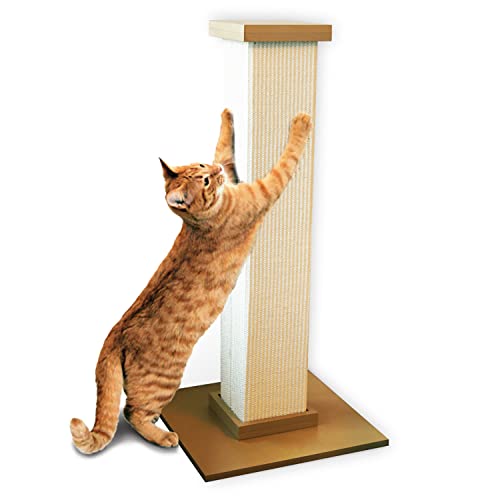
SmartCat Pioneer Pet Ultimate Scratching Post
Thirty two inches gives a long bodied cat room to reach from shoulder to tail without curling. Sisal fabric rather than rope forms the scratching face, so worn patches stay flat instead of looping loose. Owners of heavy breeds point to the weighted base as the reason it survives a running start.
Pros
- Clears the standing reach of most big breeds
- Fabric weave wears flat instead of fraying
- Sixteen inch base stops mid stretch tipping
Cons
- No perch, toy or hideaway included
- Loose sisal fibers shed onto carpet for the first few weeks

FUKUMARU Cat Scratching Post 33.5 Inch
Nothing else in this group reaches 33.5 inches, which counts for a Maine Coon measuring past three feet nose to tail. Natural sisal rope covers the full column, and a ball hangs from the top for cats that swat while they scratch. Rope opens into loose loops sooner than a woven face under heavy claws.
Pros
- Height suits Maine Coons, Ragdolls and Bengals
- Thick rope strands give claws something to hook
- Dangling ball pulls cats to it on day one
Cons
- Rope frays faster than a fabric weave
- Plush base collects fur and wants weekly vacuuming

PetFusion Ultimate Cat Scratcher Lounge
Plenty of cats rake forward on the floor instead of reaching up a wall, and this curved cardboard deck serves that habit. Flipping the corrugated insert roughly doubles how long it lasts. Its 34 inch deck holds a large cat lying flat, though shredded cardboard means sweeping two or three times a week.
Pros
- Matches cats that scratch horizontally
- Reversible deck doubles the usable life
- Wide enough for a 15 pound cat to nap on
Cons
- Cardboard crumbs collect around the base
- Shorter service life than sisal across a year

Yaheetech 32-Inch Sisal Cat Scratching Post
Same 32 inch column as the SmartCat, plus a small plush platform where a cat can settle afterwards. Base weight is where it gives ground, so it works best under cats below roughly 14 pounds. Included hardware finishes the build without a trip to the toolbox.
Pros
- Perch adds a resting spot in the same footprint
- Full height column without a premium build
- Hardware supplied for a ten minute assembly
Cons
- Lighter base rocks under cats past 14 pounds
- Perch is narrow for a large breed to sleep on

Amazon Basics Cat Scratching Post
Sisal rope over a carpeted board, roughly 26 inches tall, and nothing else going on. Short height blocks a full stretch for a big cat, so treat it as the second post in a back bedroom. Kittens and small adults get the whole job done here.
Pros
- Cheapest route to a second scratching spot
- Small footprint in a hallway or bedroom
- Rope can be rewrapped once it wears through
Cons
- Too short for a large cat to extend fully
- Carpet base may signal that carpet is fair game

Trixie Parla Cat Scratching Post
Trixie keeps the footprint narrow, which helps beside a sofa arm or in an apartment hallway. Plush covers the base and the top cap while real sisal rope handles the scratching. Stability holds for medium cats and turns marginal past 15 pounds.
Pros
- Slots next to furniture without taking the room
- Plush finish reads as furniture, not equipment
- Light enough to carry between rooms
Cons
- Narrow base tips under the heaviest cats
- Twenty four inches cuts the stretch short

Necoichi Cozy Cat Scratcher Bowl
Bowl walls catch cats that claw the edge of a bed, then curl up inside once the session ends. Corrugated cardboard forms the entire shell, and a raised rim traps most of the shed crumbs. Big cats overhang the 16 inch diameter, so pair it with a tall post instead of swapping one for the other.
Pros
- Raised rim keeps debris off the floor
- Cats sleep in it between scratching sessions
- Light enough to shift from room to room
Cons
- Large cats hang over the rim
- Cannot replace a vertical stretching post
Before you buy
What to look for in a scratching post for a large cat Height leads every other factor. Scratching is a stretch, so the column has to beat the cat’s standing reach, which lands near 30 inches for most big breeds. Stability follows, since a base narrower than half the post height rocks under load. Material only decides how many months the post survives once those two are settled. Anyone with carpeted stairs should avoid carpet covered scratching faces entirely.
Sisal fabric vs sisal rope vs cardboard Woven sisal fabric erodes in layers and keeps an even texture, which is why SmartCat builds with it. Rope hands claws a thicker strand to hook, then frays into loops that some cats refuse to touch. Cardboard shreds satisfyingly and costs least, yet a heavy cat can work through a lounge in a few months. Match the material to the habit: cats that hook and pull take to rope, floor rakers take to cardboard, and all day scratchers justify fabric.
Height and base width: the stability math Base width should run at least half the post height. A 32 inch column therefore wants roughly 16 inches of base, which is what the SmartCat supplies. Weight counts as much as width, so particle board bases beat hollow plastic ones. Check the assembled joint again after two weeks, because screws back out as the column flexes. A paving slab tucked under a wobbling base fixes the problem faster than chasing the hardware.
Vertical, horizontal and where to put the post Watch how your cat already scratches before ordering anything. Door frame climbers need a tall column, while rug rakers want the PetFusion lounge or the Necoichi bowl. Placement outranks build quality more often than owners expect, so the post belongs beside the furniture under attack rather than in a spare room. Homes with two or more cats should plan on one surface per cat plus a spare. Cats that snub every option usually come around after catnip is rubbed into the sisal.
How they compare
| # | Model | Height | Best for | Score | Price |
|---|---|---|---|---|---|
| 1 | SmartCat Pioneer Pet Ultimate Scratching Post | 32 inches | Best overall | 9.4 | Check price |
| 2 | FUKUMARU Cat Scratching Post 33.5 Inch | 33.5 inches | Best for large breeds | 9.2 | Check price |
| 3 | PetFusion Ultimate Cat Scratcher Lounge | 34 inches | Best horizontal scratcher | 9.0 | Check price |
| 4 | Yaheetech 32-Inch Sisal Cat Scratching Post | 32 inches | Best value | 8.7 | Check price |
| 5 | Amazon Basics Cat Scratching Post | About 26 inches | Best budget | 8.4 | Check price |
| 6 | Trixie Parla Cat Scratching Post | About 24 inches | Best for small spaces | 8.2 | Check price |
| 7 | Necoichi Cozy Cat Scratcher Bowl | Round bowl with raised rim | Best scratch and nap combo | 8.0 | Check price |
Frequently asked questions
Are there automatic cat scratching posts?
No motorized scratching surface exists in any real form. Some posts bolt a spinning ball or laser toy onto the base, and self grooming arches sit nearby in the same aisle. Scratching itself stays entirely cat powered.
How tall should a scratching post be for a large cat?
Thirty inches is the floor, and taller helps for Maine Coons and Ragdolls. Front legs need to extend fully without the back arching. FUKUMARU at 33.5 inches and SmartCat at 32 inches both clear that mark.
Which is better for heavy cats, sisal rope or sisal fabric?
Fabric lasts longer and stays smoother as it erodes. Rope offers a thicker strand to hook, though it unravels into loops over time. Pick fabric for durability, rope only if your cat walks past fabric.
Why does my cat ignore its scratching post?
Placement and stability explain most cases. Move it next to whatever furniture is being shredded, then work catnip into the surface. A post that rocks under pressure loses the cat’s trust wherever you put it.
Can two cats share one scratching post?
They can, though competition and territorial marking usually follow. Behaviorists generally suggest one surface per cat plus one spare. Mixing a vertical column with a horizontal lounge covers both scratching styles at once.
Do cardboard scratchers last long enough to be worth buying?
A few months of daily use is normal, and less with a 16 pound cat. PetFusion stretches that by being reversible. Treat cardboard as a supplement to a sisal post rather than the main surface.
What is the best cat scratching post for a small apartment?
Trixie Parla takes the least floor space while keeping real sisal rope. Necoichi Cozy Cat Scratcher Bowl tucks into a corner and doubles as a bed. Neither substitutes for a tall column if your cat is a large breed.
SmartCat vs FUKUMARU: which suits a Maine Coon?
FUKUMARU wins on reach at 33.5 inches, useful for a cat over three feet nose to tail. SmartCat wins on durability and base weight, since fabric outlasts rope. Cats under about 15 pounds are better served by the SmartCat.
Is a scratching post or a cat tree better for a big cat?
A dedicated post puts all the material into one tall, stable column. Cat trees split the budget between platforms, hideaways and shorter scratching sections. Homes that already own a tree usually still need a full height post beside it.
How do you stop a cat from scratching the sofa?
Place an approved surface directly against the target spot, then make the sofa dull with a slick cover or double sided tape. Trim claws every few weeks while the habit shifts. Blocking access alone rarely changes anything.
The verdict
Buy the SmartCat Pioneer Pet Ultimate Scratching Post for a big cat, since 32 inches of sisal fabric on a 16 inch weighted base answers both the stretch and the stability problem. Cats measuring over three feet nose to tail should get the FUKUMARU Cat Scratching Post 33.5 Inch instead, accepting that rope frays sooner. Floor scratchers belong on the PetFusion Ultimate Cat Scratcher Lounge, and homes with two or more cats usually end up owning one of each.
Olivia Hartley
Olivia spent several years working at an animal shelter and a pet-supply retailer before joining the editorial team. She researches pet gear with an emphasis on safety, comfort and the fine print that owners often miss.


